Home Blog Page 2137

The The Day When Israel Attacked America

6

Written by: Tiobe


On the surface of things, the United States and Israel seem perfect allies. U.S. President Harry Truman acknowledged the modern state of Israel the same day it was created in 1948. The United States gives Israel $3.1 billion annually. In a region of the world that very generally does not espouse great love for the U.S., Israel has been its little darling.

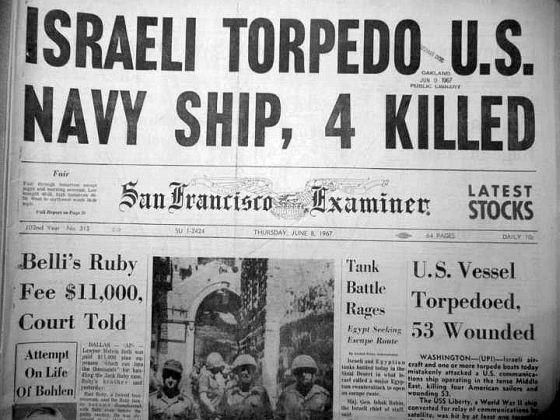
So it may come as something of a surprise to learn the U.S-Israel relationship has not been unmarred: Israel fighter jets and a torpedo boat fired on the USS Liberty, an American spy ship posted in the Mediterranean Sea June 8, 1967. In this unprovoked attack on its ally, Israel killed 34 U.S. Naval personnel and injured 121 more. LIBER

The attack took place smack dab in the middle of the “Six-Day War,” and Israel attributed the matter to mistaken identity, allegedly believing the ship to be Egyptian. Israeli officials apologized for the incident, and paid $6.7 million reparations to survivors and families of the lost, as well as $6 million for the loss of the vessel itself.

The 2007 National Security Agency (NSA) declassification of documents pertaining to the attack on USS Liberty, along with accounts from survivors of the incident, seem to suggest Israeli pilots knew full well they were firing on an American vessel.

Despite declassifying the pertinent documents, the NSA has taken the position that it is not that agency’s role to prove or disprove anything incriminating Israel in this way.

“I don’t believe that for a minute! You just don’t shoot at a ship at sea without identifying it, making sure of your target!” proclaims veteran Marine staff sergeant and USS Liberty survivor Bryce Lockwood in a Chicago Tribune interview.

Former U.S. Secretary of Defense Robert McNamara allegedly said at the time “President Johnson is not going to go to war or embarrass an American ally over a few sailors.”

Despite all the intelligence around the attack, and the outrage of survivors, there was never a formal domestic investigation into the attack on the USS Liberty, and now that most of the Israeli officials involved at the time are deceased, it is unlikely one will be forthcoming.

___________________________________________________________________________________________________

Sources:

http://www.aljazeera.com/programmes/specialseries/2014/10/day-israel-attacked-america-20141028144946266462.html

http://www.huffingtonpost.com/steven-strauss/us-aid-israel_b_4251742.html

http://www.chicagotribune.com/chi-liberty_tuesoct02-story.html#page=1


Rethinking America: Revolution Is In Our Blood

4

Written by: EV


The United States of America

Those words can induce a number of feelings depending on where they’re spoken—patriotism, pride, and freedom… bitterness, pain, and loathing. What began as a movement towards true liberty, has ultimately developed into the misery of millions around the world. What some don’t realize, or take into serious consideration, is that this government system was an experiment—one that has failed. As with all failed experiments, it’s time to start anew.

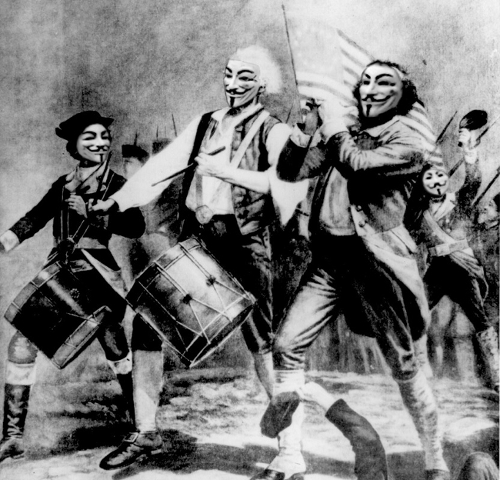
On July 4th, 1776, America declared its independence from England. To the American patriots, those who were in favor of independence, liberty began to take on a new meaning. It was no longer a set of specific rights and privileges only to be enjoyed by a corporate body, or people in certain social circumstances. Liberty had become a universal entitlement. Many Americans today can attest that this idea of liberty no longer rings true, and if we take such plights as that of the American-Indians, slaves, African-Americans, and women into consideration, one might say it never did.

Seven years of war later, in September of 1783, American and British negotiators concluded the Treaty of Paris, and America was officially recognized as an independent nation. Now the new Americans were left to the long and arduous task of establishing an official government, and the idea was to move away from those forms of government easily susceptible to tyranny. That included, first and foremost, monarchy, which embodied the principle of hereditary aristocracy, and the society of privilege, patronage, and fixed status. It was agreed by nearly everyone that the government should be a republic.

After the failed Articles of Confederation in 1787, a new Constitution was drafted. Fifty-five men, including some of the most prominent—and of course wealthy—in the nation attended the Constitutional Convention, and after four months of discussions and compromises, one of the most confusing government systems was created. Based on two political principles—federalism (the relationship between the state and federal governments), and “checks and balances” (the system for balancing power between the two)—we now had a legislature, an executive, a national judiciary, a two-house Congress which consisted of a Senate and a House of Representatives, and an extremely cumbersome system of election. Many rights were expanded to the federal government, and in comparison to the Articles of Confederation, the Constitution significantly strengthened national authority—this is an issue still argued today. It was believed by quite a few who had attended the Constitutional Convention that this system would lead to the same tyranny they were trying to avoid, so when it came to ratifying the Constitution, many were against it.

The system left open many gaps that could be exploited, and the process of ratification sparked a fierce public battle. Federalists, those who were pro-Constitution, insured the public time and again that rather than posing a danger to the people’s liberties, the Constitution protected them. It was assumed that their system of “checks and balances” was foolproof. Anti-Federalists—including Samuel Adams, John Hancock, and Patrick Henry—felt it shifted the balance between liberty and power in the direction of the latter. Today we know this to be true. In fact it would seem nearly all of the anti-Federalists fears have come to fruition, one of the largest being that the new government would fall under the sway of merchants, creditors, and others hostile to the interests of ordinary Americans. We can see this is evident in our current capitalist society.

Our great industrial nation is controlled by its system of credit. Therefore all of our activities are in the hands of a small group of men who chill and check true economic freedom. We have come to be one of the worst ruled, completely controlled and dominated governments in the world. No longer a government of the majority but a government of the opinion and duress of a small group of dominant men.”  Woodrow Wilson

According to a 2014 report from Forbes.com:

  • Almost half of the world’s wealth is now owned by just one percent of the population.
  • The wealth of the one percent richest people in the world amounts to $110 trillion. That’s 65 times the total wealth of the bottom half of the world’s population.
  • The bottom half of the world’s population owns the same as the richest 85 people in the world.
  • Seven out of ten people live in countries where economic inequality has increased in the last 30 years.
  • The richest one percent increased their share of income in 24 out of 26 countries for which we have data between 1980 and 2012.
  • In the US, the wealthiest one percent captured 95 percent of post-financial crisis growth since 2009, while the bottom 90 percent became poorer.

Most of us have heard these statistics before, and from numerous sources. We feel the effects of our capitalist society every day, but this was only the beginning of the anti-Federalist’s fears. They believed that “a very extensive territory cannot be governed on the principles of freedom”, and claimed that popular self-government flourished in small communities (states) where the governing bodies and citizens could interact daily. Melancton Smith, a member of Congress under the Articles of Confederation, warned that the “well-born” would dominate the “common people”. “This,” he predicted, “will be a government of oppression.” They knew that men of wealth, who were ignorant of the sentiments of the middle and lower class, would have the resources to win elections, and again, we know this to be true today.

According to a report from Bloomberg L.P. (a privately held financial software, data and media company), “Presidential candidates in the 2008 race spent a total of more than $1 billion, up from $717.9 million in 2004 and $343.1 million in 2000.” To the average American, this is an astronomical amount of money. Much of it was raised, yes, but trends show that the candidate who spends the most money usually wins.

In the end, we know the Federalists prevailed, and the Constitution was ratified. Because the anti-Federalists lacked the coherent leadership of the Constitution’s defenders, and because the supporters of the Constitution dominated the colonial press, we now live in the current system we find ourselves. Although more than 230 years have passed, not much has changed. We may live in a world filled with automobiles, computers, MP3 players, and neon billboards, but we are still fighting for our freedoms in the same experimental government as the first Americans. It’s as though our society fell asleep for a while and forgot what was going on.

Directly after the Constitution was ratified, Alexander Hamilton, who was by then the Secretary of Treasury, enacted a plan that included creating a Bank of the United States. He claimed to have the right to do so thanks to an ambiguous clause in the Constitution empowering Congress to enact laws for the “general welfare.” However creating a national bank was sure to have a great impact on society, and many who were pro-Constitution opposed Hamilton’s plan. This included Thomas Jefferson, who believed the new national bank to be unconstitutional since the right of Congress to create a bank was never mentioned in the Constitution. And thus the first cracks in our system were exploited from the start. It didn’t take long for the Federalists to turn to tyranny. They soon acquired an elitist outlook that reflected the early 18th century view of society as a fixed hierarchy. Public office, they felt, was to be held by the “rich, the able, and the well-born,” as Hamilton put it, and it’s safe to say not much has changed today.

This article is not meant to bash the American Constitution, nor is it by any means an argument in favor of the Articles of Confederation. Although the Constitution, in particular our Bill of Rights, is now meticulously being destroyed, many of the ideas behind it were good. We like the words “freedom”, and “liberty”, both of which many would say the Constitution stands for, and there have been many positive changes along the way, the eventual abolition of slavery being a good example. The purpose of this article is to bring to the reader’s attention that nearly all of the ways predicted in which this government could fail, have come to pass—I’ve given the biggest examples here—and it doesn’t take a source to tell you things are getting worse. This government has failed.

The United States was formed by revolutionaries. They fought for our freedom from England, and the word “revolution” was spoken with a profound sense of pride and patriotism.  It is most likely that the only way we will repair our corrupt government is with another revolution, and there are many who are now calling for them all over the globe. In the words of Thomas Jefferson;

A little rebellion now and then is a good thing. The tree of liberty must be refreshed from time to time with the blood of patriots and tyrants.”

This is not a call for bloodshed. Our government has killed enough, and why emulate something so dysfunctional? It is, however, a call for society to stand up and take part in shaping its future. We are not just people on a mass of land. We are scientists, engineers, economists, architects, mechanics, doctors, farmers… We are this country. Without its citizens, America is nothing but dirt and rock. It’s up to us, the people, to find the solutions to our problems. We can no longer be content to leave it to politicians, those who haven’t had control themselves for quite some time.

The first step is to move past fear, and educate yourself. We have to be willing to look at all sides of a story—all theories, all evidence—with an open mind, and come to our own rational conclusions. Watch documentaries, read books, and refer to unfiltered, alternative news sources—we can no longer believe the mainstream media. Join protests, and hear the opinions of others. Focus on those issues you feel most passionate about, and find ways to take action.

If it weren’t for the various revolutions around the world, we would be much worse off than we are now. If we’ve learned anything from the past, it is that nearly all governments eventually slip into tyranny, and it’s up to the people to monitor, question, and keep the governments of the world under control. Our ancestors weren’t afraid to stand for what they believed in. Now it’s our turn.

___________________________________________________________________________________________________

Sources:

Foner, Eric. Give Me Liberty! : An American History. New York: W.W. Norton, 2005.

Shin, Laura. Forbes. January 23, 2014.  (http://www.forbes.com/sites/laurashin/2014/01/23/the-85-richest-people-in-the-world-have-as-much-wealth-as-the-3-5-billion-poorest/)

Salyer, Kirsten. Bloomberg L.P. March 6, 2012. (http://www.bloomberg.com/consumer-spending/2012-03-02/the-real-cost-of-a-presidential-campaign.html)


Is The United States Prepared For Ebola?

1

Written by: Rhinostril

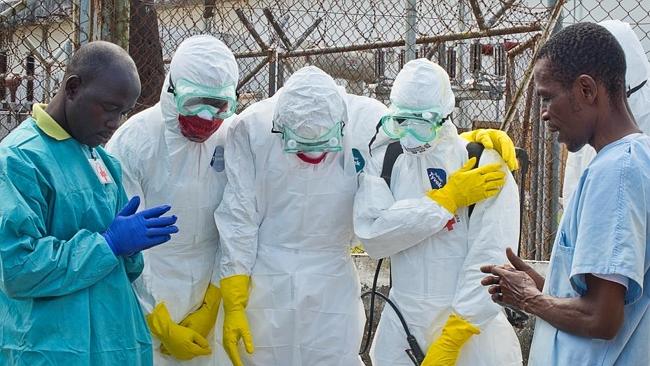
Two police officers in New York were spotted whilst dumping their hazmat (protective clothing) gear in a public area. This caused major outrage among New Yorkers with claims stating that they were negligent and not suitable for protecting US citizens.

Exaggeration and precautions

Although a deadly virus and certainly a contagious one, Ebola is still well contained and quarantined.
In New York City, there’s one confirmed Ebola patient, his name is Dr Spencer and the NYPD locked down his apartment. They were overly prepared and sent a lot of officers down there so much that a lot of them hadn’t even been near the apartment nor the building in which it was situated. However, every police officer was given a respirator and hazmat clothing. Two of those officers publicly dumped their clothing in a waste bin while they had not come in touch with ebola and had to remove their clothing. In this digital era a lot seemingly outrageous things get captured and in this case the police might have been better off giving their hazmat suits to their superior.
So basically if they were contaminated they would have been very wrong to dump those protective jumpsuits on “the streets” but since they weren’t at all involved in setting up a quarantine or handling a patient they cannot be blamed for “wanting to contaminate the city”.

Country wide contamination

Something as frightening as a contamination of ebola that isn’t contained is not likely to occur in any western countries. In the vast majority of cases of ebola recorded in somewhat western countries the victim was successfully treated, the only parameter on whether someone lives or dies is how soon he is examined/diagnosed. However on a massive scale like the entire US , the virus is far more likely to evolve and become much more tricky to counteract. Do not be alarmed because as I mentioned before the chances of that happening are negligible.

_________________________________________________________________________________________
Sources:
http://theantimedia.org/nypd-caught-dumping-hazmat-gear-ebola-site-street-garbage-can/

New Age Fundraising Makes It Also Possible For Activists To Raise Funds

5

Written by: TechAnonymous


Projects, potions, inventions and ideas… How do they get from your head to your hands? In some cases an idea never makes it any farther than a scribble on a piece of paper. In other cases, an immense amount of scavenging may yield a functional yet prehistoric looking version of said idea. What if a project is not a tangible, “hold in your hands”  assembly of parts, pieces and whatnot? Perhaps it’s an idea to get the voice of a group heard. A project to raise awareness or simply protest? It all comes down to one basic item… money. Dollars, Euros, Pounds etc…

Enter Indiegogo to the rescue. “Indiegogo empowers people to activate the global community to make ideas happen. Then, we help you spread the word.”* Known as a “funding engine”, it’s a simple to use tool that can help your ideas reach out to countless numbers of people; especially the ones that think it could be a fantastic idea but don’t have an endless amount of money to invest in you. Donations to your campaign idea can be made by credit card, Paypal and now with Apple Pay, the one touch payment system for phones.

It’s a chance; what more could we ask for? “What kinds of ideas have been brought forth already Tech Anon?” Glad you asked! One group of people in Australia thought it might bring awareness to what they think are some distasteful laws being passed** Their idea is called “educate the senate”. It involved raising money for the purchase of 90 copies of a book called “1984”. These books would be bought and sent with a pleasant and personalized letter to each of the people in their senate in hopes they would read them and see where the people believe they are moving toward. The possibilities are endless as long as they are “on the up and up”.

dngjztmlikrga6nf0skf


Head Image From Educate The Senate Campaign On Indiegogo 

Even more recently in Pennsylvania, $22,000 was raised in 5 days in order to purchase James Tully a car. Who is he? He is a man that was mistaken for Eric Frein (who is accused of killing a PA State trooper and wounding another) Mr. Tully is one of those folks that is well liked in his community and does what he has to, including walking to work every day in all kinds of weather to support his kids. He was stopped over 20 times and put to the ground a few of those times by federal and state officers even though he was wearing a day glo vest and wearing his work ID out in the open… some good quality cowboy crap there.

To those of you Anonymous out there whose bell rang when we touched on these points, Anonymous encourages you to start trying to raise money for your ideas or lawful protests and gatherings. Not only are your chances good for raising the funds to keep awareness moving, you’ll also help spread the word of what you’re trying to do by using the funding engine. If for some reason your project or idea is not acceptable to this particular fundraising platform, we ask that you send an email to AnonHQ about it. If there are enough emails and enough interest, AnonhQ  can start our own crowdfunding service for an idea!

There are other campaigns for inventions, raising awareness and even law abiding protests. So, give it a shot, start a campaign! Make a difference!

___________________________________________________________________________________________

Sources:

*https://www.indiegogo.com/

**https://www.indiegogo.com/projects/educate-the-senate

How Long Would It Take To Pay Of The US Government Liabilities?!

15

Written by: TechAnonymous


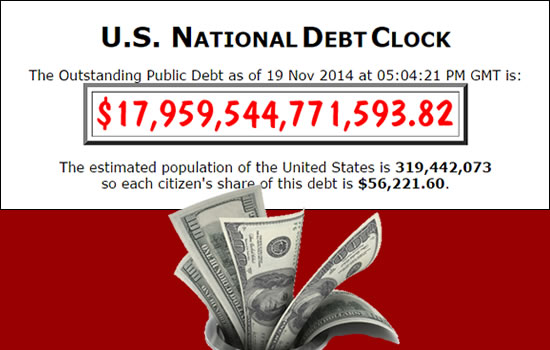
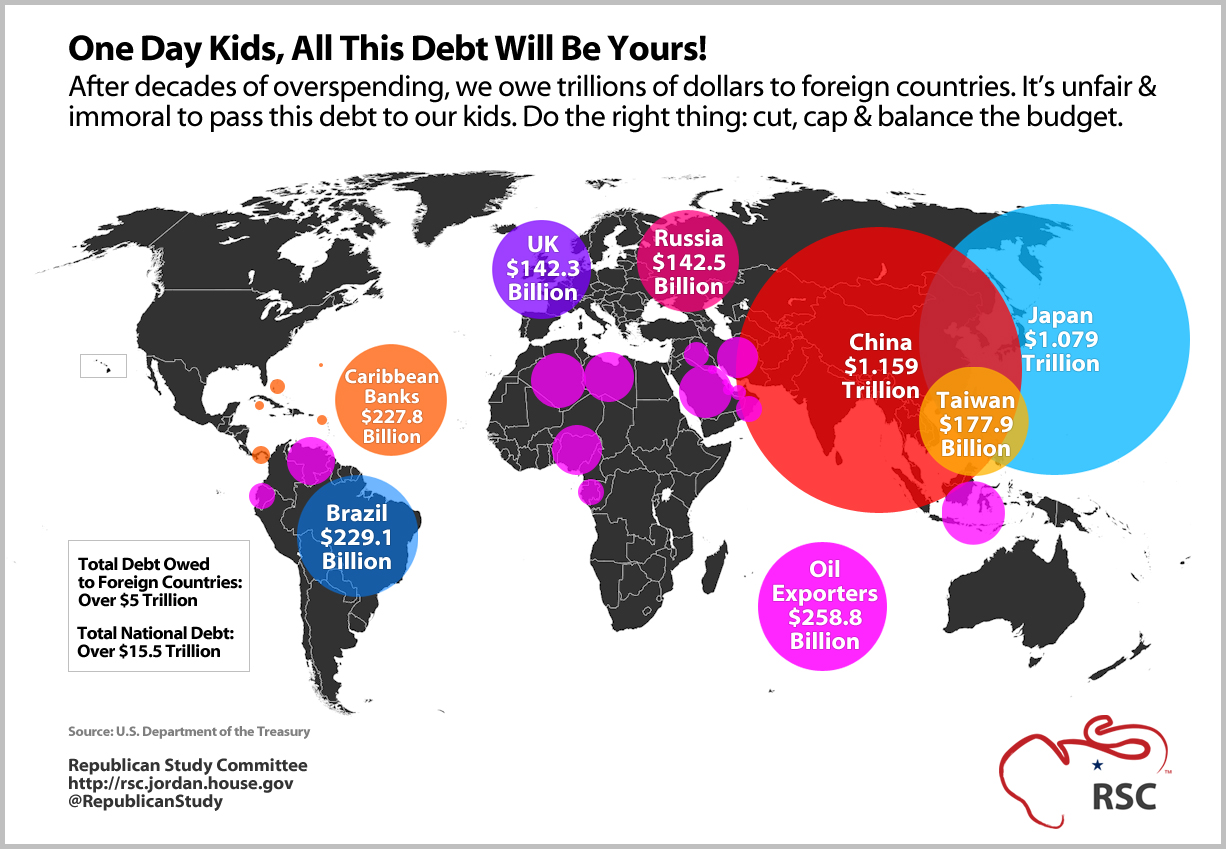
17.9 Trillion dollars… Trillion.  That is the US national debt right now. The “unfunded liabilities”, are somewhere around 250 trillion*** (being vague of course) Got that? It seems to be a bit more than a pocket full of shells. How exactly do you wrap your mind around a number like that? You can try just writing it down. It looks like this: $17,900,000,000,000. It still doesn’t seem real. (Click to enlarge the picture below)

e1abf5b1-f1ff-4597-bb41-c7af76ccabc1


US Debt To Foreign Countries

“I was finally able to get a new car for $28,000 and it’ll only take me 6 years to pay that off”.

Bravo! for being able to get that car and being able to put that arithmetic into perspective! You are definitely ahead of the curve in some cases!

“I bought a small house in Illinois for $158,000 and I’ll be able to pay that off in 25 years”

In a world where the rich are getting richer, the poor worse off and the middle class disappearing?  You rock! Keep up the great work!

How about that 18 trillion though? All kidding aside, we know there are people out there who have the prowess to understand these high end numbers that seem to come from an old science fiction movie because they work with them every day. Unfortunately there’s just as many people who rely on fingers plus toes equals 20 (men, if you’re creative you can get to 21). How do you even attempt to break down or compare something like this so that anyone and everyone can understand the gruesome reality of it?

According to “Notes for Apres la Guerre Part 2: Banking and Financial Market Theory”

How do we define the sizes of economies?  In dollars?  Nope.  These systems should be measured in terms of a transcendent, invariant unit.  Currencies are, by definition, variant, because they are constantly changing relative to one another.  This includes the dollar, which is itself measured against a BASKET of other currencies.  I propose that GDP should be measured in the unit of MAN HOURS or MAN YEARS.  $20 per hour average wage.  2000 hour average work year.  Because the buying power of an average man hour or man year shouldn’t change much at all.  Think about it.

So, if we take the latest bee-ess GDP for the former US of $16.8 trillion, and if we use an average wage of $20 per hour, or $40,000 per year, we get an economy of 840 billion man hours, or 420 million man years.

Puts a different spin on it, huh?  Now, you really want your mind blown? Now do it with the unfunded liabilities of the FEDGOV (conservatively $250 trillion).

450 million man years, and 6.25 billion man years respectively.”

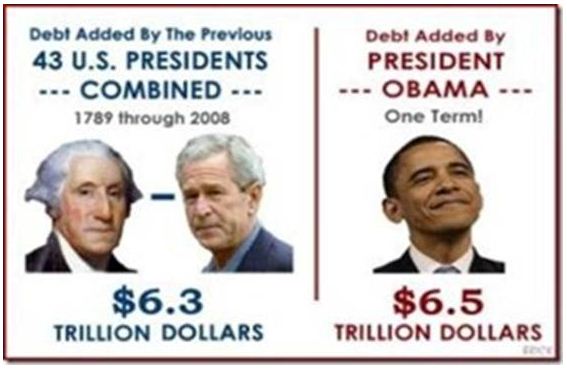
US-Debt


Ok, who understands “man hours” or “man years”? That’s what I thought.

That helps it all make sense now doesn’t it? If all that did was perplex you even more, hit the old reset button on your mind and let’s try to get this into some sort of perspective everyone can grab hold of.  Let’s just hang with the $18 trillion dollar debt. Pretty much everyone out there in internet-land is familiar with New York City. The city that never sleeps, The Big Apple etc…  According to labor stats* (To make things a little easier, we’ll round off the numbers) there are a little more than 3,500,000 that work full time in NYC every day. The average median income is approx. $63,000 a year. SO! In one year (before taxes) those people will make a little more than 220 Billion dollars. So far, so good.

The average working life of one person is say… 50 years. So long as the number of working folk stays the same (due to new workers and retirees rotating through) We can do some “not so fancy” math and figure out that if every single worker would give every single dollar toward the debt, (drum roll please) your GREAT grandchildren would still have about 7 trillion dollars left to pay! If the train stayed on the track? THEIR great grandchildren might actually see a zero balance! It would only take about 7 generations of all of their families by very rough calculations. If you and the family want to eat and have a room to live in, it may take slightly longer. It’s definitely not an appealing idea is it?

Let’s have ourselves a silly comparison now. Some sources claim that the stack of money required to pay the 18 trillion would be as high as a skyscraper. How many people have actually seen one in person though? According to map software, the distance between NYC and San Francisco is  about 2900 miles. A $100 bill is 6 inches long. If lay out $100 bills end to end from NYC to San Francisco you would have $3,026,400,000 (3 billion plus dollars). If you used packs of 100 instead of single bills? You would have a little over 3 trillion dollars laying on the roads.  (which is probably the closest any of this money would ever get to the roads). Finally, if we lay 5 more lines of these $100 bill packs alongside the first? We now have a 15 inch wide strip of money a half an inch thick running from one coast to the other just to pay of our basic debt.

Let’s go one more comparison. A football field…  Even if you cannot stand American football, you still probably know how big a football field is right? I’m referring to just the field, not the end zones. 100 yards (91 meter) long, 53.3 yards (49 meter) wide. If we covered the field with stacks of $100 bills from side to side and end to end the stack of hundred dollar bills would be a little taller than the average two story house.  Are you angry yet? Make sure to call your local politicians and thank them.

__________________________________________________________________________________________

Sources:

*http://labor.ny.gov/stats/nyc/index.shtm

**http://www.newdestinyhousing.org/get-help/area-median-income-ami-chart

***http://wtfrly.com/2014/10/31/it-will-take-6-25-billion-man-years-to-pay-off-federal-government-liabilities-a-mathematical-impossibility/#.VGFO2rl0yM9