President Trump on Friday said that he had ordered US companies to stop exporting crucial medical supplies and equipment to ensure that American hospitals and health care facilities have the life-saving supplies they need to battle the coronavirus pandemic.
“The secretary of Homeland Security will work with FEMA to prevent the export of N95 respirators, surgical masks, gloves, and other personal protective equipment. We need these items immediately for domestic use. We have to have them,” Trump said at the White House during the daily briefing of the Coronavirus Task Force.
India Bans All Exports of Virus Drug Often Touted by Trump
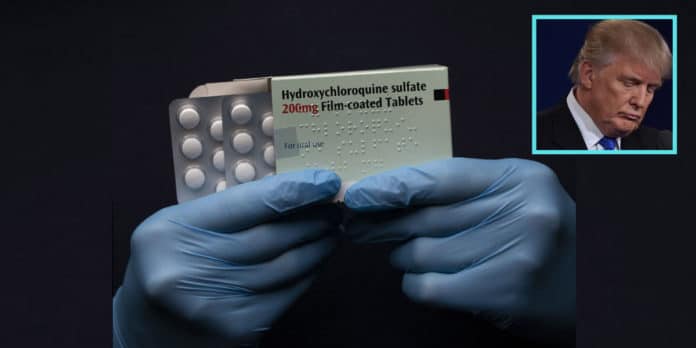
Just 2 days later after Trump’s banning spree, India announced that it banned all exports of hydroxychloroquine, a malaria drug that President Donald Trump has repeatedly touted as a “game changer” in the fight against Covid-19.
Exports of the drug and its formulations are prohibited “without any exceptions” and with immediate effect, India’s Directorate General of Foreign Trade said in an April 4 order on its website. The trade regulator had last month restricted overseas shipments of the drug, allowing only limited exceptions such as on humanitarian grounds and for meeting prior commitments.
At a press conference on Saturday, Trump said he spoke to Indian Prime Minister Narendra Modi and appealed for the release of shipments U.S. has already ordered. India is giving his request “serious consideration,” he said.
On Sunday, Trump continued to promote the drug, saying the U.S. has secured 29 million choloroquine or hydroxychloroquine pills for its medical stockpile, again touting the drug’s promise despite an absence of scientific scrutiny. Saying he was “trying to save lives,” the president asked “what really do we have to lose?”
“I’ve seen things I sort of like,” Trump said at a White House news conference. “What do I know, I’m not a doctor. But I have common sense.”
U.S. Surgeon General Jerome Adams on Sunday said there had been “some accounts, some stories” about hydroxychloroquine “helping” and the drug has been available for years.
“We feel a little bit better regarding its safety than we do about a completely novel drug, even though this is being used at much higher dosages,” Adams said on “Fox News Sunday”
There’s no conclusive scientific evidence that hydroxychloroquine can treat the infection from the novel pathogen, and it hasn’t been approved by the Food and Drug Administration in the U.S. to treat Covid-19.
Trump has been undeterred, though. “What do you have to lose? Take it,” the president said at Saturday’s briefing. “I really think they should take it. But it’s their choice.”
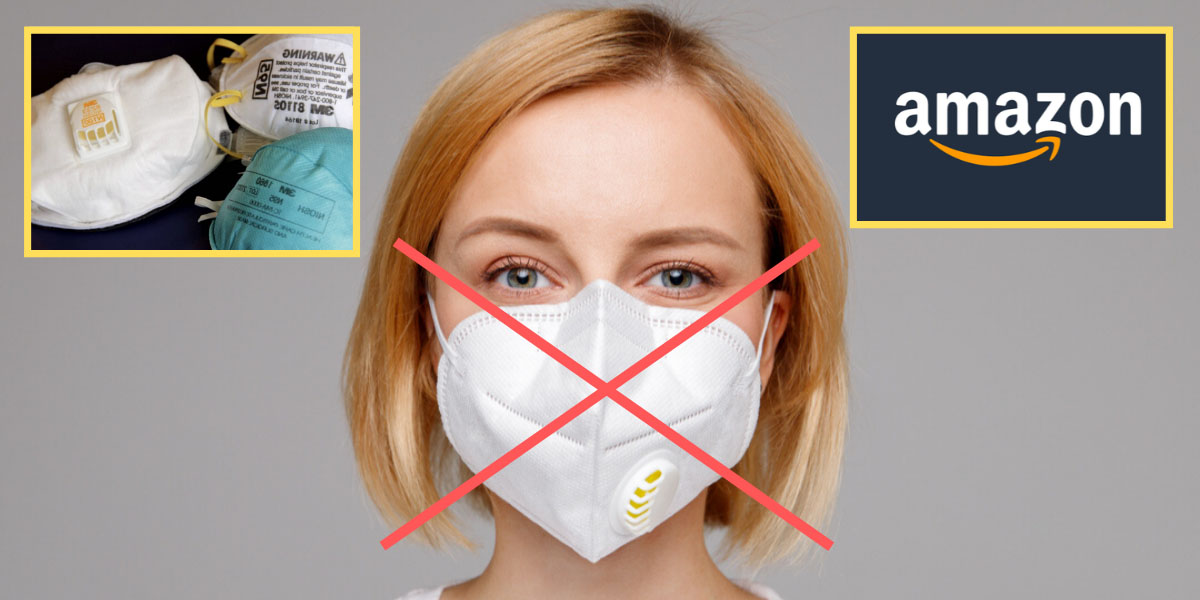
Amazon Bans Sale Of N95 And Surgical Masks To General Public – Where Can I Buy N95 Masks Now?
Amazon has banned the sale of N95 and surgical masks to the general public, claiming it would restrict sales to hospitals and government organizations dealing with the COVID-19 pandemic.
The ban took effect April 1, according to Recode, after the company said in a forum for Amazon sellers that the ban includes “facial shields, surgical gowns, surgical gloves, and large-volume sanitizers.”
Hospitals and governments can qualify to purchase said items by filling out a form, while Amazon will be eliminating the commission it usually charges sellers in order “to encourage our selling partners to make additional inventory of these products available at competitive prices to these customers with the greatest need.”
The move is the latest drastic change Amazon has made to its business practices amid the global pandemic that has upended billions of lives and economies across the globe. Amazon has become a lifeline to essential goods during this time for millions of customers ordered to stay at home and those fearful of shopping in stores during the crisis.
In mid-March, faced with merchandise shortages in the United States and Europe due to the pandemic, Amazon instituted sweeping changes on which products it will store and ship from its warehouses, in a move it said was aimed at keeping essential items in stock and speeding up orders. –Recode
Two weeks ago, the Seattle-based e-retailer said that it would be “temporarily prioritizing household staples, medical supplies, and other high-demand products coming into our fulfillment centers so that we can more quickly receive, restock and deliver these products to customers,” meaning it will no longer accept new shipments to warehouses for discretionary items through at least April 5.
Where Can I Buy N95 Masks?
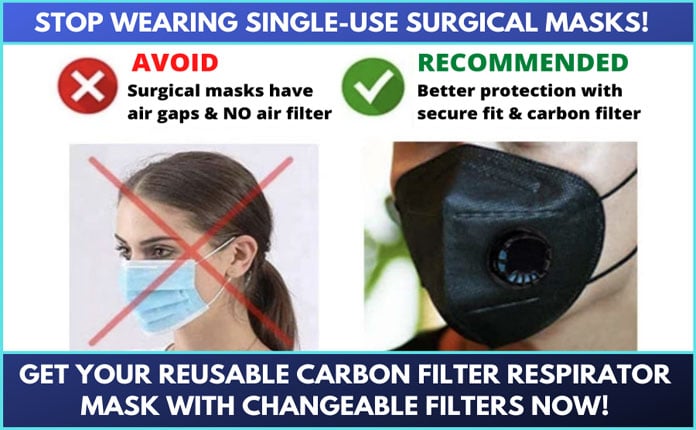
With Pharmacies, Walmart and nearly all other physical stores out of stock, Amazon out of the game and ebay selling mostly gas masks from China, there’s not much place left to buy N95 masks to protect yourself in th Covid-19 crisis.
Even on ebay, N95 masks are sold out.
As you may already know, the Darknet is selling pretty much everything that is hard to get by in stores or completely illegal. So even if you come by to find a shady shop or entity selling overpriced masks, you never know if they really are what they are advertised (N95 standard) and work and you also never know if they will ever arrive. However, there are still some online shops that are selling the very last N95 masks, one of them being a small company called Amazyble.com.
A man in Russia has shot dead five people for talking loudly outside his house late in the evening.
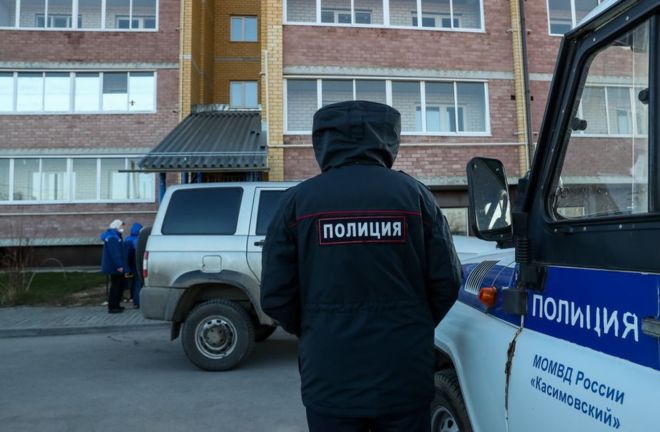
Police said the shooting happened in the village of Yelatma, in the Ryazan region about 200km (124 miles) south-east of Moscow.
The area is currently under lockdown due to the coronavirus. Investigators say the man initially complained to the group from his balcony, and an argument broke out. He then opened fire with a hunting rifle. The four men and one woman “died of their injuries on the spot” at around 2200 on Saturday, the Investigative Committee said.
The suspect, who has not been named, was later arrested. His apartment has been searched and the weapon seized.
Russia sees no epidemic but starts shutdown
Russia is beginning what Vladimir Putin called a “non-working week”, to try to slow the spread of the coronavirus.
The government is urging people to stay at home, though mixed messaging has left many Russians confused. Officials now hint the new restrictions could be extended beyond 5 April, depending on the health situation. The number of Russians infected with Covid-19 passed 1,000 on Friday, with most cases detected in Moscow.
Based on that figure, the Kremlin spokesman has stressed that there is “de facto no epidemic” here, comparing Russia’s position favourably with the crisis in Europe. And whilst state TV’s rolling news channel has changed its name to We’re Staying Home – broadcasting from presenters’ living rooms – many people are struggling to adjust after its previous insistence that Covid-19 was a “foreign threat”.
So when Putin announced a paid week off work for all, there was a rush to book holidays.
‘Not a holiday’
The governor of Krasnodar region, which includes the Black Sea resort of Sochi, had to order the closure of all shopping centres, parks and restaurants – and limit flights – after hotel reservations sky-rocketed.
“This is not a week of extra leave or holiday,” explained Benjamin Kondratiev on Instagram, clarifying the president’s speech. He added his own call for “self-discipline” to get through what he called the “bad period” of coronavirus.
Many Muscovites have already headed out of town to their dachas, or summer houses.
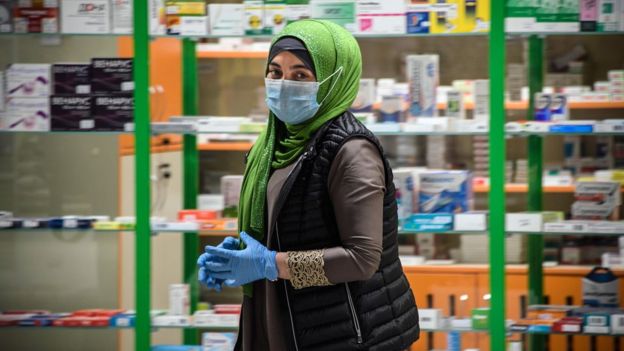
More Muscovites have been wearing face masks in recent days.
In Moscow, there has been a noticeable increase in people in facemasks on the streets since Mr Putin’s national address.
Supermarket staff have begun wearing them and there are bottles of hand sanitiser in coffee shops.
Food shops will remain open, as well as other essential services, but from this weekend cafes and restaurants can offer takeaway only.
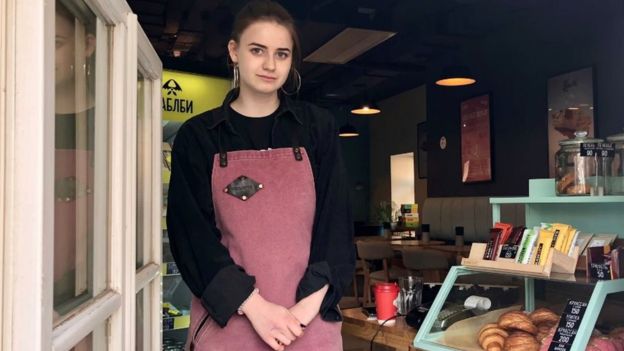
At one popular coffee chain, a barista who’s now selling drinks through a window said coronavirus was the only topic of conversation these days, and that people were worried.
This barista is selling fresh coffee from a window but Moscow’s economy is already being hit.
Her own hours have been cut; in other sectors, people are already being laid-off.
‘The weather’s great’
Still, some Muscovites can’t understand what the fuss is about.
“There’s deaths from cancer and other diseases all the time and people still go to work, take the metro or go to the park,” Dmitry shrugged, the day before the bicycle-hire shop he works at was closed.
“I’ll definitely be going out on the streets this week,” he said. “The weather’s great!”
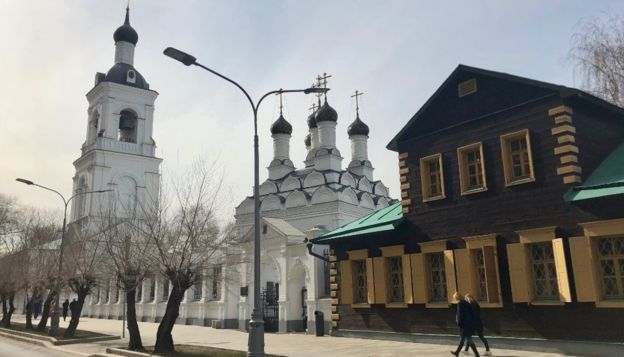
Muscovites have been out enjoying the spring sunshine.
A Latvian man passing with a pushchair was less positive.
“I think these measures are late,” Krist said, on a break from remote-working. “Look at Italy and Spain. People were out and about there, too, and now things are scary.”
Gorky Park, nearby, has already been locked shut for two days.
“We did as we were told,” a security guard said through the fence. “I’m not sure how long it will go on for.”
The Kremlin says the new restrictions are for a week, “for now”, although in Moscow people over 65 have already been told to stay inside until mid-April.
The mayor cancelled their free transport passes, just in case any were tempted to test the new rules.
Update: Even more prophetically, billionaire hedge fund manager Bill Ackman tweeted about his “optimism” and the need for
“…Hydroxychloriquine and antibiotics appear to help. There is increasing evidence that the asymptomatic infection rate could be as much as 50X higher than expected.
If this is true, the severity and death rate could be much lower than anticipated, and we could be closer to herd immunity than projected. Highly accurate antibody tests are scaling production and distribution which will definitively answer this question hopefully soon.
One could imagine a world in the next few months where everyone is tested and all but the immune-compromised go back to a socially distanced but more normal life.
We wear bracelets or carry a phone certificate which indicate our status, and track infections where they emerge…”
Yay, let’s all cheer for antibody-based freedom.
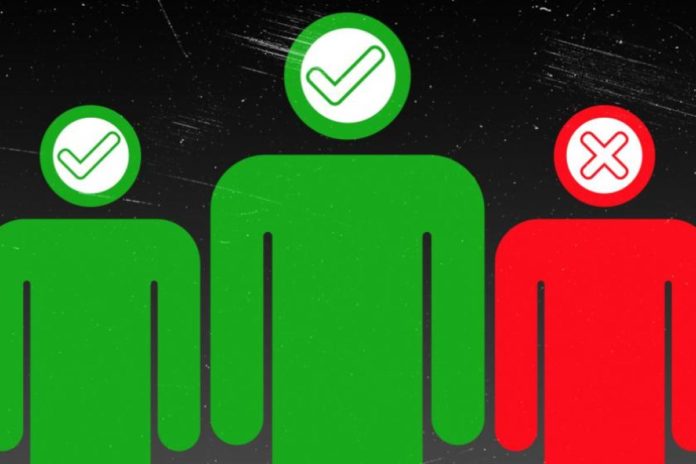
The rollout of immunity certificates across the world will likely be government-issued to first responders and citizens who have developed resistance to COVID-19.
People who have contracted the virus and have recovered, normally develop antibodies to fight the virus, could be their golden ticket to escape regions that have strict social distancing measures and or lockdowns.
Just imagine, immunity certificates granted by governments to people who have recovered or have developed resistance to the virus could be considered special passports that will allow them to freely travel across states, countries, and or the world — while everyone else remains hunkered down in their homes or doomsday bunkers.
Some of the first talks of this has originated in the UK. The government could roll out immunity passports to Britons who have already contracted and recovered from the virus so they can reenter the economy, reported The New York Times.
“(An immunity certificate) is an important thing that we will be doing and are looking at but it’s too early in the science of the immunity that comes from having had the disease,” health minister Matt Hancock said at a Downing Street press conference.
“It’s too early in that science to be able to put clarity around that. I wish that we could but the reason that we can’t is because the science isn’t yet advanced enough,” Hancock said.
UK Health Secretary: "We are looking at an immunity certificate. How people who have had the disease, have got the antibodies, and therefore have immunity, can show that, and so get back… as much as possible to normal life." pic.twitter.com/SVLV8U2YwG
Prime Minister Boris Johnson’s spokesman said Britain was completing due diligence in how feasible immunity passports would be.
Hancock said a blood test was in development that could test whether people already had the virus or had the antibodies that would make them resistant to the infection.
In Germany, researchers are preparing a study that would see if people already immune to the virus could reenter the workforce and be granted immunity passports.
In Italy, the conservative president of the northeastern Veneto region has proposed an immunity passport for people who possess antibodies that show they are resistant to the virus.
The former prime minister, Matteo Renzi, has called it a “Covid Pass” for the uninfected who can return to their normal lives.
Immunity passports and “intermittent lockdowns” could become a reality in the months, quarters, or at least in the next several years – as the virus could be sticking around a lot longer than many have anticipated.
Talk of these special passports surfaced in American politics last week when House Democratic Caucus Chairman Mike Stewart called on Tennessee Gov. Bill Lee to implement an “Immunity Certificate” for first responders and healthcare professionals.
Stewart said first-responders who have the antibodies and are immune to the virus should be shifted onto the frontlines.
“We need to get the resources in place to test all of our healthcare workers so we know which ones can work without fear of COVID-19 and which ones need maximum protection against the VIRUS,” Stewart said.
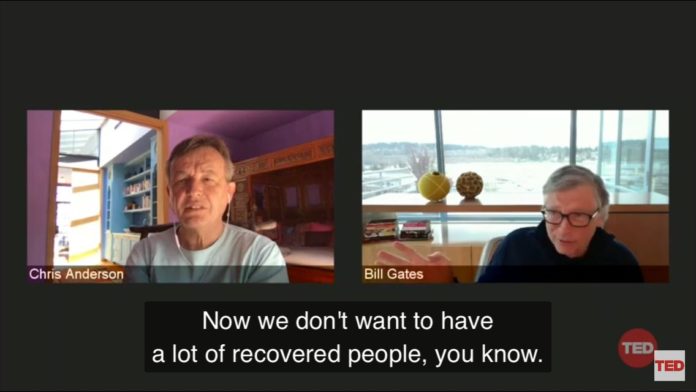
And for more confirmation that immunity passports are going to be the next big thing in the Western world, or maybe across the globe. Here is Bill Gates on March 24, giving a 50-minute interview to Chris Anderson, the Curator of TED, the non-profit that runs the TED Talks.
Right at 34:14, Gates discussed how the future in a post-corona world would be. He said:
Eventually what we’ll have to have is certificates of who’s a recovered person, who’s a vaccinated person…
…Because you don’t want people moving around the world where you’ll have some countries that won’t have it under control, sadly.
On March 24 Bill Gates gave a highly revelatory 50-minute interview to Chris Anderson (video embedded at the footer of the article). Anderson is the Curator of TED, the non-profit that runs the TED Talks.
The Gates interview is the second in a new series of daily ‘Ted Connects’ interviews focused on COVID-19. The series’s website says that:
TED Connects: Community and Hope is a free, live, daily conversation series featuring experts whose ideas can help us reflect and work through this uncertain time with a sense of responsibility, compassion and wisdom.”
“You wrote that this could be the once-in-a-century pandemic that people have been fearing. Is that how you think of it, still?” queried Anderson.
“Well, it’s awful to say this but, we could have a respiratory virus whose case fatality rate was even higher. If this was something like smallpox, that kills 30 percent of people. So this is horrific,” responded Gates.
“But, in fact, most people even who get the COVID disease are able to survive. So in that, it’s quite infectious – way more infectious than MERS [Middle East Respiratory Syndrome] or SARS [Severe Acute Respiratory Syndrome] were. [But] it’s not as fatal as they were. And yet the disruption we’re seeing in order to knock it down is really completely unprecedented.”
Gates reiterates the dire consequences for the global economy later in the interview.
“It is really tragic that the economic effects of this are very dramatic. I mean, nothing like this has ever happened to the economy in our lifetimes. But … bringing the economy back and doing [sic] money, that’s more of a reversible thing than bringing people back to life. So we’re going to take the pain in the economic dimension, huge pain, in order to minimize the pain in disease and death dimension.”
However, this goes directly against the imperative to balance the benefits and costs of the screening, testing and treatment measures for each ailment – as successfully promulgated for years by, for example, the Choosing Wisely campaign – to provide the maximum benefit to individual patients and society as a whole.
As noted in an April 1 article in OffGuardian, there may be dramatically more deaths from the economic breakdown than from COVID-19 itself.
“By all accounts, the impact of the response will be great, far-reaching, and long-lasting,”
Kevin Ryan wrote in the article. Ryan estimated that well over two million people will likely die from the sequelae of the lock-downs and other drastic measures to enforce ‘social distancing.’
Millions could potentially die from suicide, drug abuse, lack of medical coverage or treatment, poverty and lack of food access, on top of other predictable social, medical and public-health problems stemming from the response to COVID-19.
Gates and Anderson did not touch on any of those sequelae. Instead, they focused on rapidly ramping up testing and medical interventions for COVID-19.
Gates said at 30:29 in the interview that he and a large team are moving fast to test anti-virals, vaccines and other therapeutics and to bring them to market as quickly as possible.
The Gates Foundation and Wellcome Trust with support from Mastercard and now others, created this therapeutic accelerator to really triage out [candidate therapeutics]…
You have hundreds of people showing up and saying, ‘Try this, try that.’ So we look at lab assays, animal models, and so we understand which things should be prioritized for these very quick human trials that need to be done all over the world.”
Not long before that, on January 23, Gates’s organization the Coalition for Epidemic Preparedness Innovations (CEPI) announced it will fund three programs to develop COVID-19 vaccines. These are the advancing of DNA-vaccine candidates against MERS and Lassa fever, the development of a “‘molecular clamp’ platform” that “enables targeted and rapid vaccine production against multiple viral pathogens,” and the manufacture and Phase 1 clinical study of an mRNA vaccine against COVID.
“The programmes will leverage rapid response platforms already supported by CEPI as well as a new partnership. The aim is to advance nCoV-2019 vaccine candidates into clinical testing as quickly as possible,” according to a news release.
Then at 32:50 in the video, Anderson asked whether the blood serum from people who have recovered from a COVID infection can be used to treat others.
“I heard you mention that one possibility might be treatments from the serum, the blood serum of people who had had the disease and then recovered. So I guess they’re carrying antibodies,” said Anderson.
“Talk a bit about that and how that could work and what it would take to accelerate that.”
[Note that Anderson did not ask Gates about, instead, just letting most of the population – aside from people most vulnerable to serious illness from the infection, who should be quarantined — be exposed to COVID-19 and as a result very likely recover and develop life-long immunity. As at least one expert has observed, “as much as ninety-nine percent of active cases [of COVID-19] in the general population are ‘mild’ and do not require specific medical treatment” to recover.]
“This has always been discussed as, ‘How could you pull that off?’” replied Gates.
“So people who are recovered, it appears, have very effective antibodies in their blood. So you could go, transfuse them and only take out white cells, the immune cells.”
However, Gates continued, he and his colleagues have dismissed that possibility because it’s “fairly complicated – compared to a drug we can make in high volume, you know, the cost of taking it out and putting it back in probably doesn’t scale as well.”
Then a few seconds later, at 33:45, Gates drops another bomb:
We don’t want to have a lot of recovered people…
To be clear, we’re trying – through the shut-down in the United States – to not get to one percent of the population infected. We’re well below that today, but with exponentiation, you could get past that three million [people or approximately one percent of the U.S. population being infected with COVID-19 and the vast majority recovering]. I believe we will be able to avoid that with having this economic pain.”
It appears that rather than let the population be exposed to the virus and most develop antibodies that give them natural, long-lasting immunity to COVID-19, Gates and his colleagues far prefer to create a vast, hugely expensive, new system of manufacturing and selling billions of test kits, and in parallel very quickly developing and selling billions of antivirals and vaccines.
And then, when the virus comes back again a few months later and most of the population is unexposed and therefore vulnerable, again selling billions of test kits and medical interventions.
Right after that, at 34:14, Gates talked about how he sees things rolling out from there.
Eventually what we’ll have to have is certificates of who’s a recovered person, who’s a vaccinated person…
…Because you don’t want people moving around the world where you’ll have some countries that won’t have it under control, sadly.
You don’t want to completely block off the ability for people to go there and come back and move around.
So eventually there will be this digital immunity proof that will help facilitate the global reopening up.”
[Some time on the afternoon of March 31 the last sentence of this quote was edited out of the official TED video of the interview. Fortunately, recordings of the complete interview are archived elsewhere.]
In the October 2019 Event 201 novel-corona virus-pandemic simulation co-sponsored by the Bill & Melinda Gates Foundation, the World Economic Forum and a division of the Johns Hopkins Bloomberg School of Public Health, a poll that was part of the simulation said that 65% of people in the U.S. would be eager to take a vaccine for COVID-19, “even if it’s experimental.”
This will be tremendously lucrative.
Vaccines are very big business: this Feb. 23 CNBC article, for example, describes the vaccine market as six times bigger than it was 20 years ago, at more than $35 billion annually today, and providing a $44 return for every $1 invested in the world’s 94 lowest-income countries.
Notably, the Bill & Melinda Gates Foundation – which has an endowment of $52 billion – has given more than $2.4 billion to the World Health Organization (WHO) since 2000, according to a 2017 Politico article. (While over the same time frame countries have reduced their contributions to the world body, particularly after the 2008-2009 depression, and now account for less than one-quarter of the WHO’s budget.) The WHO is now coordinating approximately 50 groups around the world that are working on candidate vaccines against COVID-19.
The Politico article quotes a Geneva-based NGO representative as saying Gates is “treated liked a head of state, not only at the WHO, but also at the G20,” and that Gates is one of the most influential people in global health.
Meanwhile, officials around the world are doing their part to make sure everyone social distances, self-isolates and/or stay locked down.
For example, here’s Toronto’s Medical Officer of Health, Dr. Eileen DE Villa, at her and Toronto Mayor John Tory’s March 30 press briefing:
“We find ourselves in the midst of a global pandemic. We should expect some more people will get sick – and for some, sadly, will die.
This is why it is so important to stay at home to reduce virus spread. And to protect front-line workers, healthcare workers and our essential workers, so they can continue to protect us. People shouldn’t have to die, people shouldn’t have to risk death taking care of us because others won’t practice social distancing or physical distancing.”
Yet look how close Ontario’s Chief Medical Officer of Health, Dr. David Williams, is sitting to Haley Chazan, Senior Manager, Media Relations, for Christine Elliott, Deputy Premier and Minister of Health of Ontario.
This was on Friday, March 27, just before the start of that day’s daily press conference by Dr. Williams and Ontario’s Associate Medical Officer of Health Dr. Barbara Yaffe:
They were sitting two seats, or just a couple of feet, apart. A short time later Chazan got up and stood even closer to Dr. Williams for a little while:
Dr. Williams and Chazan do not live together. Rather, Dr. Williams very likely knows – just as Gates knows – that there is little any reason to worry about being in close contact with other people unless you or they are vulnerable to developing a severe illness from COVID-19. He surely knows, also, that if you contract COVID-19 and you’re otherwise healthy you’ll very likely have few symptoms, if any, and recover quickly. And that this exposure in fact is beneficial because in the process you will develop antibodies to the virus and have natural, long-lasting immunity to it.
Yet in the March 27 press conference, just like all the others he has participated in during the COVID-19 crisis, Dr. Williams lectured the public about maintaining social distancing. He told people not to go outside on the coming weekend to enjoy the nice weather because, otherwise, they might walk past someone and not be two metres apart.
Dr. Williams is among the large cadre of powerful officials who’ve crashed the global economy by forcing tens of millions of small- and medium-sized businesses to close in the name of the need for forced, severe, social distancing and lock-downs.
They’ve shattered society, suspended most civil liberties and prohibited most activities and connections that kept people mentally and physically healthy. At the same time the officials have prioritized COVID-19 care over everything else and, as a result, severely limited billions of people’s access to life-saving healthcare services ranging from acquiring medication and blood transfusions to having organ transplants and cancer surgeries.
* * *
Rosemary Frei has an MSc in molecular biology from a faculty of medicine and was a freelance medical journalist for 22 years. She is now an independent investigative journalist in Canada. You can find her recent detailed investigative analysis of COVID here and follow her on Twitter.
Ecuador’s major port city of Guayaquil has become a scene of absolute horror as health authorities appear unable to contain the rapid spread of the coronavirus, resulting in corpses being abandoned in the streets.
The sudden spread of the disease in the Andean nation has made the country the epicenter of the pandemic in Latin America, with regional newspapers dubbing Guayaquil “The Wuhan of Ecuador.”
According to officials, over 400 bodies have been recovered both from the streets and from empty buildings. The situation has rapidly overwhelmed funeral homes and mortuaries in the city of 3.6 million, reportsEFE news agency.
On Wednesday, Vice Minister of Comprehensive Healthcare Ernesto Carrasco announced that the South American country’s Emergency Operations Committee had registered 3,163 infections and 120 deaths, with 82 of the deaths occurring in Guayas province, whose capital is Guayaquil.
However, Associated Pressreports that medical professionals believe the true number of coronavirus cases may be at least five times the official count.
Shocking video shared online showed people collapsing in the middle of the streets and corpses being draped in cloth by loved ones or burned in the open by frightened residents, while images have filtered out depicting coffins strewn throughout the city—suggesting that authorities haven’t yet tallied the recent wave of deaths.
Guayaquil Mayor Cynthia Viteri, who has announced that she has also been infected, has demanded that the federal government of President Lenin Moreno should step up efforts to collect bodies, reportsLos Angeles Times.
In a video message posted to Twitter, she said:
“They’re leaving them in the villages, they fall in front of hospitals … No one wants to recover them.”
The federal government has come under sharp criticism for its handling of the pandemic as well as for the neoliberal policies enforced prior to the crisis, which saw thousands of nurses, doctors, and healthcare workers being sacked since President Moreno came to power in May 2017.
Moreno has backtracked on a proposal to dig a mass grave for the dead in Guayaquil as the city’s ruling Social Christian Party has insisted on residents receiving a proper “Christian burial.”
In the meantime, very few coronavirus tests have been made available to the public, with the cost of testing being far too expensive for most Ecuadoreans.
Along with the spiraling mortality rates, the government’s poor handling of the crisis has raised fears that the spread of CoViD-19 will be far more widespread than the government is willing to acknowledge—as well as a terrifying preview of what awaits the broader region.
This website uses cookies to improve your experience. We'll assume you're ok with this, but you can opt-out if you wish.AcceptRead More
Privacy & Cookies Policy
Privacy Overview
This website uses cookies to improve your experience while you navigate through the website. Out of these, the cookies that are categorized as necessary are stored on your browser as they are essential for the working of basic functionalities of the website. We also use third-party cookies that help us analyze and understand how you use this website. These cookies will be stored in your browser only with your consent. You also have the option to opt-out of these cookies. But opting out of some of these cookies may affect your browsing experience.
Necessary cookies are absolutely essential for the website to function properly. This category only includes cookies that ensures basic functionalities and security features of the website. These cookies do not store any personal information.
Any cookies that may not be particularly necessary for the website to function and is used specifically to collect user personal data via analytics, ads, other embedded contents are termed as non-necessary cookies. It is mandatory to procure user consent prior to running these cookies on your website.