
Home Blog Page 71

Flu & Coronavirus Have Similar Symptoms, But The Coronavirus Is Far More Deadly – Here Is A Quick Comparison

0
  • The flu and the new coronavirus have similar symptoms, but the coronavirus has already proven to be far more deadly.
  • This is what the mortality rates look like in a direct comparison.
    At the end of this article you will find the current figures on cases of illness, deaths and cured people plus a live tracker with numbers in real time worldwide.
  • The outbreak of the corona virus occurred in the middle of the flu season in the northern hemisphere.

Many people have highlighted the overlapping symptoms of the flu and COVID-19, the disease caused by the coronavirus. Even President Donald Trump asked pharmaceutical executives whether the flu vaccine could be used to stop the corona virus.

However, Tedros Adhanom Ghebreyesus, the director general of the World Health Organization, expressly warns against going too far with such comparisons.

The flu and the new coronavirus have similar symptoms, but the coronavirus is far more deadly – here are the two in comparison
ByMedicusPublished on March 22, 2020SHARETWEETCOMMENT

The flu and the new coronavirus have similar symptoms, but the coronavirus has already proven to be far more deadly.

This is what the mortality rates look like in a direct comparison.
At the end of this article you will find the current figures on cases of illness, deaths and cured people plus a live tracker with numbers in real time worldwide.
The outbreak of the corona virus occurred in the middle of the flu season in the northern hemisphere.
Many people have highlighted the overlapping symptoms of the flu and COVID-19, the disease caused by the coronavirus. Even President Donald Trump asked pharmaceutical executives whether the flu vaccine could be used to stop the corona virus.


However, Tedros Adhanom Ghebreyesus, the Director General of the World Health Organization, expressly warns against making such comparisons too far.

“This virus is not a SARS, it is not a MERS and it is not an influenza,” said Ghebreyesus in a press conference on Tuesday. “It is a self-contained virus with specific properties.”

The main difference between the flu and the corona virus is that the latter has been far more deadly so far. While around 0.1% of people who contract the flu ultimately die from it, the coronavirus mortality rate is currently around 3.4% based on the current number of reported cases and deaths.

However, the death rate of the novel coronavirus is still developing as more cases are confirmed. Many health professionals believe that as the number of cases increases, the rate will decrease over time. This is because an estimated 80% of coronavirus cases are mild, while patients checking into hospitals have the most severe symptoms. People with symptoms that are mild enough to recover at home without medical treatment are not included in the official totals.

How the flu and coronavirus mortality rates compare to each other

The novel corona virus, which originated in Wuhan, China, in December has infected 258,052 people and killed 11,277 people, mainly in China. (As of March 20, 8:18 p.m. German time). It has now spread almost worldwide. In the live tracker below, you can get detailed numbers for each country. Germany has confirmed 18,848 cases of illness and 67 deaths.

Older people die of the coronavirus much more often than younger people, and the same goes for the flu – if not to the same extent.

How the mortality rates of the two virus types in different age groups compare:
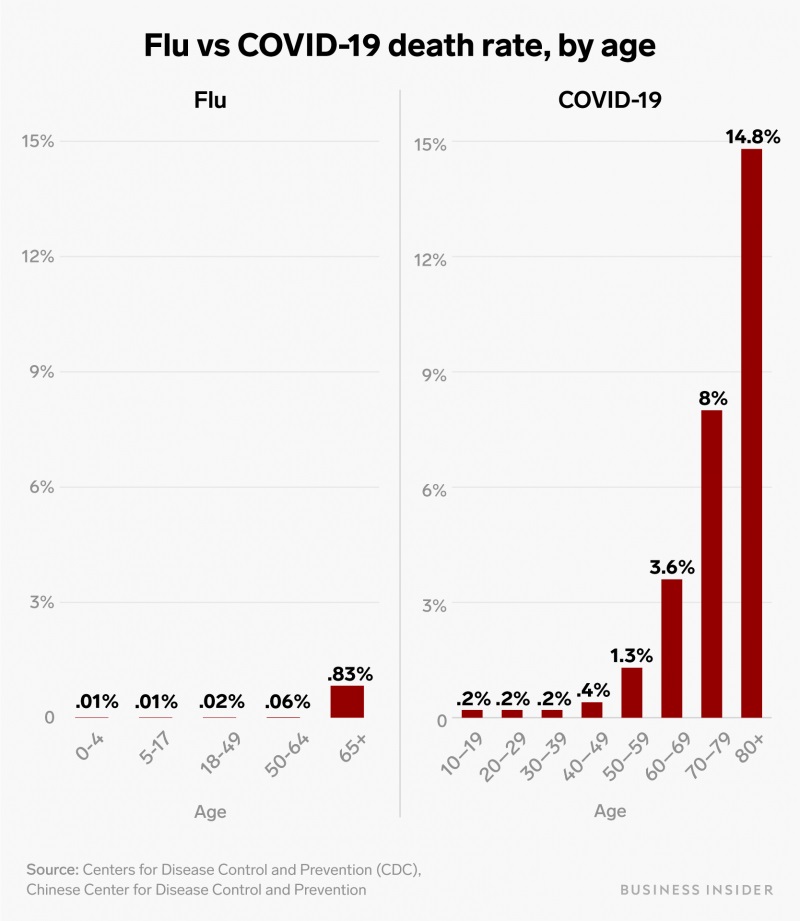
For example, during the 2018-19 flu season, approximately 35 million people contracted the flu in the U.S., and approximately 34,000 of them died, according to the Centers for Disease Control and Prevention. An estimated 32 million people have had the flu there this season, with 310,000 hospitalizations and 18,000 deaths.

The agency estimates the number of flu infections in the United States through its influenza monitoring system, which collects flu data from state and local partners and then projects nationwide sums using infectious disease models.

In the 2018/19 season, approximately one in every 1,000 flu patients died.

However, the breakdown of the numbers by age group shows a somewhat more complex situation. Around 10,000 children died in children. In adults between 50 and 64 years old, about six out of 10,000 people who had the flu died. For people aged 65 and over, however, the rate rose to around 83 out of 10,000.

While the mortality rate from flu is relatively low, it varies depending on the strains of virus that circulate each year. The flu virus also mutates very quickly, so people can be infected with different strains, which is why vaccination is not 100% effective and new vaccines are developed every year.

About 15% of coronavirus patients over the age of 80 have died from it

The corona virus is more deadly than the flu in all age groups, but especially in the elderly. This is the result of studies by the Chinese Center for Disease Control and Prevention, published in mid-February. It also affects people who already have health problems more severely.

According to the Chinese authorities, about four out of every 1,000 died between 10 and 40 years of age who contracted the coronavirus. Meanwhile, 8% of people between the ages of 70 and 79 died, and the rate rises to around 15% among those over 80.

Here’s how the corona virus compares to a number of other serious virus outbreaks:

One reason why the corona virus is more deadly than the flu: it is still new

Ghebreyesus said one reason the coronavirus death rate is so much higher than the flu is that it is the first time that humans have had it.

“While many people around the world have built immunity to seasonal flu strains, COVID-19 is a new virus that nobody is immune to,” he said in the meeting. “This means that more people are susceptible to infections and some will become seriously ill.”

We have vaccines and therapeutic agents to prevent and treat seasonal flu, but no cures for the coronavirus are known. However, scientists are trying to develop treatments and vaccines to stop their spread: biotech company Gilead is testing a drug called Remdesivir, and Moderna has submitted a potential vaccine for initial testing.

Prevention of the spread of the flu and coronavirus

The flu and coronavirus spread in the same way: through virus particles that mediate between people in tiny droplets or saliva and mucus. If a sick person sneezes, coughs or eats at a distance of 1 to 1.5 meters from a healthy person, these particles can land on the healthy person. If the particles get into this other person’s eyes, nose or mouth, they can become infected.

The flu is extremely efficient at spreading to other people before this newly infected person starts to show any symptoms. However, the corona virus does not work exactly the same way.

“According to the data available so far, COVID-19 is not transmitted as efficiently as influenza,” said Ghebreyesus.

That said, containment was still possible, he added.

“We don’t talk at all about curbing seasonal flu – it’s just not possible. But it is possible for COVID-19, “said Ghebreyesus. “We don’t track seasonal flu, but countries should do it for COVID-19 because it prevents infection and saves lives.”

China: Cuban Drug Proves Itself In The Fight Against Corona Virus

0

In the fight against the lung disease COVID-19 caused by the corona virus, a newly developed Cuban drug has proven itself in China. But so far, hardly any notice has been taken of it in western latitudes.

China’s President Xi Jinping recently thanked his Cuban counterpart Miguel Mario Díaz-Canel for supporting the socialist island nation in combating lung disease COVID-19 in China “through preventive and control measures.”

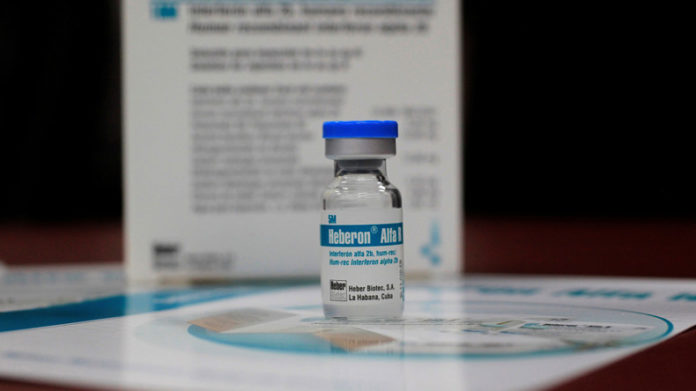
Two days earlier, Xinhua had reported on the Cuban drug called “Interferon Alfa 2B Humano Recombinante”. The Chinese news agency quoted Li Wenlan, director of the Chinese-Cuban pharmaceutical company Changchun Heber Biotechnology, based in Jilin province in northeast China:

“The Chinese National Health Commission has added interferon to the list of medications to prevent and fight the corona virus.”

The director reported that a variant of the drug has been manufactured against various virus-related diseases in China using Cuban technology since 2007. Based on the existing stocks, the Chinese now produced and distributed the new interferon Alfa 2B Humano Recombinante in just 21 days. The director of Changchun-Heber also emphasized that a group of Cuban experts are deployed in China.

There is currently no tested vaccine against the current variant of the corona virus worldwide. But the Cuban pharmaceutical industry offers two drugs that work on a similar principle and have been used successfully in China. One is the said interferon, the other is Biomodulina T. Both serve to strengthen the immune system.

Eduardo Martínez Díaz, director of the leading Cuban pharmaceutical laboratory BioCubaFarma, recalled that the official medical guideline of the Chinese health system recommends 30 drugs. The Cuban-Chinese interferon is mentioned in the first place.

52 Cuban doctors headed to Italy to help in coronavirus fight.

Interferon shows success when used early

The vice director of the Cuban Center for Genetics and Biotechnology (CIGB), Marta Ayala Ávila, told the press that the new interferon will be administered as an inhalation spray. This is the shortest way to get into the lungs and to act in the early phase of the respiratory disease COVID-19 triggered by the corona virus.

Doctors and nurses in China are currently taking the drug as a precautionary measure to strengthen their immune systems. Infected patients are treated as quickly as possible, because the earlier it is used, the greater its effectiveness. Therefore, early detection techniques play a vital role in combating such an epidemic.

Ávila explained that the “interferons” are molecules that the organism produces when it is attacked by a virus. They are the first organic response of the immune system to the viral attack. But the corona virus directly blocks the production of these interferon molecules instead of starting them. The effectiveness of the Cuban biotech drug is that it starts at this point and supplies the organism with the vital molecules.

In previous epidemics caused by variants of the corona virus, such as SARS or MERS, interferons have also been used successfully for the treatment of infected patients.

Biomodulina T. strengthens resistance to respiratory infections

The drug Biomodulina T. was developed according to similar principles. Immunology specialist Mary Carmen Reyes, head of the clinical trials group at the National Center for Biopreparations (BioCen) in Havana, said the drug is a balancing modulator. It is used successfully in older patients with respiratory infections to alleviate the symptoms of the disease and prevent relapses. This would potentiate the patient’s resistance. The drug is particularly effective and safe, with little side effects, says Reyes.

Both products are also made in Cuba. The island nation now has the capacity to meet intra-Cuban needs for three to six months in the event of a possible epidemic. Sufficient production can also be made for international demand.

We have taken stock of the product in process. The stock is practically the amount that would be needed to treat the infections that have occurred in China, “said CIGB Director General Dr. Vázquez.

In the meantime, 15 requests have been received from other nations, who either ask for initial information or want to buy the drug.

Exact side effects still need to be researched

In fact, the current interferon spray was developed as a quick response to the new virus and had to be used directly. There was no time for preliminary clinical examinations. On the other hand, there are studies of previous generations of medications from the same family that were carried out after previous corona virus infections, as reported by the Cuban newspaper GRANMA.

Gabriela Delgado, president of the Colombian Immunotherapy Society, said in a radio interview that interferon, on the one hand, boosts the immune system’s defenses, but on the other, it can sometimes weaken other antibodies.

Activation of the immune system is non-specific in interferon, but must be specific to avoid such effects, “said Delgado.

According to her, in China the malaria drug chloroquine is used in severe cases, which is statistically more efficient. Unlike Delgado, Dr. Gerardo Guillén of the CIGB, however, expressly points out that “interferon is involved in the (balancing) modulation of the immune system. It acts both in the innate, non-specific area and in the part of the immune system acquired later”. It would also prevent the spread of pathogenic germs.

In a scientific study conducted by the Catholic University of Bogota in Colombia in 2018, the effects of the subcutaneously administered interferon alfa drugs in the anti-virus area were classified: they regulate the immune system, fight viral infections, prevent their spread and are anti-inflammatory . Side effects such as mild flu symptoms, fatigue, headache or fever have been noted. Any combination with other drugs must therefore be strictly controlled.

Everything suggests that the interferon drug will bring positive results when used preventively or in the early stages of corona infection. Certainly also because the build-up process in the immune system takes some time. The results are not clear in the case of highly advanced infections, which is why other drugs must be used as a priority in such cases.

A final evaluation of the treatment of the Corona virus with the Cuban interferon drug is not yet possible, but it is striking that the associated experience in media and medical discourse in Europe does not appear to play a role.

For example, a current overview by the Association of Researching Pharmaceutical Manufacturers (vfa) on currently tested or developing therapeutic corona drugs lacks Cuban interferon.

None of the products of western pharmaceutical companies mentioned therein have been sufficiently scientifically tested and are ready for use against the corona virus. They are at least in the same stage as the Cuban drug. The Cubans, however, have practical successes during a massive epidemic and are thus almost ahead of all other competitors.

So what criteria did you choose here? According to scientific or economic? One thing is clear: Cuban drugs stand in the way of the profit interests of the domestic pharmaceutical industry, which may be the primary reason why they receive so little attention in the West – even with proven effectiveness during the corona epidemic in China.

The Entire Healthcare System in the US is About to Collapse, Doctors and Nurses Warn

1

Health professionals are increasingly sounding the alarm over the U.S. healthcare system, warning that the coronavirus outbreak will quickly overwhelm unprepared hospitals without swift action to provide equipment to nurses and doctors.

“This is a nationwide problem, even on the private side,” an anonymous doctor told NBC News. “No clinic in this country, or hospital for that matter, is going to have enough equipment.”

NBC News reported that around 250 doctors and nurses responded to an informal survey request and painted a bleak picture of a healthcare system already on the verge of collapse with at least a month to go before coronavirus cases peak in the U.S.—citing in particular a lack of personal protective equipment (PPE).

According to NBC News:

Nearly all who responded said there were shortages of PPE in the hospitals, outpatient clinics and offices where they worked.

Many reported being forced to ration or reuse supplies, including surgical and N95 masks, for fear of running out. Many also said they were facing shortages of basic sanitary supplies, including hand sanitizer and disinfectant wipes.

One Philadelphia doctor interviewed by NBC News said her husband—also a doctor—is on the frontlines in the city.

“I am so scared,” she said. “I can’t even begin to tell you.”

Calls for the federal government to step in and order manufacturers to produce equipment increased Friday, with the union National Nurses United issuing a demand for immediate action to protect healthcare workers.

“We need to act now and act fast,” Bonnie Castillo, National Nurses United executive director, said in a statement. “Priority number one is to protect the health and safety of our nurses and health care workers so that they can continue to take care of patients and keep our communities as healthy as possible through this pandemic. If our health facilities no longer stay as centers of healing and instead turn into disease vectors, many more people will needlessly suffer from this terrible disease.”

It’s not just PPE. Testing kits are near-impossible to obtain for hospitals and health professionals, leading to difficult decisions on who to treat, when to treat them, and how to track the virus. In Los Angeles County, health officials are instructing doctors and nurses “to test patients only if a positive result could change how they would be treated.”

As the Los Angeles Times reported:

A front-line healthcare provider who was not authorized to speak to the media and requested anonymity said county doctors are interpreting Thursday’s letter and other advice coming from senior L.A. County public health officials to mean they should only test patients who are going to be hospitalized or have something unique about the way they contracted the virus.

They are not planning to test patients who have the symptoms but are otherwise healthy enough to be sent home to self-quarantine — meaning they may never show up in official tallies of people who tested positive.

The coming crisis, as one nurse in Michigan told NBC News, is the result of a societal failure to prioritize public health.

“I don’t feel like my hospital is failing us,” said the nurse. “It’s the whole system that’s failing us.”

By Eoin Higgins | CommonDreams.org | Creative Commons

Coronavirus Cases In The USA Are Growing Faster Than In Any Other Country – Supplies Dwindling

0

The national mobilization against the coronavirus is now in full swing. Schools and workplaces nationwide have shuttered. The federal government has recommended that people not gather in groups of 10 or more. Social distancing and self-isolation are now becoming part of the fabric of daily American life.

This has all sparked a serious question among many people: Are we overreacting?

It’s not just a question being asked by partiers and bar-goers — it has also been asked in the New York Times. A widely circulated article by Stanford’s John Ioannidis suggests that the stepped-up US response is a “fiasco in the making” that’s being made without enough data.

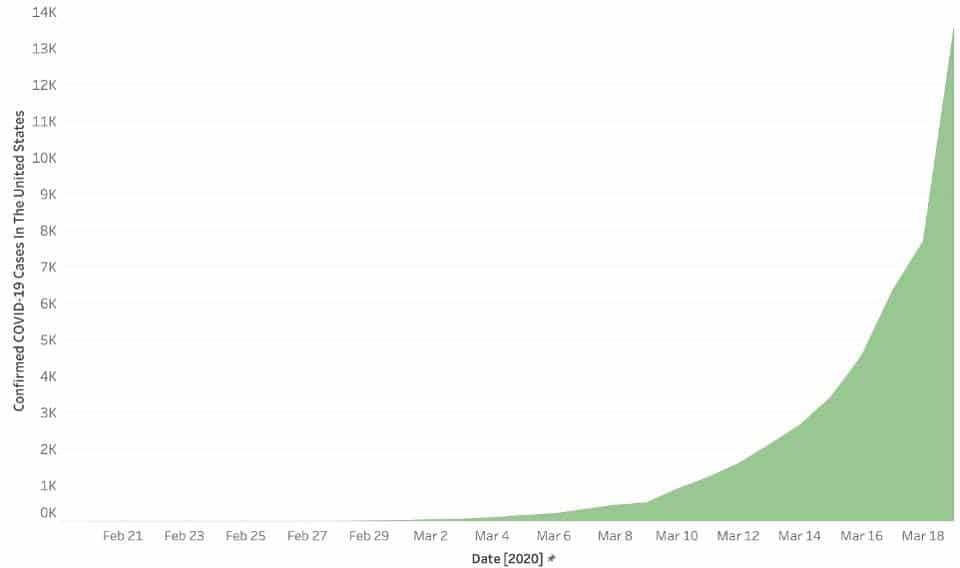
As of today, the United States falls in last place with regard to limiting COVID-19 growth according to the number of confirmed cases. According to the Johns Hopkins Coronavirus Resource Center, the number of confirmed cases in the United States grew at a faster rate than any other country in the world yesterday. Below, I dive into how these numbers are skewed by country population and the number of coronavirus tests conducted.

The number of confirmed coronavirus cases rose from 7,783 on Wednesday to 13,677 yesterday. The growth of 5,894 new confirmed cases in just one day equates to a 76% increase in cases in just a 24-hour period.

Plot of coronavirus cases in the United States over the last month (2/19 to 3/19). You are likely wondering how population size, number of tests performed, etc. play into this overall picture.

With regards to population size, despite having a billion more people India added only 38 new cases yesterday. However, this number is skewed by the fact that India has performed only 14,514 tests to date compared to 103,945 tests in the United States.

In comparison, the country that added the 2nd highest number of cases yesterday was Italy, a country with a population of 60.48 million. That equals just 18% of the population of the United States.

It is no secret that coronavirus testing in the United States has lagged compare to other countries. Limited testing in the United States potentially downplays the numbers below, leaving the true number of cases unknown.

In the past week, the number of tests conducted in the United States has increased, however, the data for the past couple days has not been compiled yet. This could skew the numbers to look like coronavirus is growing faster, yet we are simply testing more.

Ultimately, it’s impossible to capture the true number of coronavirus cases at any given point. The numbers show the minimum number of COVID-19 cases and are highly dependent on two factors: population and rate of testing.

Coronavirus (COVID-19) Growth By Country From 3/18 to 3/19

  1. United States cases grew by 5,894 equalling a growth of 76%
  2. Italy cases grew by 5,322 equalling a growth of 15%
  3. Spain cases grew by 4,053 equalling a growth of 29%
  4. Germany cases grew by 2,993 equalling a growth of 24%
  5. France cases grew by 1,828 equalling a growth of 20%
  6. Switzerland cases grew by 1,047 equalling a growth of 35%
  7. Iran cases grew by 1,046 equalling a growth of 6%
  8. Netherlands cases grew by 409 equalling a growth of 20%
  9. Austria cases grew by 367 equalling a growth of 22%
  10. Portugal cases grew by 337 equalling a growth of 75%
  11. Belgium cases grew by 309 equalling a growth of 21%
  12. Ireland cases grew by 265 equalling a growth of 91%
  13. Brazil cases grew by 249 equalling a growth of 67%
  14. Israel cases grew by 244 equalling a growth of 56%
  15. Czechia cases grew by 230 equalling a growth of 50%
  16. Norway cases grew by 196 equalling a growth of 13%
  17. Sweden cases grew by 160 equalling a growth of 13%
  18. Pakistan cases grew by 155 equalling a growth of 52%
  19. South Korea cases grew by 152 equalling a growth of 2%
  20. Canada cases grew by 143 equalling a growth of 22%
  21. Luxembourg cases grew by 132 equalling a growth of 65%
  22. Australia cases grew by 113 equalling a growth of 20%
  23. Malaysia cases grew by 110 equalling a growth of 14%
  24. Poland cases grew by 104 equalling a growth of 41%
  25. Saudi Arabia cases grew by 103 equalling a growth of 60%
  26. Turkey cases grew by 94 equalling a growth of 96%
  27. Denmark cases grew by 94 equalling a growth of 9%
  28. Peru cases grew by 89 equalling a growth of 61%
  29. Ecuador cases grew by 88 equalling a growth of 79%
  30. Indonesia cases grew by 84 equalling a growth of 37%
  31. Iceland cases grew by 80 equalling a growth of 32%
  32. Finland cases grew by 64 equalling a growth of 19%
  33. United Kingdom cases grew by 63 equalling a growth of 2%
  34. Egypt cases grew by 60 equalling a growth of 31%
  35. Thailand cases grew by 60 equalling a growth of 28%
  36. China cases grew by 54 equalling a growth of 0%
  37. Russia cases grew by 52 equalling a growth of 35%
  38. India cases grew by 38 equalling a growth of 24%
  39. Japan cases grew by 35 equalling a growth of 4%
  40. South Africa cases grew by 34 equalling a growth of 29%
  41. Singapore cases grew by 32 equalling a growth of 10%
  42. Armenia cases grew by 31 equalling a growth of 37%
  43. Iraq cases grew by 28 equalling a growth of 17%
  44. United Arab Emirates cases grew by 27 equalling a growth of 24%
  45. Mexico cases grew by 25 equalling a growth of 27%
  46. Croatia cases grew by 24 equalling a growth of 30%
  47. Lebanon cases grew by 24 equalling a growth of 18%
  48. Panama cases grew by 23 equalling a growth of 27%
  49. Bahrain cases grew by 22 equalling a growth of 9%
  50. Serbia cases grew by 20 equalling a growth of 24%

Italian Doctor Dies Of Coronavirus After Working Without Gloves Due To Shortage

0

A 57-year-old doctor who tested positive for coronavirus and who was working in a hospital in the town of Codogno has died.

Marcello Natali had been hospitalised in Cremona before being transferred to Milan after developing double pneumonia. In one of the last interviews he gave before he was tested for COVID-19, he told Euronews that he had had to work without gloves: “They have run out,” he said.

He also said that in Codogno and a nearby town, Casale, 14 out of 35 doctors were in quarantine or hospitalised as of February 28.

“We weren’t prepared for coronavirus: as doctors of the post antibiotic era, we grew up thinking that a pill against everything was enough,” he said.

Natali’s death was confirmed by a representative of the Italian Federation of General Practitioners, who said that he too was suffering from double pneumonia because of the coronavirus.

“It’s a war,” he said.

Paola Pedrini, regional secretary at the federation, told Euronews that 110 doctors out of 600 in the sole province of Bergamo are sick.

“The situation has not gotten better since end of February. We received some mask, some gloves kit, nothing else. A mask that should last half-a-day, here lasts a week.”

“We practice a lot over the phone, when possible, to avoid the spread of the virus and getting in contact with asymptomatic people who still carry the virus”

Italy announced a record daily death toll of 475 on Wednesday, bringing the number of dead in the country to 2,978, with almost 36,000 confirmed cases.

Many European countries have struggled to find enough gloves, medical masks and items such as hand sanitiser in stories as demand is intensified by panic buying.

Italy: Military Transports Corpses From Bergamo!


Italy: An image is currently being shared on social media showing numerous military vehicles, with the accompanying text that they would be needed to remove corpses from the Italian city of Bergamo, as the local funeral parlors could no longer keep up with the dead.

Terrible image de camions de l'armée italienne qui emportent les cercueils en dehors de bergame pour les crémations. …

Posted by Corsica ile Magique on Thursday, March 19, 2020

The picture taken in the center of Bergamo shows a long column of military vehicles at Borgo Palazzo, which is a few hundred meters away from the local cemetery. The army vehicles were made available by the Italian military to carry coffins to the crematoriums in other regions.

The reason for this is the fact that the morgue in Bergamo has been exhausted for days. This also applies to the city’s only crematorium furnace, which currently runs 24 hours a day. The Bergamo region is one of the most affected areas of the Covid – 19 virus and both the cemetery and the funeral home have not been accessible for a long time.

In order to relieve the mortuary of the cemetery, the military vehicles shown above were provided to transport the coffins to other regions.

The city of Bergamo is located northeast of Milan and, like the entire region of Lombardy, belongs to the exclusion zone of northern Italy. This was set up by the Italian government in order to contain the corona virus there as quickly as possible. According to calculations by the news portal n-tv, Italy will overtake China today as the country with the most deaths from the Corona Virus. For this reason, Prime Minister Conte had already announced that the curfew, which runs until April 3, would very likely have to be extended in order to cope with the crisis.

Summarized:
The shared sharepic is real. These are Italian military transporters, which relieve the local morgue or cemetery and transport the coffins in morgues or crematoriums from the surrounding area. The picture taken is from Bergamo, a city in Lombardy, which is one of the regions most affected by Covid-19 in Italy.