Since the first cases of CoViD-19 were confirmed in Iran, there has been a great deal of confusion about how many deaths the illness has caused and how many cases there are throughout the country.
The official tally in Iran is 430 deaths with just over 10,000 confirmed cases. However, posts made on social media and reports from citizens in Iran tell a different story.
A disturbing report published in the Washington Post this week has revealed that mass graves have recently been dug in Iran. The mass graves are so large that they can be seen from space and are clearly much larger than would be needed for a few hundred people.
Satellite imagery that was provided to the New York Times by Maxar Technologies, a Colorado-based space technology company, showed that a large unused section of a cemetery in the Behesht-e Masoumeh complex was being excavated around February 21, when the virus was beginning to grow out of control in the region.
The cemetery is located in Qom, which is about 80 miles south of Tehran, and the major epicenter for the virus in the country. Satellite images dating back to October showed no activity at the site until mid-February when the large excavation project began.
Later images showed two large trenches which were each at least 100 yards long. There were also indications that large piles of lime were next to the trenches, which is usually used to neutralize odors that come along with mass graves. The use of lime in the graves was also confirmed by Iranian health officials, according to the Post.
The content of the satellite photos was verified by expert analysis, video testimony, and official statements from eye-witnesses and people familiar with the project. It is also disturbing that these trenches were clearly dug in a hurry, showing a departure from traditional burial practices, leading many experts to believe that these are desperate times for Iran.
The findings confirm previous allegations from Iranian citizens that the death toll was far higher than the government was willing to admit. At the beginning of the outbreak in the country, a man was arrested for filming dozens of bodies inside of a morgue, likely on their way to the mass graves seen in the satellite photos.
As the news spread, Eduardo Bolsonaro accused the media of spreading “too much lies and little information.” The younger Bolsonaro did not outright deny the report, but said that the examinations were not yet completed.
The novel human coronavirus has reached all corners of the Earth. Some of us thought it wouldn’t and some of us knew it would. And while some people in the U.S. remain resolute that COVID-19 is no worse than influenza, others are preparing for a doomsday pandemic.
While rushing to the store to buy six months worth of supplies and hunkering down in your basement is likely overkill at this point, having a potential global pandemic on the horizon is as good time as any to consider your level emergency preparedness.
While the term emergency preparedness may evoke images of wacky “preppers” for some, you don’t have to go over the top to be prepared. In fact, being prepared should be the smart and normal course of action for American families who have the means to do so. Being prepared is not synonymous with hoarding.
According to YouGov, in 2018, prior to outbreak of the novel coronavirus which began in Wuhan, China, 75 percent of Americans were worried about the possibility of a natural disaster, a terror attack, or a host of other serious incidents that may affect the communities in which they live. However, despite their concern very few of them reported being prepared for any of these things.
In fact, 41 percent of respondents say they are not prepared for a natural disaster and only 39 percent say they have an emergency kit on hand. Only 39 percent of respondents reported having a stock of non-perishable food and only 28 percent said they have a supply of potable water.
Do you have an emergency kit or a supply of shelf stable food? What about water? If not, right now might not be the easiest time to build up your supplies as social media is clearly showing that pandemic panic has set in across the United States, but if you play your cards right you can still snatch up a few essentials that you should always have on hand in case of emergency.
I live in the epicenter of the coronavirus outbreak in Washington State. My advice for those elsewhere – go to Costco now. Thousands of people at local stores yesterday – not where you want to be if there is a virus spreading. Glad I went a week ago.
— Bound Here By Evil! (@Da_Show_Stopper) March 1, 2020
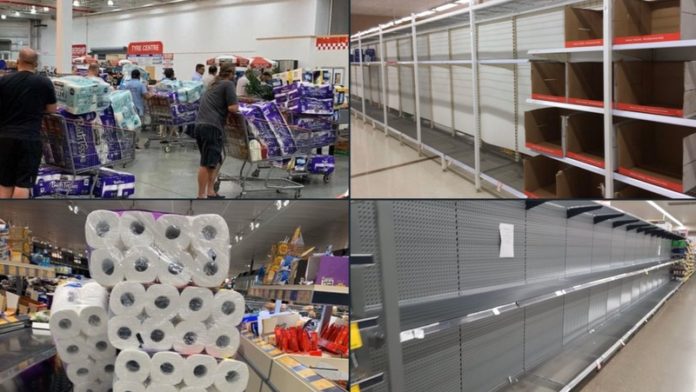
Costco stores are flooded with customers buying health care items in bulk as fears of the coronavirus outbreak spread across the U.S. pic.twitter.com/3bcihAZAfL
Many of these people are likely buying above and beyond the necessary items (like the guy mentioned in the tweet below), but if you’re willing to brave the crowds and encounter some empty store shelves in the process we have some suggestions on what is most important to stock up on, whether or not there is a potentially deadly pandemic at your doorstep.
I was sent to a Costco to see if people are stocking up (even though health officials say it’s not necessary) in case COVID-19 gets more serious here. This guy came out of the store with 16 boxes of condoms and a big jar of coconut oil. We all have priorities. pic.twitter.com/C3edUsgZzH
Epidemics, pandemics, natural disasters, power outages, and more have an ability to interrupt our normal daily lives. When these things last long or impact the greater world economy, as the novel coronavirus is, we have the potential to feel a significant impact, sometimes long after—picture the tsunami after an earthquake—even if the initial thing isn’t directly affecting you.
We should prepare ahead of time for any one of these things, but especially for this particular pandemic, so that we don’t add to the inevitable panic, so we don’t find ourselves in crowds of people were sickness can spread, and so we are at our best and calm and therefore able to assist others in our communities that may need assistance.
Step 1: Don’t Panic, Have a Plan
You’re preparing, that means the emergency or disaster isn’t here yet. So stay calm and think clearly. Grab a piece of paper and start building your emergency preparedness plan. What is your goal? Do you want to have enough food for one week or one month? How many people are in your family? In the event of a loss of power or gas will you have a way to cook food? Does anyone in your household take medications that cannot be skipped? The answers to these questions and more will help you navigate what is most important for your household and will help you build a list of exactly what you need.
The U.S. Department of Homeland Security suggests keeping enough food and water for all members of your household on hand for a minimum of 72 hours but you may choose to extend that further by a week, two weeks, or more. Factors may depend on the size of your family, where you live, and the kind of emergency situations you may face.
Food:
Emergency meal kits can be purchased at stores like Costco, REI, and other online retailers that specialize in emergency preparedness. The kits come in varying sizes based on number of people and length of time. However, the purpose of these kids is to have them on hand before you need them. A lot of people have gained first hand experience with this recently when they found absolutely no meal kit results when searching Costco’s website. The kits can be nice because they take the guesswork out of building your emergency food supply and they are designed to not take up a lot of space but those who purchase them and don’t end up using them run into challenges when the things inside expire or when your family has dietary restrictions.
If you can’t currently get your hands on a food kit or don’t want to, here are some tips on what to collect individually. The exact amount will depend on the plan that you came up with.
Look for non-perishable and shelf stable items that your family is somewhat used to eating but that doesn’t need a lot of extra ingredients or materials to prepare. You should have a mix of things that need to be cooked and things that don’t. In some cases you may be short on water and fuel or not have access to it at all. If this is the case, an emergency supply of only food that requires cooking won’t get you too far. Pasta and sauce, canned and dried beans, canned vegetables, canned soups, oatmeal, shelf stable milks, along with snacks like granola bars, nuts, and dried fruits are a great place to start. And don’t forget about pet food if that applies to you.
Store your food in a cool, dry place and out of direct sunlight. Storage food in a hard-sided container is ideal especially if you’re keeping it in an attic or a basement. You don’t want pests to get to it before you do.
Check your kit every 6-months or so. During this time look for anything that might be damaged and pull it out. Look for expired foods or foods that will expire in the next six months. Use those items soon rather than throwing them away and make sure to replace anything you removed.
Reevaluate your kit every year. Has your household size changed? Is there a new dietary restriction or allergy you need to take into account?
Water:
It is recommended to store one gallon of water a day for each person in your household. This means a family of four with a 72-hour emergency kit should have 12 gallons of potable water in storage.
Bottled water flies off store shelves when communities are faced with illness, natural disaster, or impending inclement weather. However, unless you’ve been hiding under a rock you should be aware that most bottled water is no better than your tap water and some of it is actually worse because it is stored in thin plastic. When faced with an emergency some water is better than none, but consider the kind of water you’re storing and the source if you’re building a kit in advance of an emergency.
It’s great if you already filter your tap water but in the event that the water stops flowing, having filtration systems won’t do a darn thing to help you.
Water storage containers in varying sizes can be ordered online. Some, like WaterBricks, can be stacked for storage because water really can occupy a lot of space. Many of the containers out there are made of thick, blue plastic. Thick, colored plastic doesn’t let UV rays in and the blue color signals that there is water inside. In the filling process it is important to keep the area and your hands clean so that the water stays safe. Water won’t expire but some people like to swap it out every once in a while, though this isn’t necessary. If you’re storing your water in a basement, make sure it isn’t directly on a concrete floor.
Don’t forget to store water for your pets, too.
Medications and First Aid:
If someone in your household requires prescription medication find out how much you can secure ahead of time. Unfortunately this isn’t always easy when dealing with insurance companies in the United States and some medications don’t have a long shelf life anyway. When you have advance notice that something may impact your ability to get medications—like a big storm or a pandemic—contact your doctor and your pharmacy and find out if you can get approval to have some extra medication.
Keep a list of medications and pharmacies for those in your household in your emergency kit. Find out if there are over the counter items available to use in lieu of any of these medications in the event of an emergency and keep those items in your emergency kit. Skipping prescription medications and using something else is never ideal and is not something that should be taken lightly but in the event that it is literally impossible to get your medications, having some sort of back up, if available, is better than nothing.
Keep a first aid kit stocked. The essentials include a manual to help you tread wounds, pain reliever, bites, and other issues, tweezers, alcohol swabs, antibiotic ointment, bandages in multiples sizes, gauze pads and wrap, medical tape, elastic bandages, essential oils like lavender, colloidal silver cream and tincture, as well as instant cold packs. Add additional things specific to your household like children’s pain reliever and fever reducer, antacids, contact solution, etc.
Preventatives:
If you’re going to be eating from your emergency food kit for days and potentially rationing water during this time, your nutrition might not be at its best. And if you’re facing a potential pandemic you’re going to want your immune system to be supported. Keep a stock of all vitamins and supplements that you normally take but consider increasing your intake of things like vitamin C, elderberry syrup, and colloidal silver, depending the kind of emergency you’re facing or preparing for.
Fuel and Power:
Have extra batteries on hand and accessible for things like flashlights. And make sure you know where they are. When you need light the most is probably not when you’re going to want to be rummaging through your junk drawer. Keep flashlights in your kit but also in other places throughout your home. Back-up batteries for phones can come in handy during extended periods without electricity.
If you’re a camping enthusiast you probably have an alternative method for cooking food, like a small stove. If you need to use one remember to never do so inside your house. If you don’t already have something like this, small stoves are affordable and easily available from common brands like Coleman. Your emergency food won’t be of any use to you if it all must be cooked but your power is out, thus rendering your electric cooktop useless. Keep matches sealed in a waterproof container in your kit.
Generators come in handy but won’t be helpful if you don’t have fuel. However, as technology progresses we’re being given new options when it comes to alternative power sources. Small generators with different kinds of outlets can be charged from a wall outlet ahead of time or hooked up to a portable solar panel. Look for reliable brands like Goal Zero.
Keep your vehicle’s gas tank full when you have advanced notice that there may be an emergency situation on the horizon.
Cleaning Supplies and More:
Toilet paper, paper towels, trash bags, bleach, hand sanitizers, vinegar, diapers, feminine hygiene products, along with paper plates, cups, and cutlery or a reusable mess kit (but keep in mind you may not be able to wash it).
The Department of Homeland security also recommends the following items:
Battery-powered or hand crank radio and a NOAA Weather Radio with tone alert
Whistle to signal for help
Dust mask to help filter contaminated air and plastic sheeting and duct tape
Moist towelettes, garbage bags, and plastic ties
Wrench or pliers
Manual can opener
Local maps
Cell phone with chargers and a backup battery
Cash or traveler’s checks
Important household documents like insurance policies, identification and bank account records saved electronically or in a waterproof, portable container
Sleeping bag or warm blankets
Complete change of clothing and sturdy shoes
Fire extinguisher
Paper and pencil
Books, games, puzzles or other activities for children
Most importantly, remember not to panic. If you build up your supplies before an emergency strikes you’ll avoid the long lines and the inevitable panic. You won’t contribute to the empty shelves or the congestion at the stores and on the streets. If you’re facing an emergency as the result of a potential pandemic, staying home and out of the crowds is the best place to be and you will, because you’re prepared.
If you already are prepared, take a moment and pat yourself on the back—you’re in the minority. If you aren’t prepared, regardless of whether or not you’ve considered it in the past, don’t be discouraged. Sit down, plan your kit, and calmly get to work. It is never too early to prepare your household but it can be too late.
Just as the COVID-19 Coronavirus was declared a global pandemic by the World Health Organization (WHO), actor Tom Hanks and his wife Rita Wilson, also an accomplished actor and musician, announced that they have tested positive for the virus.
Tom Hanks and Rita Wilson are both 63 years old, which puts them at a much higher risk of having serious complications from the illness.
According to a statement published by a spokesperson for the Hanks family, the couple caught the virus in Australia where Hanks was in the middle of filming for Baz Luhrmann’s untitled Elvis Presley biopic in which Hanks is playing Presley’s manager, Colonel Tom Parker.
The statement from Hanks reads:
“Hello, folks. Rita and I are down here in Australia. We felt a bit tired, like we had colds, and some body aches. Rita had some chills that came and went. Slight fevers too. To play things right, as is needed in the world right now, we were tested for the Coronavirus, and were found to be positive.
Well, now. What to do next? The Medical Officials have protocols that must be followed. We Hanks’ will be tested, observed, and isolated for as long as public health and safety requires. Not much more to it than a one-day-at-a-time approach, no?
Meanwhile, U.S. President Donald Trump has banned all travel from Europe, aside from the United Kingdom. There was not any specific mention in Trump’s Wednesday night press conference about whether or not Australia, where Hanks and Wilson are currently in isolation, will also be affected by the travel ban.
Also on Wednesday night, the NBA announced that the remainder of its season would be suspended following the conclusion of tonight’s games.
According to the numbers being published by the Center for Systems Science and Engineering (CSSE) at Johns Hopkins, there are currently 128 confirmed cases in Australia, but the actual number is likely far higher because testing has not become widespread in the country as it has in other places like South Korea.
The Italian actor known from the Italian Mafia TV show “Gomorrah” has published a video on Facebook in which he expresses his grief and anger.
In the video you can see his dead sister Teresa († 47), who apparently died from the coronavirus. Francese says she died the day before. She was a risk patient because she had epilepsy. «I have my sister here in bed. Dead. I do not know what to do. I cannot give her the honor she deserves. »
Government is “incapable”
The rescue workers who responded to his cry for help did not have a Corona test with them the first time. His first aid would also have been of no use.
He describes the authorities as “incapable”. – Screenshot Youtube
The man is now locked in the apartment with his dead sister and is waiting for an answer from the authorities. He feels let down. “I contacted all kinds of institutions,” he says in the video. He describes the government as “incapable”.
Francese released another video a few hours later. There it becomes clear that his sister was tested positive for the corona virus.
Corona virus: This is the current situation in the world
A total of over 110,000 cases were reported globally. There are more than 3800 dead so far.
62,302 people are healthy again. You may get infected several times.
The corona virus continues to hold its spell like the world. With current (March 10, 12 p.m.) 7375 cases, Italy is an absolute figure in the top 3 most affected countries and leading by far in Europa. China is still at the top with 80,738 cases. A total of 110,098 cases have been reported globally to date. 3831 people died from the corona virus. The number of unreported cases is particularly high for infections.
China, 80,738 infected, 3120 dead South Korea, 7382 infected, 53 dead Italy, 7,375 infected, 366 dead Iran, 6566 infected, 194 dead France, 1209 infected, 19 dead Germany, 1040 infected, 0 dead Spain, 674 infected, 17 dead USA, 554 infected, 22 dead Japan, 502 infected, 7 dead Switzerland, 312 infected, 2 dead Over 62302 infected again healthy
Many of the originally infected people have since recovered. The number of Corona patients healed is currently (March 10, 8 a.m.) 62,302 people. According to initial findings, multiple infections with the corona virus cannot be ruled out.
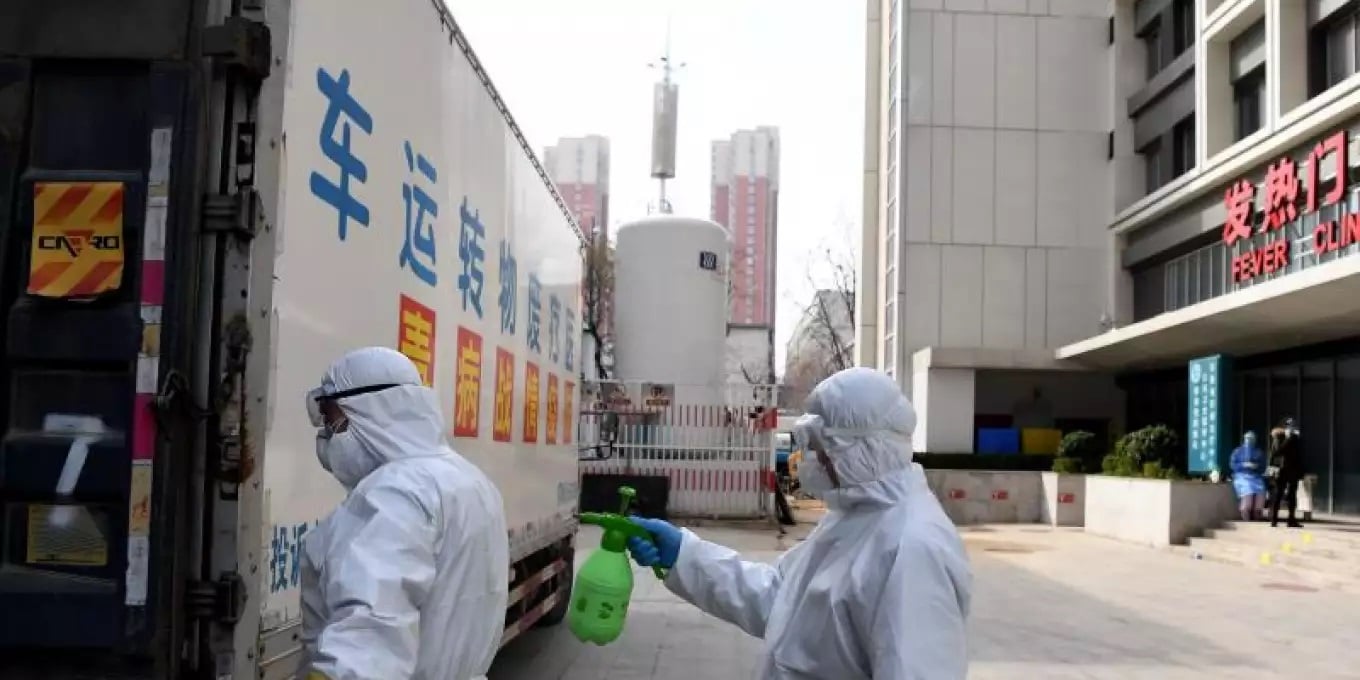
A medical worker is disinfected by a colleague. Photo: Hao Yuan / XinHua / dpa – dpa-infocom GmbH
Rest of the world is catching up to China
The global spread is favored by the geographical proximity of countries to each other and by international air traffic. Most cases of Covid-19 occurred in the Chinese province of Hubei and in the rest of mainland China.
With a time delay, other countries around the world are currently experiencing a similarly rapid increase in infections as China one and a half months ago. With restrictive measures and the sealing off of several hundred million people, however, China managed to flatten the infection curve.
The Baltimore Sun reports that some Maryland shoppers spent most of the weekend panic buying supplies at big-box retailers as six confirmed cases were reported in the area. The Sun interviewed shoppers across the Baltimore–Washington metropolitan area that loaded up on supplies amid pandemic fears.
The BJ’s Wholesale Club in Canton, Harris Teeter in Canton Crossing, and the Whole Foods in the Inner Harbor experienced a surge in shoppers on Saturday and Sunday.
“I’m always prepared,” Denise Cox told The Sun at Harris Teeter in Canton Crossing on Saturday morning. She’s spent the last several weeks buying water, Clorox wipes, Lysol spray, and bleach. “When I bought the bleach, corona was in my thoughts.”
“I’ve never seen anything like it,” said assistant store manager Jeff Major, who has worked for the grocery store for nearly two decades.
Major said the store purchased several cases of Purell hand sanitizer last Wednesday, and it was sold out by that evening.
“I think rubbing alcohol will be the next thing to go,” general manager Tom Gilbert said.
“Fingers crossed, we’ll have hand sanitizer by March 15,” he added.
Sandie Pearce spent her weekend driving around the Baltimore Metropolitan Area, going from store to store in search of disinfectants, such as Lysol and Clorox.
Pearce went to nine stores on Saturday, telling The Sun that disinfectants were all sold out everywhere. However, she hit the “jackpot” at a Walgreens on York Road in Timonium. Where she found a 12-ounce can of Lysol spray for $8, marked up well over 100%.
She said Amazon was all sold out of disinfectants, which forced her to spend the weekend searching for virus prevention products at brick and mortar stores.
“The last time I saw this was the last big snowstorm,” Pearce said. “Before it was bread. Now it’s germ virus killers.”
Rod Hall, store manager at Dollar General in Baltimore City, said someone walked into his store and bought hundreds of dollars of disinfectants last week.
“It was Clorox. It was Lysol. It was store brand. He didn’t care,” Hall said, as he explained the man wiped the store shelves clean. “I’m pretty sure it was for business.”
He said his store is out of hand sanitizer, rubbing alcohol and surgical masks.
“[Hand sanitizer] was the first thing to go. Then they bought the alcohol. And spray bottles,” Hall said. “We might not get anything until the Tuesday after next.”
Most big-box retailers, not just in Maryland but across the country, have seen unprecedented demand for hand sanitizers and masks – now experiencing massive shortages.
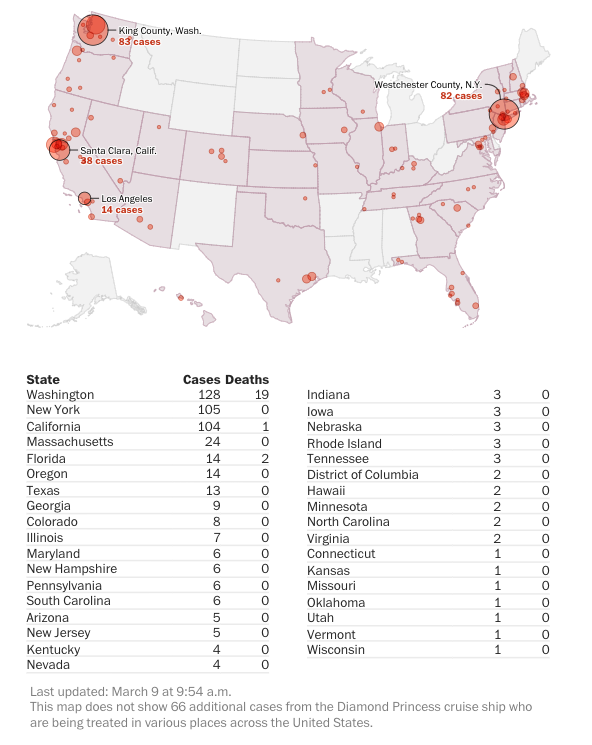
President Trump is well aware of the situation and panic across America. Trump said on Monday that “nothing is shut down, life and the economy go on.” The Trump administration is absolutely terrified that they cannot control the narrative of the “greatest economy ever,” as virus cases surge across the country, the map below will likely get a lot redder:
While President Trump attempts to maintain the narrative of how everything is “wonderful,” his Secretary of Health and Human Services, Alex Azar, warned Americans on Monday that “everyone should take precautions regarding the virus.”
As virus cases increase in the US, so will the panic – we’re likely in the beginnings of a virus crisis in the US that could tilt the economy into recession.
This website uses cookies to improve your experience. We'll assume you're ok with this, but you can opt-out if you wish.AcceptRead More
Privacy & Cookies Policy
Privacy Overview
This website uses cookies to improve your experience while you navigate through the website. Out of these, the cookies that are categorized as necessary are stored on your browser as they are essential for the working of basic functionalities of the website. We also use third-party cookies that help us analyze and understand how you use this website. These cookies will be stored in your browser only with your consent. You also have the option to opt-out of these cookies. But opting out of some of these cookies may affect your browsing experience.
Necessary cookies are absolutely essential for the website to function properly. This category only includes cookies that ensures basic functionalities and security features of the website. These cookies do not store any personal information.
Any cookies that may not be particularly necessary for the website to function and is used specifically to collect user personal data via analytics, ads, other embedded contents are termed as non-necessary cookies. It is mandatory to procure user consent prior to running these cookies on your website.