
Home Blog Page 2129

How the I.R.S. Abuses Criminal Law to Steal Money from Innocent Americans

6

Written by: Carey Wedler at theantimedia.org

Some weeks ago, the New York Times revealed that the Internal Revenue Service has been abusing a civil assets forfeiture law intended to target drug traffickers, racketeers, and terrorists. Instead of catching “evil-doers,” it more commonly uses these policies to confiscate money from innocent people without ever charging them with a crime.
From Around the Web
30 Celebs Not Afraid to Get Naked for Money
juicyceleb.com
10 Female Athletes Who’ve Got Better ‘Back’ Than Kim K
rantsports.com

?
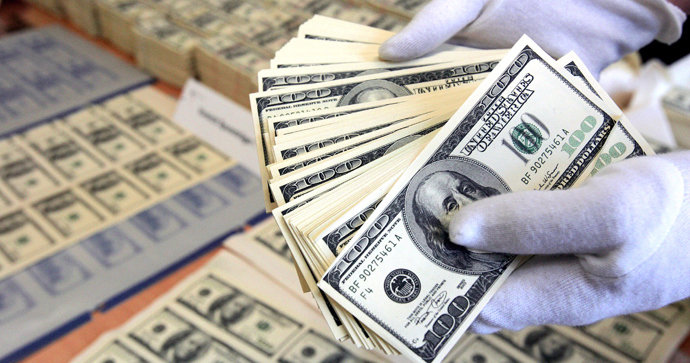
The I.R.S. justifies its confiscations through what it calls “structuring,” or depositing less than $10,000 at a time to avoid having to report income-this is illegal. Pursuant to the Bank Secrecy Act, deposits of over 10,000 dollars must be reported by banks to the government, but the government also requires that banks report deposits under $10,000 that seem “suspicious.”
Last year, banks filed over 700,000 reports, and often, a mere bank report is enough for the government to obtain a “seizure warrant.” Further, there are over 100 multi-agency task forces dedicated to poring over bank statements, looking for assets to steal.

David Smith, a forfeiture expert, lawyer, and former federal prosecutor, told the Times:
“They’re going after people who are really not criminals…They’re middle-class citizens who have never had any trouble with the law.”
While in 2005 there were 114 asset seizures, by 2012 there were 639. Only 1 in 5 have been charged with criminal structuring.
One Mexican restaurant owner, Carole Hinders, deposited profits from her cash-only business for years, only to learn that the I.R.S. confiscated the $33,000 she had saved. She had to borrow money, abuse her credit cards, and take out a second mortgage to maintain her business.
“How can this happen? Who takes your money before they prove that you’ve done anything wrong with it?”
In another case, a candy and cigarette distributor, run by the same family for 27 years, lost nearly half a million dollars and in other instances, Maryland dairy farmers have been targeted. One retired Army sergeant began depositing money into a bank account to save money for his daughters’ college education, but the government took $66,000 and one daughter had to delay school for a year.

It is often expensive and unsuccessful to challenge the government’s seizures. The median seize was $34,000, but legal costs can be around $20,000.
Following questioning by the New York Times, the Chief of Criminal Investigation at the I.R.S., Richard Weber, said the I.R.S. would curtail the practice of seizing money from people who had done nothing wrong:
“This policy update will ensure that C.I. continues to focus our limited investigative resources on identifying and investigating violations within our jurisdiction that closely align with C.I.’s mission and key priorities.”
Just like many other arms of government, the I.R.S. has abused a policy purported to halt criminal, dangerous behavior and instead turned it against non-violent Americans.
Meanwhile, elites get away with whatever blatant crimes they want. HSBC was found guilty of laundering drug money, but the powerful banking cartel was required to pay a mere 1.9 billion dollar fine, about five weeks of profit. This is a theatrical slap on the wrist for an established banking cartel when working-class citizens, who struggle at the hands of banker greed, are stripped of their entire life savings for doing nothing wrong.
The I.R.S. is the agency that makes tax-payer funded war, militarization, and corporate dominance possible. This agency relentlessly proves its corruption. Stories like these damage its credibility and expose its entire fraudulent foundation. However, as long as government has guns and the threat of force backing up its theft, abuses like these will continue to crop up and Americans will perpetually bankroll their own oppression.
__________________________________________________________________________________
Credit: http://theantimedia.org/irs-abuses-criminal-law-steal-money-innocent-americans/

How Many Lies Can A Police Officer Tell While Being Recorded?

17

Written by: Tiobe


Ricky Munday and Daniel Saulmon were bicycling toward a reported police harassment incident earlier this month in South Central Los Angeles when they had their own confrontation with a Los Angeles Police Department (LAPD) officer.

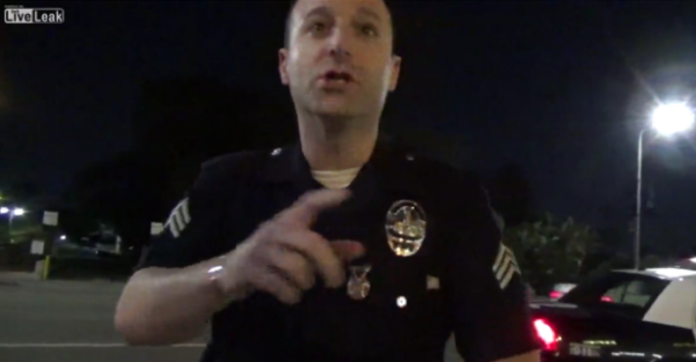
LAPD Sergeant Neil Wank’s patrol car was blocking the bicyclists’ path, and they swerved to avoid his car. As Wank pulled away from the curb, he accelerated dramatically, leaving about three feet between his car and the bicyclists. Munday shouted at Wank to slow down. Instead, Wank immediately pulled over, got out of his vehicle, and began gesticulating wildly.

Wank approached Munday, who came to a halt in front of him. Wank is confrontational, puts his chest and face right up to Munday’s, before grabbing his left arm.

Unfortunately for Wank, Munday and Saulmon run a website called Mistakenbacon.com, and Saulmon was recording everything.

Once Munday brought this to Wank’s attention by asking Saulmon if he is “getting all this,” Wank’s entire demeanor changed; he released Munday’s arm and stepped back.

Munday calls Wank out on this, but Wank insists he is not acting differently, and that he had been on camera the whole time, via a body cam and dashboard cam. Wank claims he cannot turn off the device even if he wanted to, but as he pushed the applicable button on the device, once can see the green power light turn off and on, seeming to indicate the ability to turn it off, should he want to.

A sheriff’s department vehicle pulled up and joined the melee at this point in the recording, and Wank repeatedly insisted he had stopped Munday and Saulmon strictly to verify they were alright, that they were not shouting at him for assistance.

The parties all exchanged information, Wank gawking a bit when Munday and Saulmon revealed the moniker of their business, and at least in this instance, everyone went their separate ways safely.

Watch The Full Video Here: http://www.liveleak.com/view?i=696_1415700359

Related Articles: Why Film The Police? http://anonhq.com/film-police/

__________________________________________________________

Source:

http://thefreethoughtproject.com/lies-lapd-officer-recorded/

10 Banned Food Ingredients That Are Still Allowed in The USA

3

Written by: Tiobe


Ever since Upton Sinclair wrote The Jungle, Americans have been paying attention to what is in their food and avoiding unsavory ingredients. Sinclair published his book detailing horrors in the meat packing industry February 1906, and the United States Food and Drug Administration (FDA) was formed to regulate these industries four months later, in June 1906.

While the FDA makes sure things like ground human fingers no longer wind up in your ground beef accidentally, and generally ensures food safety, there are numerous ingredients commonly used in processed food in the United States that receive FDA approval, but other countries ban. Below are ten examples of this:

1. Olestra/Olean

Dubbed one the worst inventions of all time by Time magazine, this ingredient, a fat substitute found in fat free potato chips and the like, causes gas, cramping and uncontrollable diarrhea. Additionally, it may hinder the digestive tract’s ability to absorb nutrients, and products containing Olestra are required to add vitamins to compensate for this effect. It is banned in the United Kingdom and Canada.

2. Genetically Modified Corn and Soy

Pigs fed GMO corn and soy showed a higher instance of uterine enlargement and stomach inflammation than those who were not, according to a 2013 study. Many Americans favor labeling foods that contain genetically-modified organisms, but current law does not require this, making it difficult if not impossible to distinguish those foods that contain GMOs and those that do not. GMO corn and soy are banned in Algeria, France and Greece.

3. Potassium Bromate

This ingredient, used in breads to strengthen dough and reduce baking time, increased thyroid, kidney and other cancers in rats and mice, according to Japanese researchers. It is banned in Brazil, Canada, China, the European Union, Nigeria, Peru and South Korea

4. Azodicarbonamide

Another ingredient found in breads, especially fast food hamburger buns, Azodicarbonamide can increase rates of asthma and allergies. It is banned in Australia, the United Kingom and some European Union countries. In Singapore, use of this ingredient can result in a 15-year prison sentence and a $500,000 fine.

5. Butylated Hydroxyanisole (BHA) and Butylated Hyrdoxytoluene (BHT)

These preservatives are linked to increased cancer rates in animals, according to the United States Toxicology Program. BHT and BHA are commonly found in cereal, chewing gum, chips and sausages, but are banned in Australia, Canada, the European Union, New Zealand and Japan.

6. Recombinant Bovine Growth Hormone (rBGH)

Some dairy farmers use this synthetic hormone to boost milk production in cows. The American Cancer Society has said cows fed rBGH are more prone to mastitis, or udder infections, and so are fed an increased amount of antibiotics, possibly leading to antibiotic-resistant bacteria. It is banned in Canada and the European Union.

7. Blue Dye #1

Found in liquors, cereal, food coloring, frosting, soups and canned vegetables, some studies link this ingredient to hyperactivity, aggressiveness and irritability, attention problems and allergies in children. It is banned in Austria, Belgium, Denmark, France, Germany, Greece, Italy, Spain, Sweden, and Switzerland.

8. Tartrazine/Yellow Dye #5

Commonly found in cereal, cheese-flavored crackers and pastas, puddings and sports drinks, studies link this dye to an increase in cell deterioration and mutation at a genetic level. Tartrazine is banned in Finland and Norway.

9. Yellow #6

Also a popular coloring agent in cheese-flavored products, as well as cereal, it can cause adrenal and kidney tumors in animals. This ingredient is also banned in Finland and Norway.

10. Brominated Vegetable Oil (BVO)

This ingredient is also used to make carpet flame retardant, as well as pool cleaner. Often found in sports drinks and bread products, BVO is shown in some studies to accumulate in the body, and may cause memory problems. It is banned in Europe and Japan, and Coca Cola and Pepsi both announced earlier this year they will be dropping this ingredient from their beverages.

__________________________________________________________________________-

Sources:

http://www.livestrong.com/slideshow/1007800-11-banned-food-ingredients-still-allowed-us/#slide=2

http://www.dailymail.co.uk/news/article-2345564/Shocking-list-US-foods-BANNED-countries-containing-dangerous-chemicals.html

http://www.mayoclinic.org/healthy-living/nutrition-and-healthy-eating/expert-answers/bvo/faq-20058236


Spain And It’s Invisible Reality Of Homeless People

1

Written by: Tiobe


Recession hurts, no matter where in the world it occurs, it has a very human toll. In Spain, a nation officially in economic recession for the last two years, that toll is a bit shocking.

Nearly 30 percent of all children in Spain live in poverty, according to the United Nations Children Fund.

Spain’s unemployment rate is at nearly a quarter of the population, or one in four people without jobs.

Even amongst those who are employed, 13 percent of these are classified as working poor, or those with full-time employment still living in poverty.

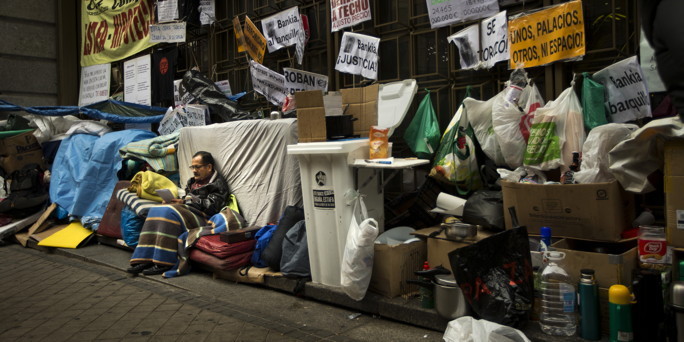
Depending on whom you ask, the number of homeless in Spain ranges between 20,000 to 40,000 people. And no wonder: during the first six months of 2014 alone, over 37,000 people were evicted from their homes.

A staggering 3.4 million homes currently sit vacant in Spain or about 14 percent of the total housing stock in Spain. To put his into perspective, that is enough to provide homes for every single homeless person in the entire European continent.

There have been over 569,000 foreclosures in Spain since 2007. In the autonomous region of Catalonia, local governments have allegedly threatened to fine banks up to $138,000 for homes that remain vacant for two years or more, or even to compel the banks to turn over these homes for social housing.

Many of Spain’s homeless population sleep “rough,” or on the streets, regardless of weather or safety.

“On the street I feel vulnerable, so inferior. You lose your dignity and it’s hard to get it back. I want out of this,” said 40 year-old homeless Miguel Arregui to the Inter Press Service (IPS).

“It’s easy to end up on the street. It’s not because you led a bad life; you lose your job and you can’t afford to pay rent,” said David Cerezo.

There are, thankfully, organizations working to change this reality, however.

One of these is Ángeles Malagueños de la Noche, or Málaga Angels of the Night, which provides hot meals and shelter for the homeless of Malaga. When the shelter is full up, the organization provides blankets to those needing warmth for the night.

Another group working to stem the damage of homelessness in Spain is the RAIS Foundation. Along with devising innovative ideas to combat homelessness, the RAIS Foundation also works against hate crimes and discrimination against Spain’s most vulnerable populations.

The main focus of the RAIS Foundation is providing homeless individuals with their most immediate need: shelter. The foundation tries to relocate those living on the streets or in shelters to their own apartments or within community housing projects. While this may seem obvious, this goes a long way to restoring stability and dignity for these individuals.

“The system could use a turn of the screw, to provide permanent and unconditional housing, in first place,” said RAIS director José Manuel Caballol to IPS. “The results are spectacular. The people are so happy, they take care of their house and of themselves because they don’t want to lose what they have.”

The RAIS Foundation and other non-governmental organizations have assisted about 50 individuals in this manner since July 2014.

_______________________________________________________________

Sources:

http://www.truth-out.org/news/item/27333-the-invisible-reality-of-spain-s-homeless

http://www.thelocal.es/20140225/spain-worst-in-europe-for-empty-properties


Documents Show FBI Threats to Martin Luther King Jr.

2

Written by: Tiobe


Attempting to discredit political figures by publicly shaming them about their sex lives, especially their extramarital affairs, is nothing new.

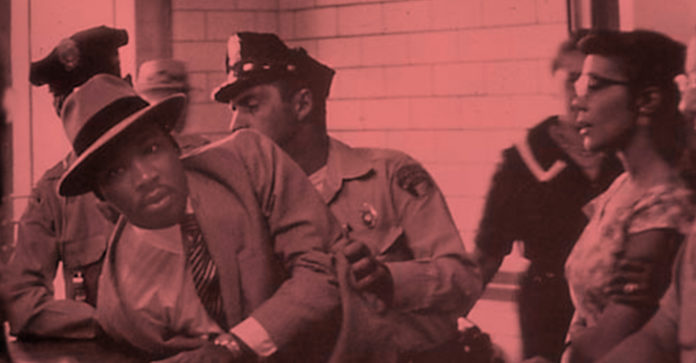
Yale University professor of American History Beverly Gage was recently researching Edgar Hoover for a biography when she discovered an uncensored letter Hoover’s Federal Bureau of Investigation (FBI) sent to civil rights leader Martin Luther King, Jr.

William Sullivan, one of Hoover’s underlings, drafted and sent the hate-filled document. In it, the author begins by refusing to acknowledge King as a reverend or as Dr. King, and repeatedly refers to him as a fraud and sexual deviant. Sullivan tells King “you are done,” that there is only one way out for King, that his “end is approaching,” suggesting either suicide or resignation.

The letter demands King leave public life within 34 days of receipt of the letter, presumably to prevent King from accepting the Nobel Peace Prize, but King remained unaware of the letter until his return from Oslo.

The words “fraud,” “evil,” and “abnormal” are used about a half-dozen times throughout the letter, and Sullivan alludes to King being a beast and an animal numerous times.

For someone as fond of the word “fraud” as the person who penned this letter, it is interesting Sullivan affected grammatical errors and pretended to be African American, even saying, “you know you are a complete fraud and great liability to us Negroes.”

Included with the letter was a recording that allegedly captured King in the throes of adulterous passion. King’s wife Coretta reportedly received and opened the packet first, then turned it over to her husband, who then assessed how to proceed with a team of his friends and advisors.

Hoover’s agents began leaking information of King’s extramarital activities to the press, information gathered in a spy operation aimed at King’s friendship with Communist Stanley Levison. When the media did little to nothing with the story, a frustrated Hoover held a Nov. 18, 1964 press conference denouncing King, and Sullivan sent his letter days later.

One wonders how this drama would have played out with today’s media, especially in light of National Security Agency (NSA) mass surveillance. If members of the NSA or FBI leaked potentially humiliating or scandalous secrets about one of our leaders to the press, would that leader have any chance of retaining their position?

“To a scandal-hungry media, the bedroom practices of our public officials and moral leaders are usually fair game. And a sex scandal is often — though not always — a cheap one-way ticket out of public life,” notes Gage in her New York Times Magazine piece. “Faced with today’s political environment, perhaps King would have made different decisions in his personal affairs. Perhaps, though, he never would have had the chance to emerge as the public leader he ultimately became.”

_____________________________________________________________________________

Sources:

http://theantimedia.org/fbi-threats-to-martin-king-jr/

http://www.nytimes.com/2014/11/16/magazine/what-an-uncensored-letter-to-mlk-reveals.html?_r=0