
Home Blog Page 47

Protesters Gathered Outside Buckingham Palace To Condemn “Pedophile” Prince Andrew

0

This Saturday in London, protesters gathered outside of Buckingham Palace as part of a demonstration against child exploitation. Protesters shouted accusations of “pedophile” outside the gates of the palace, in reference to Prince Andrew’s involvement in Jeffrey Epstein’s child trafficking ring.

The protests were organized through a Facebook event page called, ‘Freedom For The Children Global Walk London.’

A post on the event page read: “The purpose of this walk for change is to bring awareness to the current reality of child exploitation within our own communities and around the world. Let’s show our devotion and determination toward protecting these children, our communities most vulnerable, by requesting change and reformation within our government and law enforcement agencies to ensure that justice is brought in such a manner that it will significantly reduce instances of child exploitation while promoting awareness in order to end this ongoing issue.”

In footage later released of the protest, protesters can be seen waving banners with Prince Andrew’s face along with messages condemning his crimes.

Protesters shout 'paedophile' outside Buckingham Palace

In footage said to be from yesterday, protesters outside Buckingham Palace chant 'paedophile, paedophile'. You're unlikely to see this on the BBC…

Posted by The Skwawkbox on Monday, 24 August 2020

Meanwhile, Prince Andrew has been dodging investigators that want to question him about the accusations made by some of Epstein’s victims.

New York prosecutors have said that the prince has “completely shut the door” on cooperating with authorities. They are now considering what further legal action can be taken.

Andrew continues to deny any wrongdoing or knowledge of Epstein’s many crimes, despite a growing body of evidence indicating that he was involved.

Manhattan Attorney Geoffrey Berman described the prince as a “co-conspirator.”

“Contrary to Prince Andrew’s very public offer to cooperate with our investigation into Epstein’s co-conspirators, an offer that was conveyed via press release, Prince Andrew has now completely shut the door on voluntary cooperation and our office is considering its options,” Berman said, according to the Guardian.

Andrew has previously promised to help investigators with the case, but has since removed himself from public life. He has also refused requests for interviews that investigators have sent him. He has stepped down from his official royal position and is now more than ever the black sheep of the royal family.

After the arrest of alleged Epstein co-conspirator Ghislaine Maxwell, who is also said to be good friends with Andrew, the prince has canceled all of his travels and business trips outside of the UK, likely out of fears that he will be arrested as well.

According to a former member of the Royal guard who worked on Prince Andrew’s security detail, The London Metropolitan Police have destroyed evidence that could have revealed where Prince Andrew was on the night that he is accused of having sex with a teenager that was being trafficked by Epstein and Maxwell.

The night in question is March 10th, 2001, as well as the morning hours of March 11. Virginia Giuffre, who was known by the name Virginia Roberts at the time, says that she was taken to London by Epstein and Maxwell and was expected to have sex with Prince Andrew. Giuffre says that she was just 17-years-old at the time.

Akon Builds $6 BILLION City in Africa Rivaling Mythical Kingdom of Wakanda

0

Akon plans to build a cryptocurrency-run city in Africa that will rival the mythical kingdom of Wakanda from the Marvel film Black Panther. The “Locked Up” legend, who hails from Senegal, joined TMZ Live on Tuesday (August 11) where he talked about his $6 billion vision.

Akon City, a “futuristic cryptocurrency themed city” founded by music mogul Akon, is ready to begin construction in Senegal, after securing $4 billion from investors. The city will exclusively use the “Akoin” digital currency and plans to have parks, universities, schools, a stadium, hotels, and more. It will be the de facto currency in a Senegalese city he’s constructing on land donated by the government. Will cryptocurrencies become the tool that puts African nations on the path to overcoming their economic challenges?

“Akoin is a cryptocurrency powered by a marketplace of tools and services fueling the dreams of entrepreneurs, business owners, and social activists as they connect and engage across the rising economies of Africa and beyond,” according to the project’s website.

Akoin, is now part of the nearly 1,600 cryptocurrencies trading around the world in an industry with a market capitalization of more than $267 billion, according to data from CoinMarketCap. The digital currency was originally announced in 2018 and CultureBanx reported that along with his team they plan to build a whole ecosystem around Akoin, including construction of the city and initiatives to support young entrepreneurs.

The city centerpiece will be a $1 billion, 5,000-bed state of the art hospital, which is part of the first phase of construction along with residences, hotels, schools, a police station, fire department, an airstrip, a mall and other staples of a major city.

“It’s going to be one of many throughout all of Africa starting in Senegal,” he said. “As of right now, it’s like, ‘What do we start to build first?’ I wanted the city to be something that was in there that would actually be utilized by the whole country. We’re starting with the hospital first. It’s gonna be one of the biggest hospitals in all of West Africa. We noticed that a lot of times someone may get sick with a serious illness but some place in Africa, you have to fly into America or Europe to get treated.”

When TMZ Live co-host Charles Latibeaudiere mentions the city renderings remind him of Wakanda, Akon concurs.

“It’s actually amazing man, especially for what Wakanda the film did for Africa itself from a branding standpoint,” he says. “Before then, it was a big jungle, a lot of war-torn countries and AIDS-infested spaces in Africa that people had this vision of. But this movie literally made an idea of what Africa could really be and what it could really look like for the future.

“It was just ironic that I was already working on this before the movie actually came out. It was something that helped me a lot, in a big way from a standpoint of trying to explain to people what I was trying to do.”

Akon was granted a $6 billion grant to begin construction on the city in June. Phase I is expected to be complete by 2023, while Phase 2 will take place between 2024 to 2029. The final phase, Phase 3, will include parks, universities, schools, a stadium, hotels and an industrial complex and will hopefully be finished by 2030.

Mother Exposes L.O.L. Surprise Dolls Sold At Stores Change Into Lingerie & BONDAGE Clothing When Dunked In Water

0

A furious Australian mother has issued a warning to parents about a popular brand of dolls after discovering their bodies show disturbing sexualised outfits when dipped in cold water. 

Kate Worsfold, from Brisbane, took to Facebook on Saturday morning after learning  her daughter’s L.O.L. Surprise Dolls had a ‘hidden’ feature.

In the video, the mother says she had found stories online about lingerie imprinted on the figurines, which are sold at Kmart, Big W and Target stores across the country.

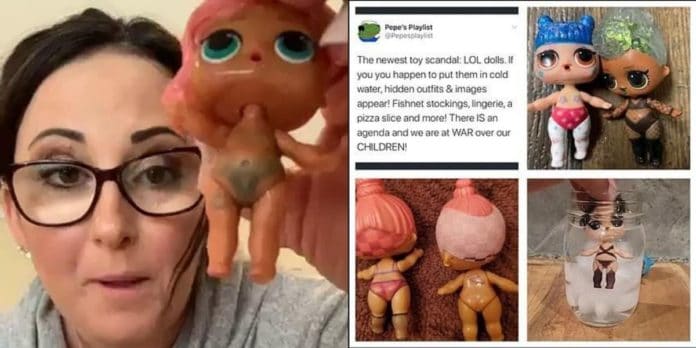
When she dunked them in water she saw the toys’ adult underwear.

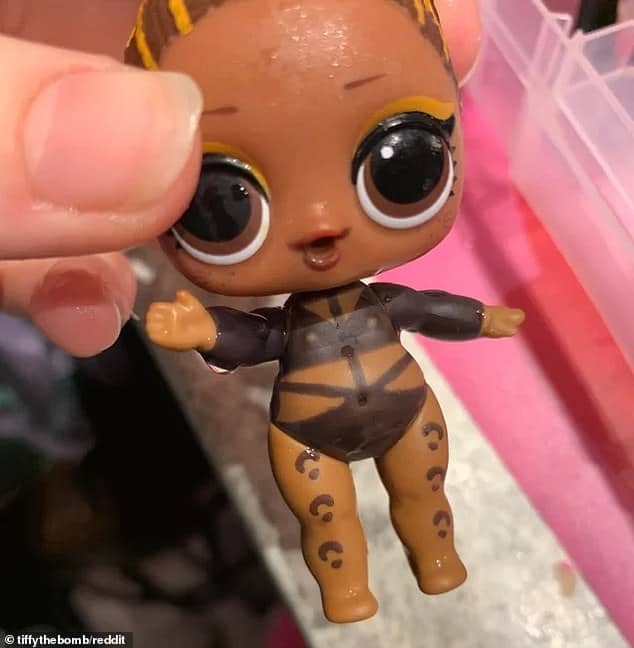
As the toys began to dry, tattoos, bondage apparel, skimpy clothing and sexually suggestive words scrawled on their private parts came into view.

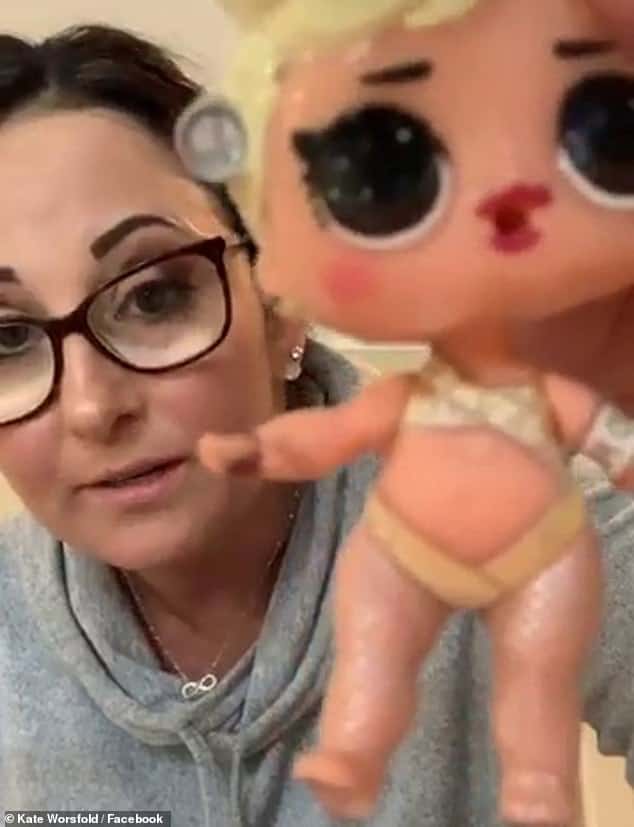
After it was dunked in cold water, one of the dolls’ underwear became thinner, black bands developed on its wrists, and the word caution appeared over its private parts (pictured)

‘I didn’t think it was possible for something like this to happen right under our noses,’ Ms Worsfold says.

‘This is f***ing sick s**t that is happening in the world right now and we need to stand up for our children. We need to have a voice for the voiceless.’

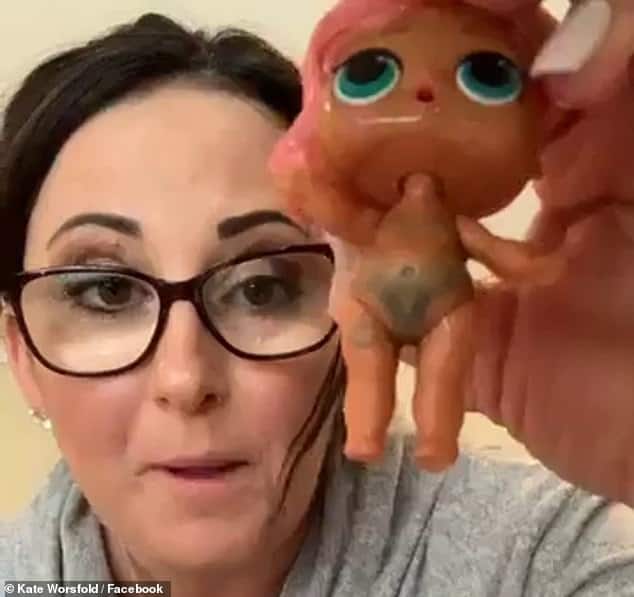
A third doll (pictured) developed what Ms Worsford described as a ‘satanic monster’ over its private parts when it was dipped in water

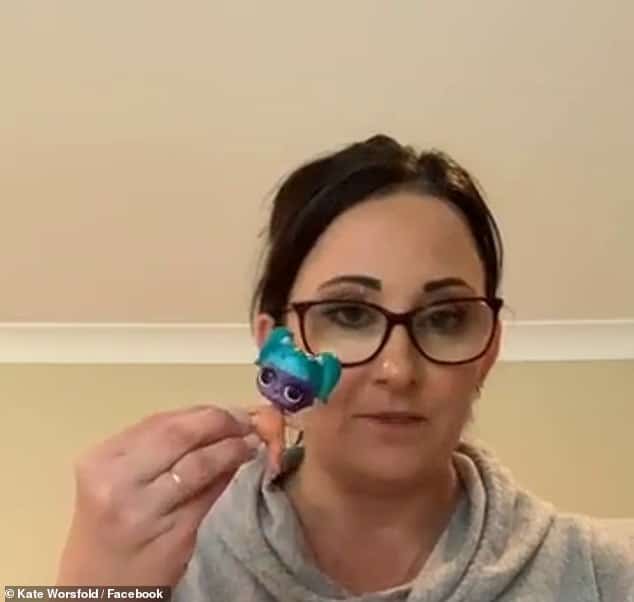
During the video the mum dips the first doll in water, after which it turns blue.

‘Don’t know why you’d want a face turning blue, because blue to me signifies that they have no breath,’ she says.

In another part of the clip she points to a doll’s red lipstick, fishnet stockings, bra and stockings.

‘This underwear looks like bandages or tape, and starts to read “caution” around her private parts,’ Ms Worsfold says.

‘This is the most disgusting thing I have come across. Who the f**k thinks it’s okay to put a message on a little girl’s doll that has tape around her privates and shackles around her hands?’

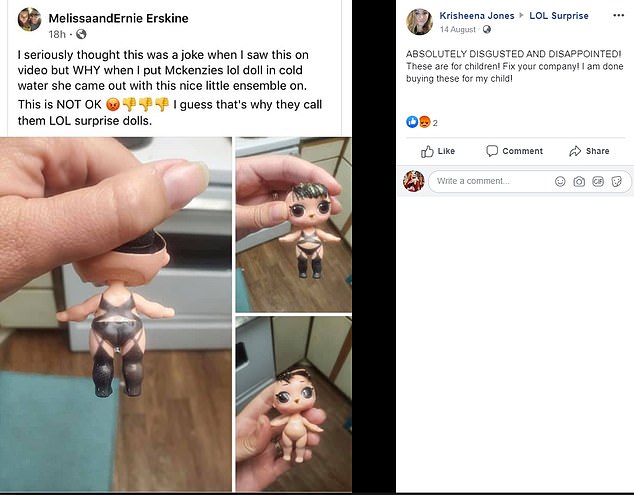
Parents from across the world have been flocking to online forums to share photos of the hidden outfits they have discovered on their daughters’ dolls

The mum then dips a third doll into water and the figurine’s underwear shows a devil’s head.

‘It looks like underwear, but if you look closely at the front part, it looks like the head off a satanic monster with an anchor tattoo on her leg,’ she says.

‘As a mum, I am fuming and f***ing livid that my daughter has these toys in our house and I knew nothing about it.’

The outraged mother then calls on other parents to take action and boycott products that sexualise children.

‘These are toys being given to our kids. We are buying them thinking they are going to have fun with these little toys and they have words on their private parts,’ she says.

‘It takes ordinary people like us that find this stuff and call it out, so we can protect our children.

‘As a mother I am standing up for my children and my children’s children for generations to come because this is not okay.

‘You need to stand with me and we need to start making some noise, because there are children out there that are suffering and these m*****f*****s think it is funny.

‘You have not got away with it because we are calling you out.

‘Save our children.’

The video has since gone viral, racking up more than 1.4million views and almost 20,000 reactions.

The post caught the attention of thousands of parents who rallied behind the mother and shared their disgust.

‘This is ridiculous. I’m shocked,’ one person wrote.

‘Extremely disgusting and disturbing,’ one mother added. ‘So glad that my daughter doesn’t like them, but I have bought them for other girls, not any more.’

Another commenter suggested people ‘rip them off the shelf’ and ‘smash them up’, while another added ‘it was already borderline with the fishnet stockings and them looking sexualised’.

‘I stand with you, Kate! As a mother and protector. Let’s email these manufacturers and suppliers,’ someone else added.

One mother said her three-year-old’s toy’s hidden attire was touted as a ‘secret spy outfit’, but ‘the nipples became extremely visible’ (toy pictured)

L.O.L. Surprise Dolls were created by American company MGA Entertainment, the masterminds behind the popular Bratz franchise.

Only some of the L.O.L. surprise dolls have colour-change capabilities, including the the Surprise Confetti Pop Series 3-1 and Lil Sisters Series 3-1.

Parents from across the world have been flocking to online forums to share photos of the hidden outfits they have discovered on their daughters’ dolls.

In a post on Twitter, one mother said her three-year-old’s toy’s hidden attire was touted as a ‘secret spy outfit’, but ‘the nipples became extremely visible’ and the original leopard outfit she came in was revealing.

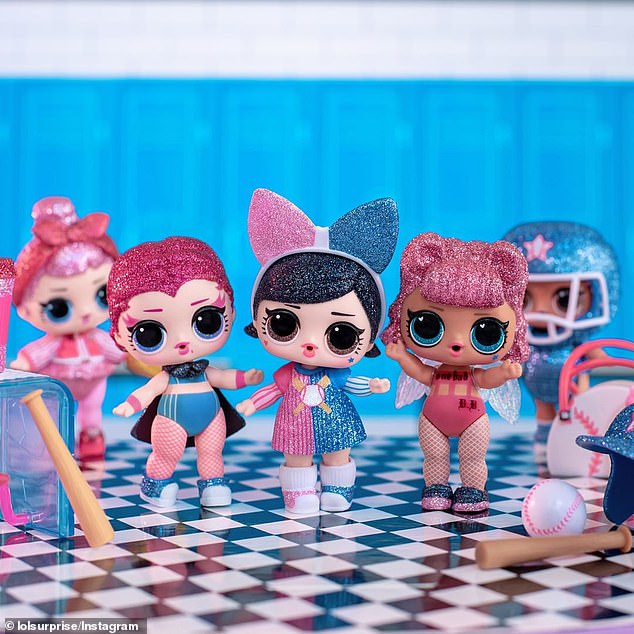
L.O.L. Surprise dolls are figurines of little girls made by US company MGA Entertainment and sold in Kmart, Big W and Target stores across Australia

It is not the first time the company has made headlines over its toys.

In March last year, a mother blasted the manufacturer over Reddit after spotting toddler-like characters dressed ‘like prostitutes and wearing BDSM gear’ in a pack she bought for her four-year-old.

The controversial designs also caused a stir later that year when male dolls were added to the collection.

To differentiate between the sexes, the boy figurines featured penises and testicles, although the girl variations did not have vaginas.

A Big W spokesperson said: ‘We can confirm our customers have approached us about the current LOL Surprise Dolls and have expressed some concern with this range.’

‘We are currently working closely with our suppliers to reach the best outcome for our customers.’

Daily Mail Australia has contacted MGA Entertainment, Kmart and Target for comment.

MGA told Fast Company: ‘L.O.L Surprise! is a fashion-forward doll brand designed to be fun and expressive.

‘We work very hard to be a brand that listens and adapts to our fans’ requests. We acknowledge the recent feedback received and thank you for bringing it to our attention.

‘We have implemented comprehensive corrective measures to our design and approval process while ensuring the essence of the brand is kept intact.’

Mums and Dads ‼️‼️ if you’re daughters have LOL dolls – you need to watch this. #SaveOurChildren

Posted by Kate Worsfold on Friday, 14 August 2020

Flesh-Eating Worms Have Returned to Florida

0

Increased trade with Cuba might have brought the little buggers back.

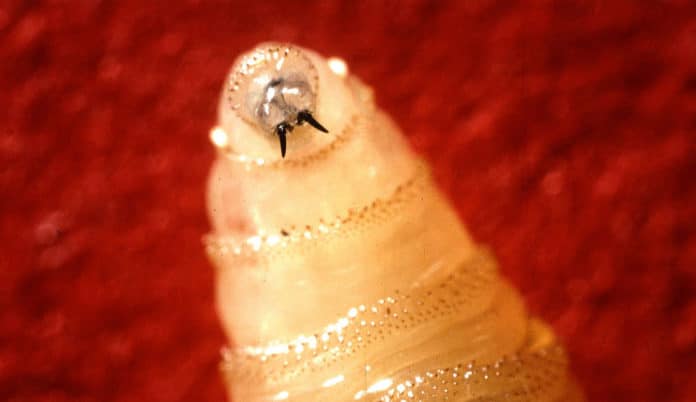
Screwworms do exactly what it sounds like screwworms do.The adults lay eggs in open wounds, and the hatched larvae burrow, corkscrew-like, through flesh. Screwworms ate their way into livestock, dogs, deer, and even humans in the U.S. until they were wiped out in 1982, in one of the most successful national eradication campaigns ever.

This week, however, U.S. officials confirmed that the screwworm is back. Poor deer in a wildlife refuge in the Florida Keys had somehow picked up the parasite, the U.S.’s first local infestation in 30 years. The screwworm “sends shivers down every rancher’s spine,” said Florida’s agricultural commissioner Adam Putnam in an unusually vivid official statement. “I’ve grown up hearing the horror stories from the last occurrence.”

Last time, the U.S. eradicated the screwworm by releasing sterile males, essentially putting the species on birth control. Florida will now be using the sterile male screwworms to tamp the infestation in the Keys. The success of the past eradication campaign , the current failure (temporary, hopefully) in Florida, and the challenge of maintaining a permanent sterile insect “wall” to keep screwworms out of the U.S. hold lessons for the control of other insects. Especially mosquitoes and especially in Florida, where the British company Oxitec now wants to test mosquitoes genetically modified to be sterile to combat diseases like Zika.

ulture scientists Edward Knipling and Raymond Bushland realized they could sterilize screwworms by shooting X-rays at them. (Early experiments literally borrowed X-ray equipment from an army medical unit.) High doses of X-rays damaged the screwworm’s chromosomes, so the sperm of irradiated males could no longer fertilize eggs. If they could overwhelm an infested area with sterile males, thought Knipling and Bushland, they could wipe out the pest. So they tried this on islands, first in Florida and then  in the Dutch Caribbean island of Cuaracao. It worked. 
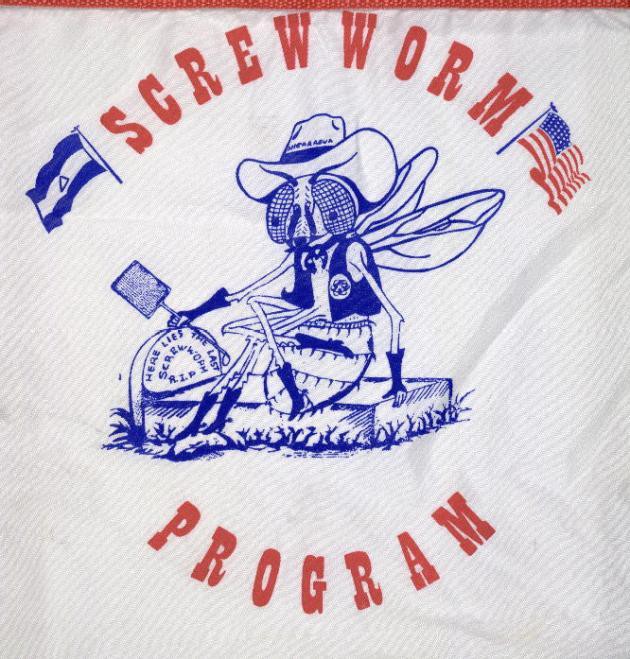
A totebag promoting the screwworm eradication program.

A Florida lab opened to churn out sterile screwworms by the millions to release further and further west: Texas, Arizona, California. By 1982, the U.S. became screwworm free.

But the USDA did not stop at the U.S. border. After all, screwworms, which grow up to be flies as adults, do not stop at borders either. The USDA established international partnerships and pushed further south. Mexico, Belize, Guatemala, El Salvador, Nicaragua, all the way to one of the narrowest parts on the continent: the Darien Gap on the border between Panama and Colombia.“It was a huge effort  over more or less 50 years, from the late 50s to the beginning of this millennium,” says Jorge Hendrichs, head of insect control at the Food and Agriculture Organization and International Atomic Energy Agency’s joint program. “It cost a billion dollars.” But it was worth it; ranchers in just the US lost about that much per year to screwworms before eradication.

This multi-country project is still not over. The USDA and its partners maintain an invisible but permanent sterile fly barrier at the Darien Gap. What this means is that every week, airplanes fly over the Darien Gap, dropping sterile males by the millions to keep screwworms out of North and Central America.

The permanent sterile fly barrier just underscores the mind-boggling work it takes to not just eradicate an insect from a country, but to keep it away forever. In the mid-20th century, the Rockefeller Foundation programs actually eradicated Aedes aegypti, the mosquito behind Zika, dengue, and yellow fever, from a lot of South America with pesticides. But there was no permanent sterile insect barrier, no continent-wide eradication. Aedes aegypti came back. So did yellow fever and dengue. New diseases like Zika came, too.

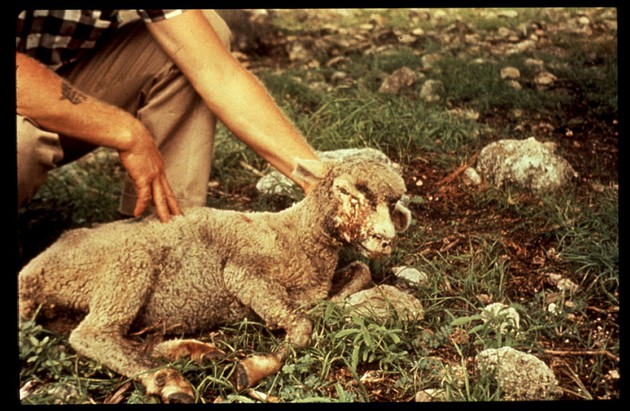
A lamb infested with screwworms.
(USDA)
The recent emergence of Zika has rekindled conversations about mosquito eradication. Oxitec cites screwworm eradication as an example of the success of sterile-insect techniques, though it has for now set its sights lower, on mosquito suppression rather than complete eradication. (Oxitec makes its mosquitoes sterile by inserting a gene, a completely different technique than the X-rays used on screwworms.) The company recently received permission to test its genetically modified mosquitoes  in Florida—a decision that has met plenty of controversy. New genetic engineering tools, like gene drives, could make it even easier to eradicate mosquitoes without having to release as many sterile ones. But eradication will require more than science to be successful; it’ll require a lot of delicate politics.

The source of Florida’s current screwworm infestation is still unknown, but some are speculating it’s Cuba. The island nation still has screwworms. It’s conceivable an adult fly could be blown over on the right wind, but that hadn’t happened before in 30 years. What has changed recently are thawing relations between the U.S. and Cuba. With recent political changes, “we predicted this would be happening sooner or later,” says Hendrichs about the Florida infestation.

Florida, in the meantime, doesn’t have a sterile-screwworm facility anymore. It closed after the eradication. “We have requested insects from screwworm barrier maintenance program in Panama,” says  Jenn Meale, communications director for Florida’s department of agriculture. The state has also set up a checkpoint out of the Keys, inspecting all pets and livestock for screwworm infections. So far, it’s inspected 100 dogs and 4 cats. No livestock yet.

If the U.S. continues to open up trade and travel with Cuba, the screwworm is likely to cross those few hundred miles of ocean again. The best thing to do, says Hendrichs, is partner with Cubans to eradicate screwworms in their country, too. Screwworms don’t care about international relations, but they’ll exploit any holes in it to survive.

8 Years After Proving Racism Affected His Trial, North Carolina Inmate Taken Off Death Row

0
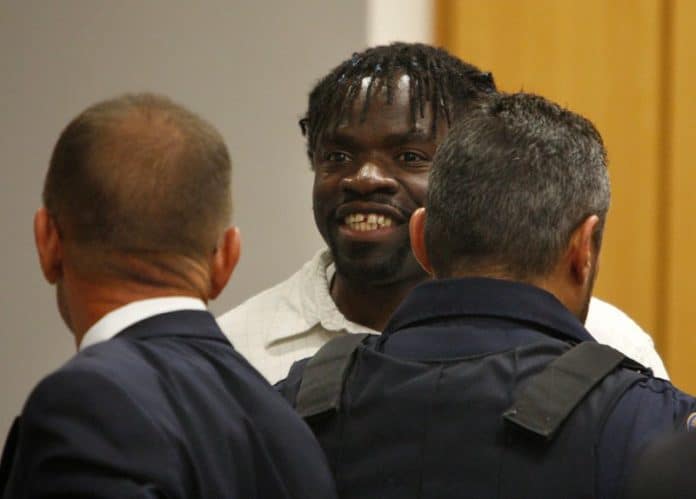
Death row inmate Marcus Robinson smiles toward his family after Cumberland County Senior Resident Superior Court Judge Greg Weeks found that racial bias played a role in his trial and sentencing on Friday, April 20, 2012, in Fayetteville, North Carolina. The historic ruling means Robinson's sentence was immediately converted to life without possibility for parole. It was the first case to be decided under the North Carolina's Racial Justice Act. (Shawn Rocco/Raleigh News & Observer/Tribune News Service via Getty Images)

Death row inmate Marcus Robinson smiles toward his family after a judge found that racial bias played a role in his sentencing on April 20, 2012, in Fayetteville, North Carolina. – Credit: Shawn Rocco—Raleigh News& Observer/Getty Images

On Friday, the North Carolina Supreme Court reinstated the life sentence of Marcus Robinson, a 47-year-old Black man who proved before a judge in 2012 that racism had affected trial proceedings that resulted in his death sentence.

Robinson had been re-sentenced to life without parole under North Carolina’s Racial Justice Act (RJA) but was later moved back onto death row after a series of legislative and legal proceedings.

Robinson had originally been on North Carolina’s death row after being convicted of first-degree murder in 1994. But in 2012 he was re-sentenced to life without parole under the RJA, a 2009 state law that allowed death row inmates to be re-sentenced if they could prove race was a significant factor in their sentencing.

But the Republican-controlled North Carolina legislature repealed the RJA in 2013, and in 2015 the state’s Supreme Court ruled that Robinson’s case needed new evidentiary proceedings. In 2017, a judge dismissed Robinson’s case without hearing his evidence, arguing that because the RJA had been repealed, he didn’t have a right to a new hearing.

Robinson was then moved back to death row without a new trial.

On Friday, the state Supreme Court ruled that the judge’s move had violated Robinson’s constitutional rights, and reinstated his life sentence.

“Almost exactly 11 years after the passage of the Racial Justice Act, the court’s decision to reverse Marcus Robinson’s death sentence is a critical step toward achieving the goal of that legislation: to break the link between racism and the death penalty in North Carolina,” Cassandra Stubbs, the director of the American Civil Liberties Union’s (ACLU) Capital Punishment Project, said in a statement. (The ACLU represents Robinson.)

“The evidence uncovered by RJA shined a spotlight on an ugly truth: Racism plays a starring role in determining who gets executed,” Stubbs’ statement continued. “Of course, nearly 50 years of data have shown that there is no way to extricate racism from the death penalty—the punishment has no place in a country that values fairness, justice, and equality.”

Three other death row inmates—Tilmon Golphin, Christina Walters and Quintel Augustine—had also been re-sentenced to life under the RJA in 2012 but were then sent back to death row after a judge threw out their case in 2017. (Golphin and Augustine are Black; Walters is Lumbee and Cherokee Indian.) It’s not yet clear how the court’s reinstatement of Robinson’s life sentence will affect their cases moving forward.

Over 100 death row inmates had filed RJA claims before the law was repealed, but only Robinson, Golphin, Walters and Augustine had been granted hearings and successfully had their their death sentences overturned.

However, in June, the state Supreme Court issued a sweeping ruling that the RJA’s repeal cannot be applied retroactively, meaning that everyone who filed a RJA claim before the Act was repealed — meaning over 100 death row inmates — has a right to a hearing to prove racism affected their sentences. That ruling also means that, at the bare minimum, Golphin, Walters and Augustine will get new hearings to present their evidence of racial bias.

Robinson, Golphin, Walters and Augustine had already proven before a judge that racial bias affected their sentences, not just systematically but also in their specific trials—particularly during jury selection.

Robinson’s RJA claim cited a study of jury selection in North Carolina’s capital cases done by researchers at Michigan State University College of Law. The study found that between 1990 and 2010, Black jurors were 2.26 times more likely than all other jurors to be struck by a prosecutor. The 1986 U.S. Supreme Court ruling Batson v. Kentucky makes it unconstitutional to strike jurors based solely on race.

Robinson’s team also presented evidence that the prosecutors in his case asked demeaning questions about potential Black jurors—such as questioning whether one juror could read—along with other examples of racial bias.

In its ruling, the North Carolina Supreme Court decried racial bias in jury selection, writing that the “same racially oppressive beliefs that fueled segregation manifested themselves through public lynchings, the disproportionate application of the death penalty against African-American defendants, and the exclusion of African-Americans from juries.”