


Home Blog Page 80

The Super Bowl’s Biggest Losers: The Boys and Girls Being Sold for Sex 20 Times a Day

0

There can only be one winner emerging from this year’s Super Bowl LIV showdown between the San Francisco 49ers and the Kansas City Chiefs, but the biggest losers will be the hundreds of young girls and boys—some as young as 9 years old—who will be bought and sold for sex during the course of the big game.

It’s common to refer to this evil practice, which has become the fastest growing business in organized crime and the second most-lucrative commodity traded illegally after drugs and guns as child sex trafficking, but what we’re really talking about is rape.

Adults purchase children for sex at least 2.5 million times a year in the United States.

It’s not just young girls who are vulnerable to these predators, either.

According to a USA Today investigative report, “boys make up about 36% of children caught up in the U.S. sex industry (about 60% are female and less than 5% are transgender males and females).”

Get the latest from The Mind Unleashed in your inbox. Sign up right here.

Consider this: every two minutes, a child is exploited in the sex industry.

In Georgia alone, it is estimated that 7,200 men (half of them in their 30s) seek to purchase sex with adolescent girls each month, averaging roughly 300 a day.

On average, a child might be raped by 6,000 men during a five-year period.

It is estimated that at least 100,000 children—girls and boys—are bought and sold for sex in the U.S. every year, with as many as 300,000 children in danger of being trafficked each year. Some of these children are forcefully abducted, others are runaways, and still others are sold into the system by relatives and acquaintances.

Child rape has become Big Business in America.

This is an industry that revolves around cheap sex on the fly, with young girls and women who are sold to 50 men each day for $25 apiece, while their handlers make $150,000 to $200,000 per child each year.

This is not a problem found only in big cities.

It’s happening everywhere, right under our noses, in suburbs, cities and towns across the nation.

As Ernie Allen of the National Center for Missing and Exploited Children points out, “The only way not to find this in any American city is simply not to look for it.”

Don’t fool yourselves into believing that this is merely a concern for lower income communities or immigrants.

It’s not.

It is estimated that there are 100,000 to 150,000 under-aged child sex workers in the U.S. These girls aren’t volunteering to be sex slaves. They’re being lured—forced—trafficked into it. In most cases, they have no choice. Every transaction is rape.

In order to avoid detection (in some cases aided and abetted by the police) and cater to male buyers’ demand for sex with different women, pimps and the gangs and crime syndicates they work for have turned sex trafficking into a highly mobile enterprise, with trafficked girls, boys and women constantly being moved from city to city, state to state, and country to country.

For instance, the Baltimore-Washington area, referred to as The Circuit, with its I-95 corridor dotted with rest stops, bus stations and truck stops, is a hub for the sex trade.

No doubt about it: this is a highly profitable, highly organized and highly sophisticated sex trafficking business that operates in towns large and small, raking in upwards of $9.5 billion a year in the U.S. alone by abducting and selling young girls for sex.

Every year, the girls being bought and sold gets younger and younger.

The average age of those being trafficked is 13. Yet as the head of a group that combats trafficking pointed out, “Let’s think about what average means. That means there are children younger than 13. That means 8-, 9-, 10-year-olds.

“For every 10 women rescued, there are 50 to 100 more women who are brought in by the traffickers. Unfortunately, they’re not 18- or 20-year-olds anymore,” noted a 25-year-old victim of trafficking. “They’re minors as young as 13 who are being trafficked. They’re little girls.”

This is America’s dirty little secret.

But what or who is driving this evil appetite for young flesh? Who buys a child for sex?

Otherwise ordinary men from all walks of life. “They could be your co-worker, doctor, pastor or spouse,” writes journalist Tim Swarens, who spent more than a year investigating the sex trade in America.

Catholic and Protestant churches have been particularly singled out in recent years for harboring these sexual predators. Twenty years after the clergy sex abuse scandal rocked the Catholic Church, hundreds of sexual predators—priests, deacons, monks and lay people—continue to be given work assignments in proximity to children. In many cases, the abuse continues unabated.

Although much less publicized, the sex crimes within the Protestant Church have been no less egregious. For instance, a recent expose into the Southern Baptist Church leaders by the Houston Chronicle documents over 700 child sex victims “who were molested, sent explicit photos or texts, exposed to pornography, photographed nude, or repeatedly raped by youth pastors. Some victims as young as 3 were molested or raped inside pastors’ studies and Sunday school classrooms.”

And then you have national sporting events such as the Super Bowl, where sex traffickers have been caught selling minors, some as young as 9 years old. Yet even if the Super Bowl is not exactly a “windfall” for sex traffickers as some claim, it remains a lucrative source of income for the child sex trafficking industry and a draw for those who are willing to pay to rape young children.

According to criminal investigator Marc Chadderdon, these “buyers”—the so-called “ordinary” men who drive the demand for sex with children—represent a cross-section of American society: every age, every race, every socio-economic background, cops, teachers, corrections workers, pastors, etc.

And then there are the extra-ordinary men, such as Jeffrey Epstein, the hedge fund billionaire / convicted serial pedophile who was arrested on charges of molesting, raping and sex trafficking dozens of young girls, only to die under highly unusual circumstances.

It is believed that Epstein operated his own personal sex trafficking ring not only for his personal pleasure but also for the pleasure of his friends and business associates. According to The Washington Post, “several of the young women…say they were offered to the rich and famous as sex partners at Epstein’s parties.” At various times, Epstein ferried his friends about on his private plane, nicknamed the “Lolita Express.”

Men like Epstein and his cronies, who belong to a powerful, wealthy, elite segment of society that operates according to their own rules, skate free of accountability by taking advantage of a criminal justice system that panders to the powerful, the wealthy and the elite.

Still, where did this appetite for young girls come from?

Look around you.

Young girls have been sexualized for years now in music videos, on billboards, in television ads, and in clothing stores. Marketers have created a demand for young flesh and a ready supply of over-sexualized children.

“In a market that sells high heels for babies and thongs for tweens, it doesn’t take a genius to see that sex, if not porn, has invaded our lives,” writes Jessica Bennett for Newsweek. “Whether we welcome it or not, television brings it into our living rooms and the Web brings it into our bedrooms. According to a 2007 study from the University of Alberta, as many as 90 percent of boys and 70 percent of girls aged 13 to 14 have accessed sexually explicit content at least once.”

This is what Bennett refers to as the “pornification of a generation.”

In other words, the culture is grooming these young people to be preyed upon by sexual predators.

Social media makes it all too easy. As one news center reported, “Finding girls is easy for pimps. They look on … social networks. They and their assistants cruise malls, high schools and middle schools. They pick them up at bus stops. On the trolley. Girl-to-girl recruitment sometimes happens.” Foster homes and youth shelters have also become prime targets for traffickers.

Rarely do these girls enter into prostitution voluntarily. Many start out as runaways or throwaways, only to be snatched up by pimps or larger sex rings. Others, persuaded to meet up with a stranger after interacting online through one of the many social networking sites, find themselves quickly initiated into their new lives as sex slaves.

Debbie, a straight-A student who belonged to a close-knit Air Force family living in Phoenix, Ariz., is an example of this trading of flesh. Debbie was 15 when she was snatched from her driveway by an acquaintance-friend. Forced into a car, Debbie was bound and taken to an unknown location, held at gunpoint and raped by multiple men. She was then crammed into a small dog kennel and forced to eat dog biscuits. Debbie’s captors advertised her services on Craigslist. Those who responded were often married with children, and the money that Debbie “earned” for sex was given to her kidnappers. The gang raping continued. After searching the apartment where Debbie was held captive, police finally found Debbie stuffed in a drawer under a bed. Her harrowing ordeal lasted for 40 days.

While Debbie was fortunate enough to be rescued, others are not so lucky.

According to the National Center for Missing and Exploited Children, nearly 800,000 children go missing every year (roughly 2,185 children a day).

With a growing demand for sexual slavery and an endless supply of girls and women who can be targeted for abduction, this is not a problem that’s going away anytime soon.

For those trafficked, it’s a nightmare from beginning to end.

Those being sold for sex have an average life expectancy of seven years, and those years are a living nightmare of endless rape, forced drugging, humiliation, degradation, threats, disease, pregnancies, abortions, miscarriages, torture, pain, and always the constant fear of being killed or, worse, having those you love hurt or killed.

Peter Landesman paints the full horrors of life for those victims of the sex trade in his New York Times article “The Girls Next Door”:

Andrea told me that she and the other children she was held with were frequently beaten to keep them off-balance and obedient. Sometimes they were videotaped while being forced to have sex with adults or one another. Often, she said, she was asked to play roles: the therapist patient or the obedient daughter. Her cell of sex traffickers offered three age ranges of sex partners–toddler to age 4, 5 to 12 and teens–as well as what she called a “damage group.” “In the damage group, they can hit you or do anything they want to,” she explained. “Though sex always hurts when you are little, so it’s always violent, everything was much more painful once you were placed in the damage group.”

What Andrea described next shows just how depraved some portions of American society have become. “They’d get you hungry then to train you” to have oral sex. “They put honey on a man. For the littlest kids, you had to learn not to gag. And they would push things in you so you would open up better. We learned responses. Like if they wanted us to be sultry or sexy or scared. Most of them wanted you scared. When I got older, I’d teach the younger kids how to float away so things didn’t hurt.”

Immigration and customs enforcement agents at the Cyber Crimes Center in Fairfax, Va., report that when it comes to sex, the appetites of many Americans have now changed. What was once considered abnormal is now the norm. These agents are tracking a clear spike in the demand for harder-core pornography on the Internet. As one agent noted, “We’ve become desensitized by the soft stuff; now we need a harder and harder hit.”

This trend is reflected by the treatment many of the girls receive at the hands of the drug traffickers and the men who purchase them. Peter Landesman interviewed Rosario, a Mexican woman who had been trafficked to New York and held captive for a number of years. She said: “In America, we had ‘special jobs.’ Oral sex, anal sex, often with many men. Sex is now more adventurous, harder.”

A common thread woven through most survivors’ experiences is being forced to go without sleep or food until they have met their sex quota of at least 40 men. One woman recounts how her trafficker made her lie face down on the floor when she was pregnant and then literally jumped on her back, forcing her to miscarry.

Holly Austin Smith was abducted when she was 14 years old, raped, and then forced to prostitute herself. Her pimp, when brought to trial, was only made to serve a year in prison.

Barbara Amaya was repeatedly sold between traffickers, abused, shot, stabbed, raped, kidnapped, trafficked, beaten, and jailed all before she was 18 years old. “I had a quota that I was supposed to fill every night. And if I didn’t have that amount of money, I would get beat, thrown down the stairs. He beat me once with wire coat hangers, the kind you hang up clothes, he straightened it out and my whole back was bleeding.”

As David McSwane recounts in a chilling piece for the Herald-Tribune: “In Oakland Park, an industrial Fort Lauderdale suburb, federal agents in 2011 encountered a brothel operated by a married couple. Inside ‘The Boom Boom Room,’ as it was known, customers paid a fee and were given a condom and a timer and left alone with one of the brothel’s eight teenagers, children as young as 13. A 16-year-old foster child testified that he acted as security, while a 17-year-old girl told a federal judge she was forced to have sex with as many as 20 men a night.”

One particular sex trafficking ring catered specifically to migrant workers employed seasonally on farms throughout the southeastern states, especially the Carolinas and Georgia, although it’s a flourishing business in every state in the country. Traffickers transport the women from farm to farm, where migrant workers would line up outside shacks, as many as 30 at a time, to have sex with them before they were transported to yet another farm where the process would begin all over again.

This growing evil is, for all intents and purposes, out in the open.

Trafficked children are advertised on the internet, transported on the interstate, and bought and sold in swanky hotels.

Unfortunately, as I make clear in my book Battlefield America: The War on the American People, the government’s war on sex trafficking—much like the government’s war on terrorism, drugs and crime—has become a perfect excuse for inflicting more police state tactics (police check points, searches, surveillance, and heightened security) on a vulnerable public, while doing little to protect our children from sex predators.


By John W. Whitehead | Ruthford.org | Republished with permission
“I Am Not a Virus”: Outbreak Leads to Shocking & Dangerous Rise in Racism Toward Asian People

0

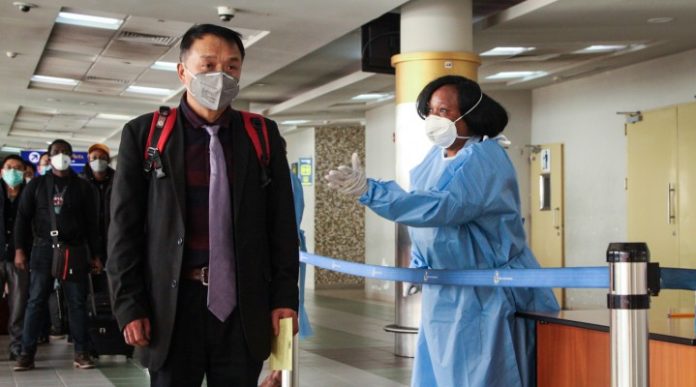
As new cases of the novel coronavirus continue to emerge across East Asia as well as in Europe and North America, another pandemic with possibly more deadly implications has also swept across the globe: the revival of shockingly racist and vile sentiments targeting people of Chinese and East Asian descent in the form of false news reports and general hysteria.

On Thursday, the phenomenon took a heartbreaking turn when a Chinese man collapsed and died from a heart attack in Chinatown in Sydney, Australia. According to reports, onlookers ignored the 60-year-old man as he suffered, refusing to give him CPR and leaving him to die on the sidewalk out of fear that they would catch the coronavirus, according to the Daily Telegraph.

And while the coronavirus reportedly originated in Wuhan, China, those far removed from the outbreak are feeling the devastating impact of the aggravated racism toward Asians.

South Korean newspaper Hankyoreh reports that in France, a Korean woman complained that she faced bigoted harassment multiple times thanks to the upswing in xenophobia. The newspaper reports that in a post to a South Korean online message board, the woman complained:

“An older man called me a ‘dirty Chinese [expletive].’ A guy who looked like a high schooler got in my face and told me to ‘get lost.’ I really lost it for a moment when a homeless person walking down the street even called me a [derogatory word for a woman].

Even when I explain I’m Korean, people tell me that all Asians should leave. I’d been afraid this might happen, but experiencing it personally has shown me how hard it is to bear such hatred. It makes me afraid to go to crowded places.”

Meanwhile, on France’s BFM TV, an Asian-descended French person complained:

“When I was coming out of a sports stadium in downtown Paris, a boy made fun of me by shouting, ‘Here comes the coronavirus.’”

The complaints come amid an outcry over a headline published last week in local newspaper Courrier Picard that read “Alerte jaune” (Yellow alert) and “Le péril jaune?” (Yellow peril?) alongside an image of a Chinese woman in a protective mask, harkening back to a racist early 20th-century concept of the so-called “Yellow Peril” pitting the so-called “civilized” white, Western world against the alleged “threat” posed by the peoples of the “orient,” or eastern Asia.

The alarming rise in overt racist abuse across public transportation and social media in France has led to many Asians taking to social media using the hashtag #JeNeSuisPasUnVirus—or “I’m not a virus.

From Toronto to even as far as San Diego, Chinese-owned businesses have been sharply impacted. Even across Latin America, seemingly harmless memes about catching the coronavirus from Asian retailers like Chinese variety store Miniso or Korean counterpart Mumuso reflect the irrationality that has gripped the masses.

And while many scientists believe that there is a nexus between the coronavirus and animals, with many of those infected having worked in or shopped at a large meat market in Wuhan, a number of uneducated assertions and racist jokes have conflated the diets of Asians and Chinese with the outbreak.

In one clip posted to Twitter by the anonymous user @FreeMindHK, an Asian man can be seen eating live baby mice along with the caption:

“Chinese ‘delicacy,’ probably one of the causes for [the] emergence of #WuhanCoronavirus Source: telegram.”

However, Chinese social media users, including one who claims to reside in Wuhan, deny that live mice is a so-called “delicacy” and have also pointed out that there is nothing in the video that identifies the man as Chinese.

As James Palmer wrote in a widely-shared article for Foreign Policy magazine, while many Chinese people have a taste for dishes that seem abhorrent in the West—including exotic and wild animals believed to have medicinal properties, which the government has attempted to clamp down on in recent years—such tastes are hardly the norm. Indeed, as Palmer notes, many inside China joke about the Cantonese dietary habits of eating “everything with four legs save the table and everything that flies but the airplane.

Regardless, social media users—including commenters on posts by the Mind Unleashed—have been quick to point to groundless rumors, anecdotes, and social media posts to revive decades-old racist tropes about the “bizarre” and “disgusting” diets of Asian and Chinese people, or their supposedly “uncivilized,” “unevolved,” and “horrible” culture.

But while scientists are still struggling to find a cure for the coronavirus, there is an obvious cure to the shocking revival of anti-Asian discrimination across the West.

Whenever we see inaccurate stories or see racist tropes being trotted out in response to the virus, we should call this out for what it is: blind bigotry and ignorance that can result in tragedy for completely innocent people of Asian descent—including our friends, neighbors, and family members.

By Elias Marat | Creative Commons | TheMindUnleashed.com

Japan is Building a 60-Foot-Tall Gundam Robot That Can Walk

0

Japanese engineers are building a massive mechanical robot based on Gundam, the popular anime TV series by Yoshiyuki Tomino.

The droid will be based on the RX-78-2 Gundam, the samurai-inspired mech introduced in the original anime series in 1979. The massive cyborg will be a towering 60 feet tall and will weigh a tremendous 25 tons. The robot is being developed using the open-source Robot Operating System (ROS) and Gazebo simulation software.

The mech will also be capable of walking around, though there is no information on whether one will be able to pilot one of these robots and whether it will be used by Japan’s military or come equipped with the signature laser sword (not likely). The full-sized mech will be complete with the ability to use not just its feet but its hands as well. Futurism reports that the giant mechanical robot will have “fully articulated fingers and thumbs.”

Those fingers and thumbs will be mounted on rotating wrists, with moving elbows and shoulders, to really give a full robot experience.

Plans for building this gargantuan robot first stared in 2014 after the launch of the Gundam Global Challenge. The team working on the massive undertaking recently held a press conference where they unveiled a small scale model of what the final product will look like.

The creators of the Gundam Factory Yokohama Special Experience further invited fans of the franchise and giant robots to come to an event at Japan’s Yamashita Pier during the weekends in July and August of this year. The event will consist of a dock for the robot, shops, a robotics lab, and a café for Gundam inspired food and drinks.

This is the fourth time that inventor Masaki Kawahara has worked on a full-sized 60 feet tall Gundam performance. Although this will be the first time that it will require such an engineering feat to build a walking robot with appendages.

However, the massive humanoid won’t be completely built until later this year on October 1, 2020. If you wish to see this monumental life-like replica of the original Gundam series in person, you’ll need to mark your calendar before the program officially ends on October 3, 2021 (one year later).

The team has been releasing creative episodes updating fans of the project celebrating their efforts as engineers using YouTube. One episode talks about the hands and the challenges they will face in making moveable thumbs, hands, and arms a reality.

Another episode shows Gundam creator Yoshiyuki Tomino visit designer Masaki Kawahara to see the current work on the head and torso of the project. Yoshiyuki criticizes the model, stating, “it’s boring. It rubs me the wrong way … It’s just not interesting … It feels like they’re going backwards, trying to reproduce a 40-year-old original.

Gundam has launched nearly 50 official TV series’ and movies and inspired countless other franchises like TransformersPacific RimReal SteelVoltron, and MegaBots to name a few. The Gundam series is currently ranked as the 14th highest-grossing media franchise of all time according to New Atlas.

The presser for the upcoming event that is entirely in Japanese can be viewed below.

By Aaron Kesel | Creative Commons | TheMindUnleashed.com

Epstein Court Documents, Video and Audio Files Published Online

0

Documents related to the Jeffrey Epstein case in 2006-2008 have been officially published online for the public to review, reports the Sun-Sentinel.

Dave Aronberg, a state attorney in Palm Beach, Florida, announced the new online portal filled with a treasure trove of documents, videos, and audio files concerning the 2006-2008 prosecution of the infamous sex offender whose suicide has been disputed by private pathologist Michael Baden.

Beyond that, 60 Minutes recently revealed several new data points which raise additional questions regarding Epstein’s alleged suicide.

Epstein warned his lawyers that someone tried to kill him weeks before his death and notified authorities, the Washington Post reported—a fact often ignored by the corporate media. Curiously, security footage recorded in the correctional facility was reported to have been accidentally destroyed in December.

report by the NY Post has said that Epstein had told his lawyers that his cellmate—alleged mobster and ex-cop Nicholas Tartaglione—had choked him weeks prior. This is the reason that Epstein wasn’t on suicide watch, according to his lawyers. It is worth noting that Tartaglione was allegedly transferred one day prior to Epstein’s death.

However, these newly-released documents are related to the “sweetheart deal” that Epstein received back in 2008. Epstein plead guilty in 2008 to two-state prostitution charges and agreed to an 18-month jail sentence where he was allowed to leave prison for work 16 hours a day. He was also forced to register as a sex offender and promised to reach financial settlements with dozens of his victims.

The files probably won’t provide much new information because many of them have already been public, according to the report. But the statement that was released with the documents is worth look into in itself. Aronberg said:

“First, I had nothing to do with the investigation that resulted in Epstein pleading guilty 12 years ago to prostitution charges instead of federal crimes.

Second, I have no access to one particular file that is sought by special prosecutors appointed last year by Gov. Ron DeSantis.

I have never seen or had access to the Epstein Grand Jury transcripts, as the State Attorney’s office has never possessed them.”

This suggests that even after Epstein’s death there remains a cover-up effort to suppress the Grand Jury transcripts which may include names or information about other people involved in the pedophile ring that were protected as part of the plea deal.

The 66-year-old pedophile was given an unfair plea deal, violating the federal Crime Victims’ Rights Act established in 2004, by failing to notify the 32 identified victims, lawyers for the women have repeatedly stated. The plea deal, according to sources, was a deal arranged with the FBI in exchange for ratting out financial malfeasance at Bear Stearns by hedge fund managers Ralph Cioffi and Matthew Tannin. It was an unthinkable exchange.

If that’s not enough, in 2015 Politico reported that court documents released through litigation showed prosecutors cooperating with Epstein’s lawyers to keep the deal secret.

Assistant U.S. Attorney Marie Villafaña used her personal Gmail account to suggest to one of Epstein’s lawyers that they could file legal papers in a different jurisdiction as a way to “hopefully cut the press coverage significantly.” Villafaña then told Epstein’s attorney that they would “include our standard language regarding resolving all criminal liability and would even mention ‘co-conspirators’.” However, she “preferred to not highlight for the judge all of the other crimes Epstein was accused of and other persons that we could charge.

The plea deal was brokered with the help of then-U.S. attorney Alexander Acosta. The deal was criticized as lenient because Epstein could have faced a life sentence. There are also allegations that prosecutors were threatened legally, according to Acosta.

Explaining his decision in the case in a 2011 letter, Acosta said he backed off from pressing charges after “a year-long assault on the prosecution and the prosecutors” by “an army of legal superstars” who represented Epstein, including Harvard Law professor Alan Dershowitz, Kenneth Starr, and some of the U.S.’ most prominent defense attorneys including Roy Black, Gerald Lefcourt, and Jay Lefkowitz.

Acosta wrote:

The defense strategy was not limited to legal issues

Defense counsel investigated individual prosecutors and their families, looking for personal peccadilloes that may provide a basis for disqualification.”

Dershowitz told the Chicago Tribune that no such effort to stir the prosecutors ever took place. “That’s just dead wrong,” he said. “I would never participate in anything of that kind. Of course, we investigated the witnesses but not Acosta’s deputies. That’s absurd.” Acosta’s “intention was to indict, and he fought hard and tried to get the best deal he could,” Dershowitz said. “We out lawyered him.”

However, Acosta’s staff had advocated for him to pursue a federal indictment. Instead, he offered a non-prosecution agreement with Epstein without any of the victims’ knowledge of the deal.

The Miami Herald also dug into public records in Palm Beach and the state of Florida that show Epstein “sought to ingratiate himself with local law enforcement officials.

“Sometime between June 1, 2001, and May 31, 2002, while  accusers say he was operating what amounted to a sexual pyramid scheme—luring underage girls to his home then having them recruit other girls—he gave $50,000 to the Palm Beach Police Scholarship Fund, which offers  tuition help to the children of law officers. This was followed by an  Oct. 16, 2003, donation to the Town of Palm Beach for $36,000. Finally, Epstein donated $90,000 to the Palm Beach Police Department  on Dec. 14, 2004—just a few months before the initial police  investigation into his conduct began. With Epstein under scrutiny, the $90,000 was held under the pretense  of purchasing new equipment. The department reasoned that returning the  money might have tipped off Epstein to the fact that he was under  scrutiny. The department issued him a $90,000 refund the day he turned  himself in at the local jail.”

Epstein also paid off the Palm Beach police department with a $128,000 bribe through his nonprofit organization during his incarceration between 2008 and 2009. The bribe was paid to the Sheriff’s Office as part of the arrangement for his supervised work-release program, which allowed him to leave for 16 hours a day, the Sun Sentinel reported.

Even former Palm Beach police chief Michael Reiter, whose department conducted the initial investigation into Epstein, said in a civil lawsuit deposition that Epstein got off easy.

“That wasn’t an appropriate resolution of this matter,” Reiter said, arguing that the charges against Epstein were “very minor” compared to what the facts called for.

Reiter, who was the partner of Joseph Recarey, further stated prior in 2010 in an exclusive interview with the Daily Beast that during the investigation they became aware they were being watched under surveillance for several months by an unknown source. Reiter also previously stated that State Attorney Barry Krischer was hesitant to prosecute Epstein, causing Reiter to send a letter to Krischer complaining of the “highly unusual conduct.”

The facts become even more disturbing and chilling when you learn that State Attorney Krischer, who turned a blind eye to this case, was also in charge of Florida’s Crimes Against Children Unit, a position of power in which he could directly affect cases against persons accused of crimes against children.

Additionally, in July 2008, shortly after reaching his non-prosecution deal Epstein sent a shredder to his Palm Beach home. He also shipped a tile and carpet extractor from the Virgin Islands to his Manhattan townhouse and silk carpets to his Zorro ranch shortly after a Florida federal judge invalidated his deal, the Intercept reported.

To many it appears that Epstein was in fact destroying evidence, obstructing justice, bribing officials, and hiding potential DNA such as hair follicles, blood, and bodily fluids that may have been embedded into the carpet/tiles. It is hard to deny that there was a massive network behind Epstein protecting him and others. Some have gone so far as to suggest it is possible that those same individuals could have had the convicted pedophile killed to keep their dirty sick secret.

By Aaron Kesel | Creative Commons | TheMindUnleashed.com

Media Silent as Police and JOKER-Firefighters Battle Each Other on the Streets of Paris

1

Truncheons rain down on fallen protestors as masked, black-clad riot police brutalize firefighters striking in full uniform, looking distinctly similar to their peers in the police, except that they are not carrying weapons.

That was the scene that few in the world saw this week, as media largely ignored firefighters joining the months-long nationwide protests against President Emmanuel Macron and his attempts to make sweeping changes to French society.

https://twitter.com/i/status/1222399567947272193

Wearing protective clothing, firefighters set themselves ablaze in the streets, performing perhaps the safest self-immolation protest in world history. Yet few outside France saw the action; protestors took to social media to decry the mainstream disinterest in the growing movement, the largest and most sustained protests in the country since May 1968.

Many asserted that if repression on this scale were happening in Venezuela or Iran, it would be the number one story in North America and across the globe. Yet a Wednesday morning search on the homepages of the New York Times, Google News and Yahoo! News found that there were zero links to coverage of the previous day’s events.

Nor have elites in other Western countries been stirred even as professional photographer Taha Gueffaf was rushed to hospital after police threw a grenade at him. Gueffaf shared an x-ray of his injuries on Twitter, asking Interior Minister Christophe Castaner why there were metal grenade fragments in his leg.

There has similarly been no reaction at all from professional human rights advocates like the Committee to Protect Journalists or Human Rights Watch, even as Iran continues to be a “trending” topic on the latter’s website.

https://twitter.com/MTGphotographe/status/1222263759693021188?ref_src=twsrc%5Etfw%7Ctwcamp%5Etweetembed%7Ctwterm%5E1222263759693021188&

Despite being decidedly unpopular (December polls put his approval rate at around 30 percent, with nearly 70 percent disapproval), Macron was elected president in 2017. As France’s centrist parties crumbled, the first round of the election was close to a four-way tie, but only Macron and fascist National Front leader Marine Le Pen qualified for the runoff vote. Macron won the second round easily, but abstention was high, and nearly 12 percent chose to go to polling stations and post blank ballots as a form of protest or disgust.

Macron Envisions a Neoliberal France

Macron is a firm believer in neoliberalism, modeling his politics after British Prime Minister Margaret Thatcher. He insists that France cannot be reformed but must be “transformed” from a social-democratic state into a neoliberal one more resembling the United States.

The trigger for the wave of current protests was the government’s plans to make sweeping changes to France’s pension plan, seen by many as the crown jewel in the country’s welfare state. The president wishes to amalgamate 42 extant pension programs into a single, unified one, which he claims would be more fair and transparent. However, it would mean many unions would have to surrender hard-fought benefits for their members and accept a national standard, which includes raising the retirement age from 62 to 67.

Macron has faced near-constant popular resistance for much of his time in office. Since November 2018, the Yellow Vests have protested across the country against his tax plans that they claim hit the poor and middle classes hardest.

This current round of strikes began in early December, led by transport unions who have shut down much of the country. Paris’ iconic metro system has been severely affected, as have regional trains. Meanwhile, many of France’s ports, including Calais, Dunkirk, Marseille and Le Havre have seen workers close them down.

Transport unions have found some unusual allies joining them. Lawyers, fearing their strong pension plan will be taken away from them, have gone on strike across the country, theatrically throwing their gowns down in a symbolic gesture of defiance. Striking ballet dancers performed a free show on the steps of the famous Palais Garnier opera house in Paris. Meanwhile, employees closed down the famous Louvre Museum, telling visitors that “the Mona Lisa is on strike” and arguing that Macron’s plan would “lower everyone’s pensions.”

The firefighters themselves are protesting the proposed retirement age changes and worsening conditions. “We are the final link in the chain of emergency aid in France and we are overwhelmed by call-outs,” said Frederic Perrin, head of the firefighters’ union.

He continued, “We need the staffing and means to respond to this and also a guarantee that we can concentrate on our core missions, emergency response, and not serve as a supplement to absent health services.”

The French government also gives danger money bonuses to certain professions. Firefighters are asking that their bonuses be raised to match those of the police.

Throughout the demonstrations this winter, firefighters have marched in full uniform with other striking groups, acting as a human shield in the belief that police would not attack their fellow first responders, who they work with closely every day. Yesterday’s footage proves that this belief was mistaken.

The question that arises now is how the two services will interact now that one has attacked and undermined the other? This is just one of the many strains put on those who are tasked with crushing dissent in Macron’s new state.


By Alan MacLeod | MintPressNews.com | Creative Commons