
Home Blog Page 85

BREAKING: US Military Continues Attack – Kills 6 Pro-Iran Iraqi Commanders – Will Iran Strike Back Now?

0

Less than 24 hours after a US drone shockingly killed the top Iranian military leader, Qasem Soleimani, resulting in equity markets groaning around the globe in fear over Iranian reprisals (and potentially, World War III), the US has gone for round two with Reuters and various other social media sources reporting that US air strikes targeting Iraq’s Popular Mobilization Units umbrella grouping of Iran-backed Shi’ite militias near camp Taji north of Baghdad, have killed six people and critically wounded three, an Iraqi army source said late on Friday.

Iraqi official media has also confirm that two vehicles were targeted north of Baghdad, carrying commanders of the pro-Iran militias in the PMUs.

Two of the three vehicles making up a militia convoy were found burned, a Reuters source said, as well as six burned corpses.

The strikes reportedly took place at 1:12 am local time.

According to unconfirmed reports, a US MQ-9 Reaper drone targeted a convoy carrying several high ranking officials of PMU (Hashd al-Shaabi) in Taji, North of Baghdad. The casualties are said to be mostly among members of the IRGC-backed Asaib Ahl al-Haq. It is not known whether Qais al-Khazali is dead or alive.

Separate reports claim that Shibl al-Zaidi, a commander of Kataib Imam Ali brigades, an Iranian-backed militia and the PMU’s 40th Brigade, is among those the six who were killed in the strike.

Al-Zaidi was close (see on left) to Soleimani & Abu Mahdi al-Mohandis, both killed 24hrs ago.
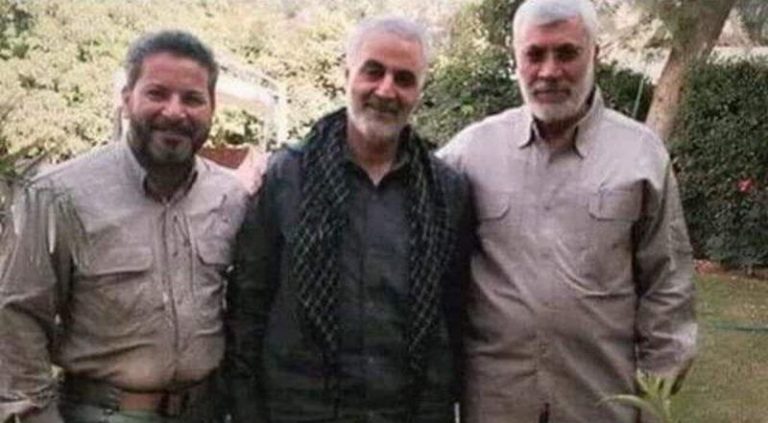
That said there are conflicting reports, with some noting that a Twitter account allegedly belonging to al-Zaidi tweeted that he is alive after the attack.

Additionally, Hamad al-Jazairi, the deputy leader of Saraya al-Khorasani, was also reprotedly among those killed tonight.

In separate, unconfirmed reports, yet another airstrike is said to have targeted a convoy in Iraq’s Nineveh governorate.

And so, with the US laying death and carnage from the sky across Iraq, reactions have ranged from the sarcastic and laconic…

… to the objectively concerned, with some wondering how much further is Iraq going to let US operate freely in country before they decide to kick their assets out? These airstrikes really make the Iraqi government look weak like they can’t deal with their problems by themselves, which may or may not be true, but the point stands.”

Of course, the other point is when and how will Iran respond, as it is now clear that if it does nothing it will only embolden the US to pick off its top generals, while any substantial escalation could lead to a regional war.


By Tyler Durden | ZeroHedge.com | Republished with permission
Oil Prices Spike as US Deploys 3,000 Additional Troops to Middle East Amid Iran Escalation

0

Oil prices jumped to the highest level in more than three months on Friday after the US killed a top Iranian military commander in Iraq, sparking fears that escalating conflict in the region could disrupt global oil supplies, Reuters reports.

An air strike at Baghdad airport killed Major-General Qassem Soleimani, architect of Iran’s spreading military influence in the Middle East, with Iran’s Supreme Leader Ayatollah Ali Khamenei vowing revenge.

Brent crude was up 3% or $1.96 a barrel by 12:37 a.m. ET (1737 GMT) at $68.21, just off the session peak of $69.50 a barrel, highest since the mid-September attack on Saudi oil facilities.

West Texas Intermediate (WTI) crude was up $1.52 or 2.5% at $62.70 a barrel. The session high was $64.09 a barrel, its highest since April 2019.

US Secretary of State Mike Pompeo said Soleimani was planning attacks on US facilities and workers in Iraq, Lebanon, Syria and other countries.

Tensions between the United States and Iran have flared over the past year as Washington reimposed sanctions on Tehran and in the aftermath of a missile and drone attack on oil installations of the Saudi Aramco company that US officials blamed Iran for.

The Soleimani attack has brought those tensions back to the forefront, fanning worries about a squeeze on crude supplies, though the effect of the increased geopolitical risk remains unclear.

“The market is trying to assess whether we’ll see a supply disruption, if any,” said Andy Lipow, president of consultants Lipow Oil Associates.

“Iran has already seen their exports cut to minimal volumes; they have little to lose in the way of crude oil exports.”

More than 675,000 front-month WTI contracts changed hands, the most in a month, while Brent trading volumes surpassed 364,000 lots, highest since the Saudi attacks.

Concern shifted to potential retaliation, and US oil companies were taking steps to evacuate workers from Iraq.

“The Iranian retaliation could take the form of a quick response by proxies against US allies and assets. One-off incidents targeting Gulf oil flows are possible, as are attacks on Gulf oil infrastructure, after the Abqaiq incident did not trigger a US military response,” said Paul Sheldon, chief geopolitical risk analyst at S&P Global Platts.

The US embassy in Baghdad on Friday urged all citizens to depart Iraq immediately, and dozens of US citizens working for foreign oil companies in the Iraqi oil city of Basra were preparing to leave, company sources told Reuters.

All oil fields across the country were operating normally and production and exports were not affected, Iraq’s Oil Ministry said in a statement. It said no other nationalities were departing.

“If the situation worsened, and oil supplies were disrupted, this could have broader economic and financial market impacts through a sharp rise in crude oil prices,” UBS Global Wealth Management’s chief investment officer Mark Haefele said in a note.

“However, spare capacity in oil remains adequate (OPEC’s and Russia’s spare capacity is around 3.3 mbpd). And, we still expect an oversupplied oil market in 2020.”

Oil prices also found support after data showed weekly US crude stockpiles fell by the most since June.

US Deploys Additional 3,000 Troops to Middle East Amid Iran Tensions

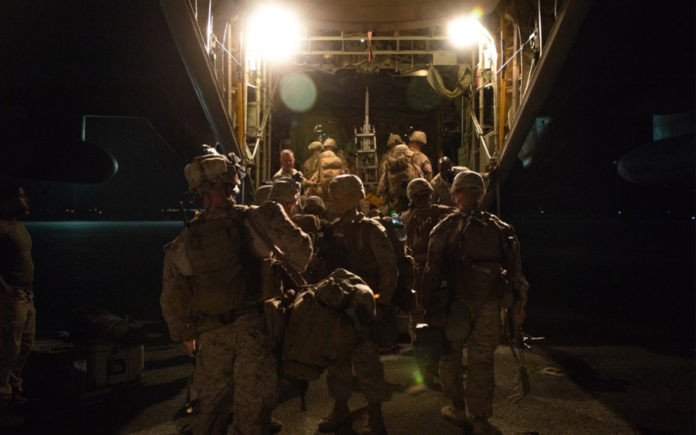
(MEMO) — The US is deploying roughly 3,000 additional troops to the Middle East after it killed a top Iranian general, according to multiple reports published Friday, Anadolu Agency reports.

The new deployment will include soldiers from the Army’s 82nd Airborne Division, the reports said citing anonymous defense and military officials.

They will be sent to both Iraq and Kuwait, according to NBC News.

Qassem Soleimani, the head of the elite Quds Force who was the chief architect of Iran’s Middle East operations, was killed early Friday morning in a US airstrike outside of Baghdad’s airport. Abu Mahdi al-Muhandis, a senior commander of Iraq’s Popular Mobilization Units (PMU) was also killed in the airstrike.

Soleimani’s slaying marks a dramatic escalation in tensions between the US and Iran, which have often been at a fever pitch since President Donald Trump chose in 2018 to unilaterally withdraw the US from the nuclear pact world powers struck with Tehran.

Iranian Supreme Leader Ali Khamenei, who gave Soleimani the country’s highest honor last year, vowed “severe retaliation” in response to his killing as Trump struck a hawkish tone of defiance.

Following the death of an American contractor in rocket attacks on a US base in Iraq, Washington carried out a series of strikes on Sunday that led to the deaths of at least 25 fighters from the Iran-backed Kataib Hezbollah militia group.

The strikes were the first major attack by the US on an Iran-linked group since the withdrawal of troops from Iraq in 2011.

The US embassy in Baghdad was then attacked by a large crowd of angry protesters on Tuesday, leading to a two-day standoff between US forces and protesters.

The Pentagon accused Soleimani of plotting the embassy attack and planning to carry out additional attacks on US diplomats and service members in Iraq and the region.

Trump said Soleimani was behind the deaths and woundings of thousands of Americans, and claimed “he was directly and indirectly responsible for the death of millions of people, including the recent large number of PROTESTERS killed in Iran itself.”

Although Iran is “not able to properly” admit it, Soleimani was both “hated and feared” within the country, the US president said in a series of tweets.

“He should have been taken out many years ago!” Trump added.


MiddleEastMonitor.com | Creative Commons

The US’ Main Allies Abandon Trump Over His Dangerous Military Escalation With Iran

1

The U.S. decision to assassinate Iranian Maj. Gen. Qassem Soleimani has been greeted with warnings from Washington’s traditional allies to avoid any further escalation of the conflict with Iran.

The drone strike on Iran’s top commander was personally approved by President Donald Trump, and was reportedly launched without consulting U.S. allies.

Needless to say, the Iranian government is furious and has promised “severe revenge” for the attack. For Tehran, the attack crosses all red lines and represents Washington behaving as a rogue superpower making a desperate gamble with the future of the region.

Global reactions to the attack have also been unkind toward Trump’s decision, with only Israel vocally backing the gambit. The picture that emerges is one of the United States facing increased isolation after it potentially lit the fuse for a massive regional conflict.

The United Kingdom: Trump Didn’t Even Bother to Tell Boris Johnson

While the U.K. has long been the closest ally of the United States—especially in regard to military interventions in the Middle East—it appears that Washington failed to consult London about its intention to launch the fateful airstrike in Iran or even tip it off to the attack, the BBC reports.

Labour Party leader Jeremy Corbyn is now pressing Prime Minister Boris Johnson to confirm what information, if any, was given to the U.K. prior to the airstrike.

In a statement Friday, Foreign Secretary Dominic Raab said that a war with Iran “is in none of our interests” and urged “all parties to de-escalate.” The foreign secretary’s statement declined to endorse or condemn U.S. actions.

Meanwhile, fellow Conservative Party MP Tom Tugendhat, who also chairs the Parliament’s Foreign Affairs Committee, told BBC News:

“I’ve long believed that the purpose of having allies is that we can surprise our enemies and not each other, and it’s been a pattern, sadly, which has been a bit of a shame, that the US administration of late has not shared with us, and that is a matter of concern.”

Acting leader of the Liberal Democrats Sir Ed Davey also blasted President Trump for “yet again radically and recklessly escalated tensions in an area where peace-keeping was already on a knife edge.”

Continuing, he demanded the prime minister clarify London’s position, adding:

“The U.K. should not automatically follow whatever position the Trump administration takes, but work with a broader group of concerned states at the United Nations.”

Other politicians and commentators across the political spectrum have also vented their anger over the attack on social media.

While London has typically been loyal to Washington in matters of war and peace in the Middle East, the U.S.’s clear disregard for protocol and shocking decision to attack Soleimani could risk undermining relations between the two countries.

France: “Escalation is Underway”                                                       

France was the first European country to react. Euro News reports that Junior Foreign Affairs Minister Amelie de Montchalin told RTL radio that “we are waking up to a more dangerous world. Military escalations are always dangerous.” She added that “escalation is underway.”

According to the Guardian, de Montchalin said that “at the European level, we have to work in collective multilateral frameworks and prevent the powers, one against the other, from playing their game in an unpredictable manner.”

President Emmanuel Macron also has voiced the need for “restraint,” urging the parties involved to “avoid a new dangerous escalation.”

Macron phoned Russian President Vladimir Putin to discuss concerns over the killing, according to a statement published Friday by the Kremlin’s website. According to the statement, both sides expressed concern that the attack “could seriously aggravate the situation in the region.”

Like the U.K. and other European countries, France played a crucial role in forging a new relationship with Iran through the 2015 nuclear accord. When Trump withdrew from the deal in May 2018, Paris was among the most vocal critics of the decision.

Germany Also Warns of “Dangerous Escalation”

The government of Germany largely blamed the crisis on Tehran but warned that the Middle East had reached “a dangerous escalation point.”

Government spokesman Ulrike Demmer said that the U.S. move “was a reaction to a series of military provocations for which Iran is responsible” while also stressing the need for diplomacy.

Israel Stands Alone at Trump’s Side

Tel Aviv quickly backed Trump’s action, with Israeli Prime Minister Benjamin Netanyahu saying in a statement:

“Just as Israel has the right of self-defense, the United States has exactly the same right. Qassem Soleimani is responsible for the death of American citizens and many other innocent people. He was planning more such attacks. President Trump deserves all the credit for acting swiftly, forcefully and decisively.” 

Opposition leader Yair Lapid of the Blue and White Party also praised the killing of Soleimani, whom he claims got “exactly what he deserved.”

By Elias Marat | Creative Commons | TheMindUnleashed.com

Related articles:

Oil Prices Spike as US Deploys 3,000 Additional Troops to Middle East Amid Iran Escalation

US Military Kills Iran’s Popular & Top Military Leader On Trump’s Order – Is That The Start Of WW3 ?

1

As peace advocates voiced alarm at the very real prospect of all-out conflict with Iran following the assassination Thursday night of that country’s top military leader on orders from U.S. President Donald Trump, war hawks who have had their crosshairs trained on Iran for years enthusiastically celebrated Trump’s decision—and even suggested the president should go further by targeting the nation’s oil refineries.

“To the Iranian government:  If you want to stay in the oil business leave America and our allies alone and stop being the largest state sponsor of terrorism in the world,” tweeted Sen. Lindsey Graham (R-S.C.), a longtime supporter of regime change in Iran.

Republican Sens. Marco Rubio (Fla.), Tom Cotton (Ark.), Jim Risch (R.-Idaho), and Ben Sasse (Neb.) joined the chorus of applause, hailing Trump for taking “decisive action.”

Trita Parsi, executive vice president at the Quincy Institute for Responsible Statecraft, tweeted in response to the torrent of praise that “hawks are celebrating [Qassem] Soleimani’s assassination not because they believe it weakened Iran. Or the IRGC. Or that Iran will lose in Iraq. But because they believe we have passed an irreversible point of escalation.”

“From here, war is unavoidable, they believe,” Parsi added. “And celebrate.”

The likely unlawful U.S. assassination of Soleimani—and the jingoistic applause it provoked—led many to express fears of a global conflict, catapulting “World War III” to the top of Twitter’s trending list. Trump, for his part, simply tweeted an image of an American flag following the strike:

Trump’s decision to kill Soleimani, as well as at least six others, with a drone strike in Baghdad came after the Pentagon threatened Iran with preemptive action in response to supposed indications it was planning attacks on U.S. forces in the region.

Though the Pentagon did not offer a shred of evidence that Soleimani or militia groups were planning attacks, corporate media outlets dutifully echoed the Trump administration’s line, leading some commentators to see parallels with the buildup to the Bush administration’s 2003 invasion of Iraq.

“I don’t see any way to stop what is coming, war from the Mediterranean to the Indus and harsh repression in the U.S. that may vitiate the 2020 election,” said Barnett Rubin of the Center on International Cooperation. “This is the test for the Democrats: have our leaders learned anything since 2003? I fear the answer.”

Observers warned the U.S. assassination of Soleimani, on top of the Trump administration’s violation of the nuclear accord last year and other aggressive actions, effectively foreclosed the possibility of peaceful negotiations with Iran.

“Whatever happens next, understand and never stop pointing out that Donald Trump walked into office with no crisis with Iran,” said Stephen Miles, executive director of Win Without War. “He then filled his cabinet with warmongers, walked away from a multilateral diplomatic accord, and purposefully engaged in ‘maximum pressure.’ He owns this.”

Iran’s Supreme Leader Ayatollah Ali Khamenei quickly vowed “harsh retaliation” in response to Soleimani’s assassination, and Iranian Foreign Minister Javad Zarif accused the U.S. of committing “an act of state terrorism.”

Amid fears of revenge attacks, the State Department on Friday urged U.S. citizens to leave Iraq immediately.

“Trump’s Iran policy has been seeking to incite war with Iran since he reneged on the nuclear deal in May 2018,” said Sina Toossi, senior research analyst with the National Iranian American Council. “If a war breaks out, the blame lies squarely with this disastrous policy and its proponents.”

“Trump thinks he got his Bin Laden moment in an election year,” Toossi added. “In reality, he’s made the worst strategic mistake by an American leader since the Iraq invasion. The consequences will be felt for years to come.”

By Jake Johnson | CommonDreams.org | Creative Commons

Related articles:

The US’ Main Allies Abandon Trump Over His Dangerous Military Escalation With Iran

Oil Prices Spike as US Deploys 3,000 Additional Troops to Middle East Amid Iran Escalation

BREAKING: US Military Continues Attack – Kills 6 Pro-Iran Iraqi Militia Commanders

“OH MY GOD” – Tesla Driver On Autopilot Films Own Crash During Rainstorm

0

Tesla Autopilot seems to give some drivers a sense of invincibility while traveling the roads as they place their lives in the hands of artificial intelligence.  

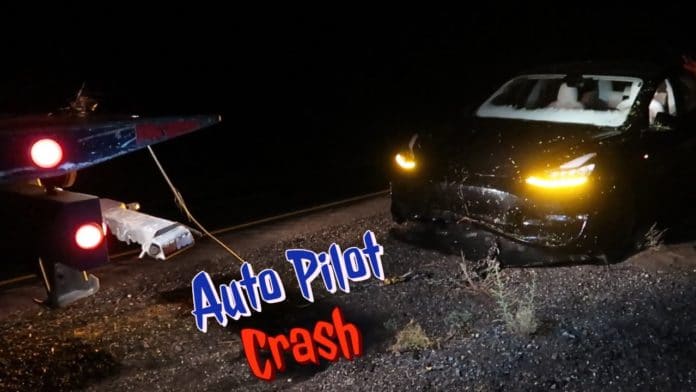
This was the case with YouTuber Dougal Vlogs, who uploaded a video on Dec. 30, showing a Model 3 presumably engaged in “Autopilot” (as per the video’s headline) traveling at a high rate of speed (over 70 mph) during a rainstorm.

The video is short, about 15 seconds, the vlogger is seen speeding down a two-lane highway traveling at 70-75mph while using Autopilot.

The vlogger is holding a camera about to talk about the Model 3, and an alarm sound starts blaring. Next thing you know, the Model 3 hydroplanes and crashes into the shoulder of the road, all caught on camera!

The vlogger was heard several times during the incident yelling “OH MOY GOD” — and at the end of the video tells his audience he just crashed.

With-in 24 hours, the video has been viewed 70k times and with over 250 comments. The vlogger was mostly ridiculed in the comment section of the video.

One YouTube said, “Let’s try out AutoPilot. Oh, yeah did I mention during a typhoon?”

Another said, “You should be cited for driving too fast for the weather conditions, reckless driving for not having your hands on the wheel, and distracted driving for being stupid enough to film in a rainstorm. Sadly you’re going to get a bunch of clicks and lots of attention for this piece of amazing stupidity. I am glad you are OK, but I am more glad that you didn’t kill some innocent person who might’ve been stuck on the side of the road or unfortunate enough to be driving next to you while you were pulling this kind of stupid nonsense.”

Someone said, “His license should be taken away. He’s a danger to all drivers and pedestrians on the road.”

Another said, “Elon Musk: “Mate! We can fix this with a firmware update.” LOL”

It remains to be seen if it was the driver’s fault or if Autopilot malfunctioned.

Source: zerohedge