Home Blog Page 2134

A Fisherman’s Account of Gaza, Fear, and his Death

0

Restricted fishing zones, from twenty nautical miles down to as little as three; honest men unable to make a living from fishing muddy waters where the fish are unable to inhabit. Boats blown apart by soldiers having a ‘bad day’, and others shot and killed without question…families surviving on international aid alone, because there is nothing else. These are some of the issues facing the fishing community in Gaza since the naval blockades were imposed in 2007.

In one personal account, a 50 year old fisherman recalls when it wasn’t unusual to bring home $500 from a single days work; he now struggles to feed his family.

His story grasps hold of you, as though you were standing on the concrete marina with him, staring out into the cold Mediterranean. But it’s all he can do now since his new boat was blown up and his son attacked by an Israeli gunboat. The occupants, his only son and his nephews were fishing two miles from the marina – within the restricted zone, were told to strip down and jump into the icy waters. What followed was a gun attack, shooting into the water around them. His son was arrested, the others survived. It was fortunate his son was returned several hours later.

But this is the way of the Gaza with the restrictions imposed. Livelihoods, stemming back generations, are devastated. Thousands of dollars of assets are either seized or destroyed. The thought of straying just past a nautical border could see you shot and killed, though there are no more fish to find in the mucky waters so close to land.

“Sometimes I think that Israel is financially fighting Palestinians in Gaza. Because they seize boats for reasons that have nothing to do with security issues, reasons that have more to do with fighting people and their source of income. Sometimes I think if they see a fisherman trying to haul in a huge amount of fish, they keep shooting until he leaves everything behind and runs. So the main target is to control what financial benefits people can get out of the sea.

It’s really hard now to support my family through fishing. It’s really bad. Before, I used to donate money to charity. But now I’m living on international aid. It’s only because of this that I can survive. We get some support from CHF, but it’s not money. It’s just flour and oil. I could make $500 a day before, and now I haven’t made anything for a month. If I could make even $30 in a day, that would be an incredible day of fishing. But I never feel discouraged. I’m always hoping for the best.” [1]

_________________________________________________________________________________________________________

Sources:

[1] Cate Malek & Mateo Hoke (7 November 2014) “When I go to work, I expect to be killed: The Terror of being a Fisherman in Gaza.” http://www.alternet.org/books/when-i-go-work-i-expect-be-killed-terror-being-fisherman-gaza (Retrieved 23 November 2014)

Wall Street Giant Paid $9 Billion To Silence Woman, but Tip of the Iceberg

4

Alayne Fleischmann was the unlikely law graduate to end up working on Wall Street. When she graduated, those who knew her best, expected a career pursued in human rights rather than the finance sector as a securities lawyer. “My whole life prior to moving into securities law was human rights work,” she says. But Wall Street knocked on her proverbial door, and with student loans to worry about, the heart of the finance sector was appealing.

Finding her passion in securities law, Fleischmann believed that she was able to make a difference from this new direction. Her talent and passion saw a career jump that landed her at one of the largest bank corporations, JPMorgan Chase, in 2006. The world held promise. But Fleischmann soon discovered that the industry was flawed; her outstanding skills, coupled with her desire to question human rights, inevitably led her to the title “whistleblower.” [1]

“It was like watching an old lady get mugged on the street,” she says, describing the actions she witnessed in her time with JPMorgan Chase as a deal manager of the bank. It was “massive criminal securities fraud” in the mortgage operations. A grand scale of fraud which saw Fleischmann blocked on every turn when trying to report it. Eventually the bank paid large fines, but without trials, judges or court system. Negotiations were settled under the table quietly and secretly; going to great lengths to conceal the goings-on from the general public.

What it came down to is Fleishmann coming across more and more loans that were approved on overstated incomes. Over 40 percent of them were based on impossible amounts. These toxic loans, bought by Chase were already several months old and defaulted on previously. They were the “bottom of the barrel” loans, where the industry resold them to investors, falsely marketing them as above subprime.

Fleischmann reported them to the diligence manager. What she saw were loans suddenly clearing, number-crunchers working back late and reports changing. Loans that would inevitably see high numbers of defaults, were cleared. The 40 percent dropped to 10 percent, a threshold that was originally 5 percent until they needed these loans to move.

Fleischmann testified in a Department of Justice deposition about the hiring of a new bank manager who oversaw the “diligence” of reviewing and clearance of loans, who instated a ‘no email policy’ in the department. There was to be no paper trail of the complaints and serious problems that Fleischmann and her colleagues highlighted, regarding packet home loans worth a collective $900 million.

In 2007, Fleischmann addressed the issue in a letter to managing director, William Buell. She also approached Greg Boster, another director, telling him that selling high-risk loans as low risk securities was fraud. By early 2008, Fleishmann was dismissed from her position in a round of layoffs and months later in September, the market began to crash. The subprime market, underwriting standards, and the dumping of these loans saw the everyday Joe become a victim of this fraudulent act.

The Saga Continues: Chase’s under the table deals.

In 2010, the Financial Crisis Inquiry Commission heard that JPMorgan Chase had been “duped…somehow we just missed, you know, that home prices don’t go up forever.” But Fleischmann, still bound by confidentiality agreements with Chase, knew that the bank had full knowledge of the bad loans being sold. So bad, that one litigant involving a credit union sued Chase for $51 million in losses.

By 2012, Fleischmann returned to Canada to find work. It had been years of trying to give evidence and repeatedly being shut down or ignored. But it 2013, she received a call to raise her hopes when civil litigators from the U.S attorney’s office, contacted her. She provided in detail all the information she had: the edict on the no email policy, the “diligence” process, the warnings she had provided regarding the risk of fraud. She expected the bank to finally have its day in court.

But rather than a day in court and Fleischmann expecting to testify, a $9 billion deal was done under the table to settle the matter, where Fleischmann was used by the Justice Department as a bargaining chip to extract hush money. Agreements were reached, including the fraud that Fleischmann had covered. JPMorgan Chase was released from civil liability, emerging with barely a scratch.

Fleischmann felt lost, but not dissuaded. The lengths that Chase had gone to keep her testimony from any hearing was tremendous. On several occasions, investigators representing different cases would ask for her testimony only to receive a reply that she wasn’t a credible witness; the Fort Worth Employee’s Retirement Fund reps, are one such group, as well as The Federal Home Loan Bank in Pittsburgh.

In the case of Pittsburgh, Chase stalled a court’s order twice on handing over Fleischmann’s name and details. By January 2014, Fleischmann discovered that Chase had settled with the Pittsburgh Bank out of court. But this isn’t her main concern. Time is running out to prosecute JPMorgan Chase. The statute of limitations time frame is running on a short fuse, and once out, Chase walks free.

“The assumption they make is that I won’t blow up my life to do it,” Fleischmann states, referencing her hope to get the truth out there and everything she risks to do it. “But they’re wrong about that.” [2]

_______________________________________________________________________________________________

Sources:

[1] Zaid Jilani (7 November 2014) “JPMorgan Chase Paid $9 Billion Fine to Keep This Woman Silent About Its Crimes.” http://www.alternet.org/corporate-accountability-and-workplace/jp-morgan-chase-paid-9-billion-keep-woman-silent-about-its

[2] Matt Taibbi (6 November 2014) “The $9 Billion Witness: Meet JPMorgan Chase’s Worst Nightmare” http://www.rollingstone.com/politics/news/the-9-billion-witness-20141106?page=6 The Rolling Stone. (Retrieved 21 November 2014)


Yes, Bayer Drug Knowingly Infected People with HIV

37

Written by: EV


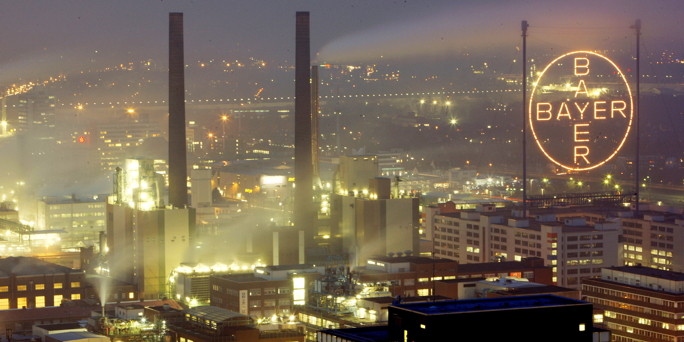
In February of 1984, a division of the pharmaceutical company Bayer (Cutter Biological) knowingly sold H.I.V. infected medications to Asia and Latin America to prevent financial losses. After a discovered H.I.V. outbreak in America amongst small, hemophiliac children that was traced back to Bayer medications, the company began to sell a new, safe medication in the West, however they sent the old batches, many of which they knew were infected, to Argentina, Indonesia, Japan, Malaysia, and Singapore. The worth of this medication totaled more than $4 million.

As unbelievable as this report may seem, I was able to trace an original article to the New York Times. Published on March 18th, 1987, it states, “Bayer A.G., the giant West German chemical company, said today that it had been sued over its sale of hemophilia drugs that may have been infected with the AIDS virus.”

It continues that Bayer representatives stated that fewer than twenty patients filed liability claims against the company, however according to a later article from New York Times, published in 2003, there’s no way of really knowing how many people were infected. Most patient records are unavailable, and since the AIDS test wasn’t developed until later in the epidemic, it’s difficult to pinpoint when foreign hemophiliacs were infected. However, in Hong Kong and Taiwan, more than 100 hemophiliacs were recorded to have contracted the disease after taking medication from the old batches.

Bayer officials, of course, stated that they had “behaved responsibly, ethically and humanely” in selling the infected medications overseas. This was after they had promised the United States regulators that they wouldn’t sell it at all. They had apparently continued to distribute the old medications for three reasons—some customers doubted the drug’s effectiveness, some countries were slow to approve sales, and due to a shortage of plasma, which is used to make the medicine, they were unable to manufacture more of the new product.

The medicine, Factor 8, was made using donated plasma from 10,000 or more donors. Since there were no screening tests for H.I.V. at the time, taking the medication was extremely risky. In the United States alone, AIDS was ultimately passed on to thousands of hemophiliacs who had taken the medication before the infected batches were discovered. Many of them have died, and the incident is now considered one of the worst drug-related medical disasters in history.

Even though Bayer admitted no wrong-doing, they’ve paid out around $600 million in settlements. The Cutter Documents—a few of which have surfaced in the media—were produced in connection with these lawsuits and outline the company’s corruption.

These are the most incriminating internal pharmaceutical industry documents I have ever seen,” said Dr. Sidney M. Wolfe, director of the Public Citizen Health Research Group.

The documents indicate that the federal regulators helped to keep the issue out of the public eye. Dr. Harry M. Meyer Jr. asked that the issue be “quietly solved without alerting the Congress, the medical community and the public,” according to Cutter’s account of a 1985 meeting between officials of the company and regulators.

No criminal charges have ever been filed, and Bayer continues to sell Factor 8 in its medications.

____________________________________________________________________________________

Sources:

A.P. New York Times. Mar 18, 1987. (http://www.nytimes.com/1987/03/18/business/bayer-named-in-aids-suit.html)

Before It’s News. Friday, July 26, 2013. (http://beforeitsnews.com/eu/2013/07/bayer-and-us-government-knowingly-gave-hiv-to-thousands-of-children-2529450.html)

Bogdanich, Walt and Koli, Eric. The New York Times. May 22, 2003. (http://www.nytimes.com/2003/05/22/business/2-paths-of-bayer-drug-in-80-s-riskier-one-steered-overseas.html?src=pm&pagewanted=1)

WorldTruth.tv. (http://worldtruth.tv/bayer-and-us-government-knowingly-gave-hiv-to-thousands-of-children/)

Protestors in Greece Meet With Police Brutality

1

Written by: EV


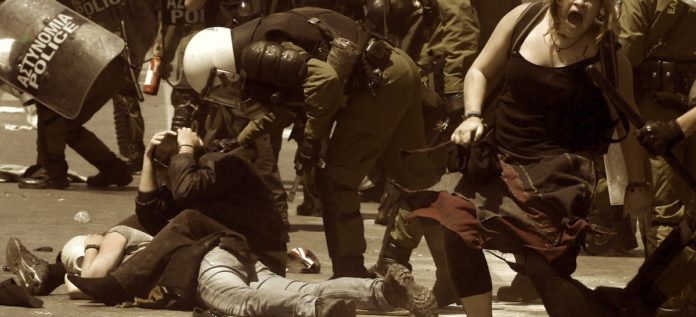
Protesters filled the streets of Athens Monday the 17th to commemorate the anniversary of the 1973 Athens Polytechnic anti-junta uprising. 35,000 people, including an additional 10,000 who were part of a rally being held at the same time in the city of Thessalonica, were met by more than 7,000 police who were deployed to “safeguard and monitor” the streets. By evening, police began to clash with students, passers-by, and demonstrators in the district of Exarcheia. This isn’t the first confrontation between protesters and police in recent days, and tensions appear to be on the rise.

On Monday the 10th, nearly six hundred high schools throughout Greece were occupied in protest of the New Lyceum legislation which was voted into Greece’s parliament last year, and has radically overhauled the process of school and university entrance examinations. Additional factors to the occupations were chronic underfunding—public spending on education in Greece makes up 2.5 percent of GDP, which is well below the European Union (EU) average of 5 percent—and lack of teaching staff.

In response to the occupations, Supreme Court Prosecutor, Efterpi Koutzamani, sent out a circular on the following Tuesday to all local prosecutors in Greece requesting they step in to restore order in the schools. She sighted another circular that had been sent out in 2009 that stated in case of “extreme criminal” behavior during the occupations, the parents of perpetrators should be investigated to establish grounds for prosecution based on negligent supervision.

Although November is the traditional month of student mobilization in Greece, in recent years it has seldom gone beyond the symbolic level. This year, however, with the problems the schools and universities are now facing, the situation has escalated. On the morning of Thursday the 13th, Athens Law School students arrived at their University in an attempt to apply their Assembly decision. This included the symbolic occupation of the University until Monday the 17th—the commemoration day of the 1973 student revolt. When they arrived, they found the school occupied by riot police.

The Athenian Universities’ rectors decided to apply a “lock out”. Neither students nor teachers were permitted to enter the building, apparently for “security reasons”. The government helped by providing police in riot gear. After an assault by the officers, a couple students were injured, and the rest dispersed. Student protests broke out by lunchtime after word spread, and other protests worked their way around the Universities, confronting a police blockade in the city center.

The student protests eventually arrived at the Polytechnic University of Athens in Exarchia, the location of the original 1973 uprising. They forced open the doors, and entered with the intention of creating another assembly, however they were immediately attacked by police. According to eye-witnesses, several protesters were injured, and hundreds were barricaded inside the Polytechnic. During a demonstration the day before, two students were injured when they were hit on the head by riot police batons.

By the evening of Monday the 17th, “Gangs of riot police soared through the narrow streets of Exarcheia on their bikes, batons in their fists, terrorizing local residents and protesters,” reported VICE Greece’s News Editor, Antonis Diniakos.

After the march on the 17th, reports were received that riot police made excessive use of teargas. Amnesty International has noted before that this is commonly used by police in Greece during demonstrations, and it is in clear violation of international standards. Things at the time had quickly spun out of control when reports started to pour in of police violence against pedestrians and journalists, including a German Erasmus student whose bloodied face is now circulating the internet.

The use of excessive force by police is normal in Greece, however the violence aimed towards journalists seems to have the special purpose of censoring the press. The decision to use police as a form of suppression is a political one. In fact, Vassilis Kikilias, the Minister of Public Order, stopped to visit the Athens police headquarters to congratulate them for a job well done.

_______________________________________________________________________________________

Sources:

Revolution News. Nov 13, 2014. (http://revolution-news.com/greece-student-protests-against-education-reform-face-police-brutality/)

Turner, Vania. VICE Media. Nov 19, 2014. (http://www.vice.com/en_uk/read/vice-reporters-attacked-by-greek-police-199)

Vassilopulos, John. World Socialist Web Site. Nov 11, 2014. (http://www.wsws.org/en/articles/2014/11/11/gree-n11.html)

Currency Exchange Corruption: Banks Fined $4.3 Billion

3

Written by: EV


Six major world banks have been fined $4.3 billion, and more fines are expected. Working together through internet chatrooms, Traders reportedly manipulated currency benchmarks—the rates in which the value of currency is measured—in an effort to boost bank profits through the foreign exchange market. According to the Associated Press, they even went as far as congratulating each other for jobs well done with quirky little quotes such as “Yeah baby,” and “nice work gents…I don my hat.”

Bank of America, Citigroup, HSBC (Hong Kong and Shanghai Banking Corporation, a British multinational banking and financial services company), JPMorgan Chase, Royal Bank of Scotland, and UBS (Union Bank of Switzerland, now merged with Swiss Bank Corporation), have all been fined so far. Barclays is still in the process of striking a deal with regulators.

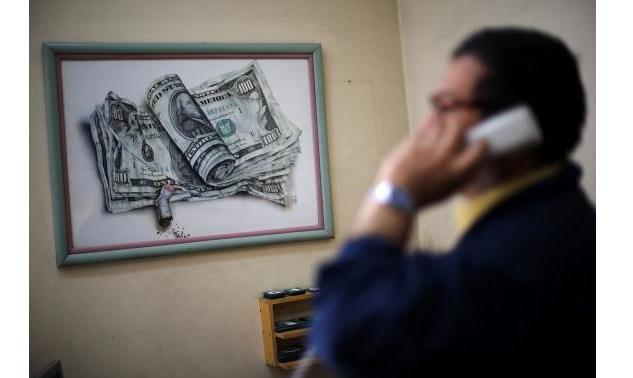
The exchange market, also referred to as forex, FX, or currency market, is a global decentralized market for trading currencies. Around $5.3 trillion passes through the foreign exchange market every day. It’s unregulated, and dominated by a few elite banks. Banks-3

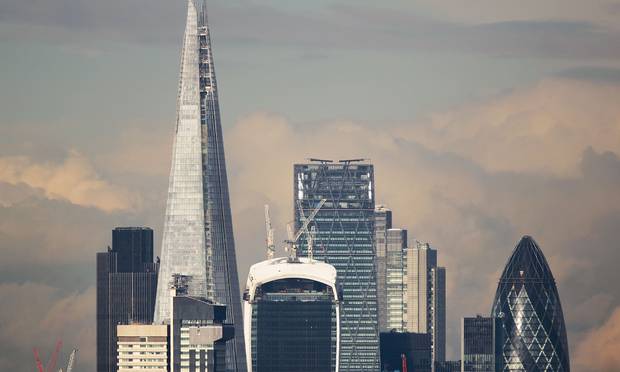
Financial Buildings Are Usually The Biggest And Highest Buildings Of A City

In one of the examples given of the manipulation, “RBS (Royal Bank of Scotland) had net client orders to sell British pounds for dollars. This meant the bank would profit if it were able to push the price of pounds lower. An RBS trader used an online chat room to share information with traders at three other firms, allowing him to increase RBS’s net sell orders to 399 million pounds from 202 million pounds and to push the price on the spot market as low as $1.6213 from $1.6276. The fix was eventually set at $1.6218. As a result, RBS made a profit of $615,000.”

“The setting of a benchmark rate is not simply another opportunity for banks to earn a profit. Countless individuals and companies around the world rely on these rates to settle financial contracts, and this reliance is premised on faith in the fundamental integrity of these benchmarks,” Aitan Goelman, Director of Enforcement at CFTC.

The Bank of England (BoE) has begun to scrutinize the bonuses being awarded to the Traders involved in the scandal, and have found that some of the banks have already started to “claw back” the bonus awards. BoE Governor, Mark Carney, says the regulators may need to target bankers fixed pay as well in order to rein in incentives for market abuses and excessive risk-taking.

Charges against individuals are reportedly underway, but many are angry that neither the British nor U.S. governments are willing to prosecute senior bankers for criminal fraud. The City of London is apparently unwilling to prosecute senior bankers due to the donations received by the Conservative Party from the financial sector. Not one board-level director in the banking sector, in either Britain or the U.S., has been charged with fraud since the 2008 banking crisis.

_____________________________________________________________________________________________

Sources:

Brunsden, Jim. Bloomberg Businessweek. Nov 17, 2014. (http://www.businessweek.com/news/2014-11-17/carney-says-fixed-salaries-may-be-next-target-for-bank-pay-curbs)

Gordon. The Associated Press. Reported from Washington. Nov 12, 2014. (http://www.washingtonpost.com/world/europe/banks-fined-billions-for-rigging-currency-markets/2014/11/12/4eda77ca-6acb-11e4-bafd-6598192a448d_story.html)

Jones, Huw and Bruce, Andy. Reuters-London. Nov 19, 2014. (http://uk.reuters.com/article/2014/11/19/uk-banks-forex-bankofengland-idUKKCN0J31Q120141119)

  1. RT. Nov 12, 2014. (http://rt.com/business/204731-currency-manipulation-fine-billion/)

Taplin, Ian. New Internationalist. Nov 19, 2014. (http://newint.org/blog/2014/11/19/banking-fraud-baddies/)