Over a million acres have burned in Oregon, displacing thousands of people in what officials describe as a “perfect storm.”
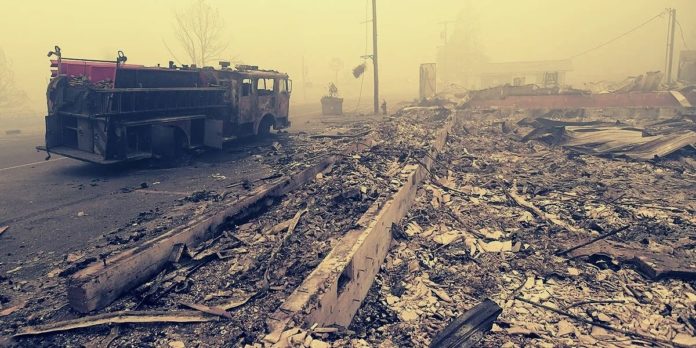
As the West Coast continues struggling to control devastating fires, the small city of Detroit, Oregon, which lies roughly 120 miles southeast of Portland, has been destroyed by the fires so comprehensively that it “looks like a bomb went off,” according to local residents.
The flattening of the rural town comes as Oregon State Police have deployed the first-ever mobile morgue in expectation of what officials have warned over the weekend could be a “mass fatality incident,” with at least 10 deaths confirmed and another 50 people unaccounted for.
The small city of Detroit, which has a population of about 210 residents, is only one of multiple towns that have been devastated by the unprecedented wildfires that have spread across western Oregon, forcing tens of thousands to be evacuated and displacing countless people as thousands of homes have been reduced to ashes.
“We have approximately 20-25 structures still standing, and the rest are gone,” the Idanha-Detroit Rural Fire Protection District announced on Facebook.
Detroit’s City Hall, which also serves as the district office for the local fire department, was one of the many buildings consumed by flames.
“Our primary focus is protecting the structures that are still standing,” officials said. “Several of our firefighters have also lost their homes. They are working through their own losses while also fighting to protect homes still intact.”
Sandi Elwood, who grew up in Detroit, was horrified when she drove into town to assess the damage. Multiple buildings were utterly annihilated by the fires, including her old church, the bar where she once worked, the marina where she would hang out during the summer, as well as her mother’s home and those belonging to countless others.
Her mother, who was evacuated from the city, still hasn’t seen the scorched ruins of her hometown – but is feeling numb nevertheless.
“The reality will probably hit her when she’s standing on her property,” Elwood said.
Elizabeth Smith was another Detroit local whose every possession was lost when the wildfire swept through the town.
“Our homes are absolutely destroyed,” Smith told KATU. “I’ve seen a few videos and photos and my lovely little house that we remodeled 12 years ago in this beautiful canyon area is absolutely flattened. It looks as though a bomb went off.”
The small community had gone from no evacuation order to an urgent level three “go now” mandatory evacuation notice in a matter of only a few hours. Some residents remain frustrated by the poor communication.
“I’m not going to blame anybody. It’s what it is,” said Detroit Mayor Jim Trett. “But yeah, we would have liked to have more of an alert. But I can’t blame anybody because this thing just came like a freight train.”
The mayor compared the explosive Lionshead Fire to the Camp Fire that destroyed Paradise, California, two years ago.
“If you remember the Paradise Fire in 2018, it’s the same topography: three canyons coming down like a funnel into the city of Paradise at the bottom of the funnel,” Trett explained. “When I heard that two years ago I said, that’s Detroit.”
The terrible damage wrought by fires remains incalculable, as huge fires spanning several have burned 4.6 million acres so far – an area equivalent to Connecticut and Rhode Island combined.
The 94 major blazes have mainly burned rural zones and forest land, but major urban centers like Los Angeles, San Francisco, Seattle, and Portland have seen their air quality plummet and the sun blotted out due to the toxic smoke being pumped out of the fires, increasing the risk of lung infections and infectious diseases.
Oregon Department of Forestry Fire Chief Doug Grafe expects that at least eight of Oregon’s wildfires will continue burning “until the winter’s rains fall,” while California still has four months left of fire season.
Emergency workers are also fighting to recover bodies from the fire, and in some cases have located the corpses of victims but have been unable to recover them due to harsh conditions.
Dozens remain missing in the western Oregon counties of Jackson, Lane, and Marion, according to Gov. Kate Brown.
For the first time in Oregon’s history, the state has now activated a 75-person regional response team to recover bodily remains and operate a mobile morgue. The state has long trained for such an event but up to now, hasn’t been forced to use it. Certified death investigators, law enforcement personnel, criminalists and forensic scientist will be aiding the team’s efforts, reports the Oregonian.
While Oregon’s fires usually consume 500,000 acres annually in the state, “this week alone, we burned over a million acres of beautiful Oregon,” Gov. Brown said.
“We saw the perfect fire storm,” she added. “We saw incredible winds. We saw very cold, hot temperatures and, of course, we have a landscape that has seen 30 years of drought.”
The terrible nature of the fires confirms the worst forecasts of climate experts, Oregon-based wildland fire ecologist and former wildland firefighter Timothy Ingalsbee told Democracy Now.
“These are climate fires,” Ingalsbee said. “And they’re the product of extreme heat waves and prolonged droughts and then very low humidities.”
“Though some scientists hesitate to attribute a single event to climate change, these are exactly the conditions predicted by climatologists,” he added. “And where once they were rare — I mean, they’re not entirely unprecedented in our prehistoric past — they will become much more frequent in the days ahead.”
Inhaling diffused incense is a moderate to low-risk and may be well worth it to those who suffer from their stressful conditions.
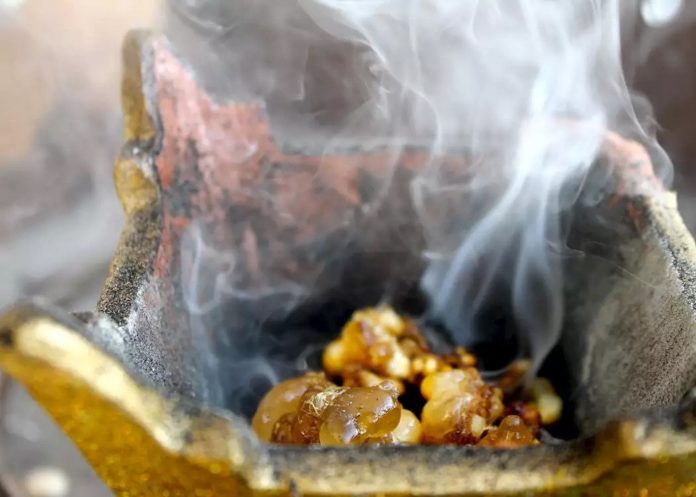
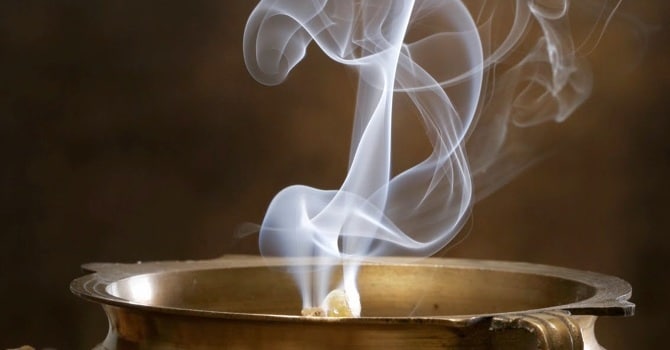
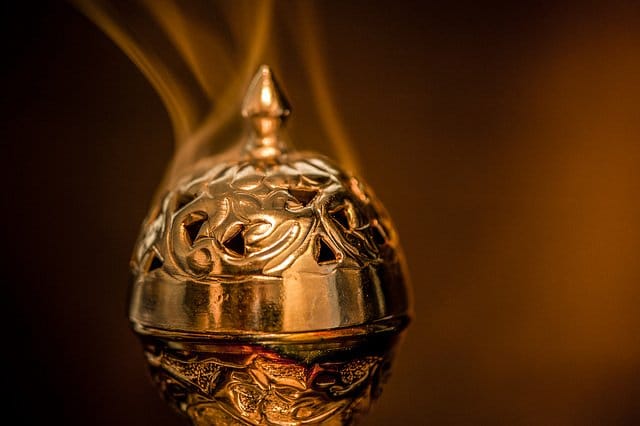
Burning Frankincense in the form of incense has been a big part of religious and other cultural ceremonies for a millennium. The resin from the Boswellia tree also known as Frankincense or olibanum is believed to be an aroma that will help your soul reach spiritual exaltation.
Frankincense resin is mentioned in many different ancient texts including the old and new testament and is said to have mystical capabilities, a belief that has been carried forward to the spiritual practices of today.
Recently a team of researchers from Johns Hopkins University and the Hebrew University in Jerusalem did a study to see what the effects were of this age-old practice. They studied Frankincense to determine why it has psychoactive effects.
In order to conduct the study and observe the effects of Frankincense on the mind, the researchers administered a primary Boswellia resin incensole acetate to some mice. The team found that the ‘incensole acetate’ influences the areas of the brain which regulate emotions.
Specifically the insense activated the protein TRPV3 which is common in all mammal brains. This protein is already known to help play a role in our skins perception of warmth. The effect on the mind, however, has a strong anti-depressant and anxiolytic effect which can leave you feeling open and relaxed. Frankincense helps your mind to rest and simply perceive the world around it.
It may not be a coincidence at all that many religions and spiritual practices have you burn Frankincense incense. This could help participants induce a sense of calm observation and reflect on life while being able to plan for the future much simpler and less stressful. Going to the a ceremony with Frankincense would generally help people feel calmer and happier.
In the Middle East during ancient times Boswellia resin was considered a precious commodity that came in from the sub-Saharan regions on caravans. It is still a major export in modern days.
Ancient Greeks used the precious resin as an oblation to the ancient Egyptians. Frankincense was used to help people manifest the presence of various gods and as a sign of gratification. In Ancient Judea and modern times they also used frankincense as the center of their ceremonies. The resin is also using in many Christian churches as well.
“In spite of information stemming from ancient texts, constituents of Bosweilla had not been investigated for psychoactivity,” said co-author of the study Raphael Mechoulam. “We found that incensole acetate, a Boswellia resin constituent, when tested in mice lowers anxiety and causes antidepressive-like behavior. Apparently, most present day worshipers assume that incense burning has only a symbolic meaning.”
Now in modern times frankincense is not only recognized for its spiritual role but as a practical form of treatment for people who suffer from depression and anxiety. According to the National Institutes of Health major depression is the leading cause of disability in the U.S. for people between the ages of 15-44 which ends up being around 15 million people.
3 million people in the U.S. has a dysthymic disorder which is a less severe type of depression and over 40 million people report suffering from some form of severe anxiety. Depression and anxiety are linked and often overlap in many cases. In the end, it all seems to come down to a battle over trying to return to a balanced state of mental peace.
We need not jump straight to the side-effect-ridden drugs from the p************* companies which often times cause the same problems they treat. Instead, we can turn to mother earth and try natural items such as frankincense and add other tools such as yoga, meditation, and proper nutrition into our lives to help us return to a balanced state of health.
Our sense of smell is strongly linked to the limbic system in the brain which is where we regulate motivation and emotion. Anxiety and depression affect almost 60 million people in the US. If used in moderation inhaling diffused incense is a moderate to low-risk and may be well worth it to those who suffer from their stressful conditions.
Frankincense has been found to help our body in more ways than just mental health. It has also been shown to help as a remedy for nausea, chest coughs, fever, hypertension as well as a great way to keep harmful insects such as mosquitos away!
Be prepared: Neither Trump nor Biden fans will like this article, cause as usual, the truth is ugly and hurts.
A new poll released Thursday has found that a majority of voters feel like President Trump nor nominee Joe Biden is mentally fit to be president.
If you’ve been less than excited about either of the 2020 presidential candidates, it may not come as a surprise that you’re far from alone.
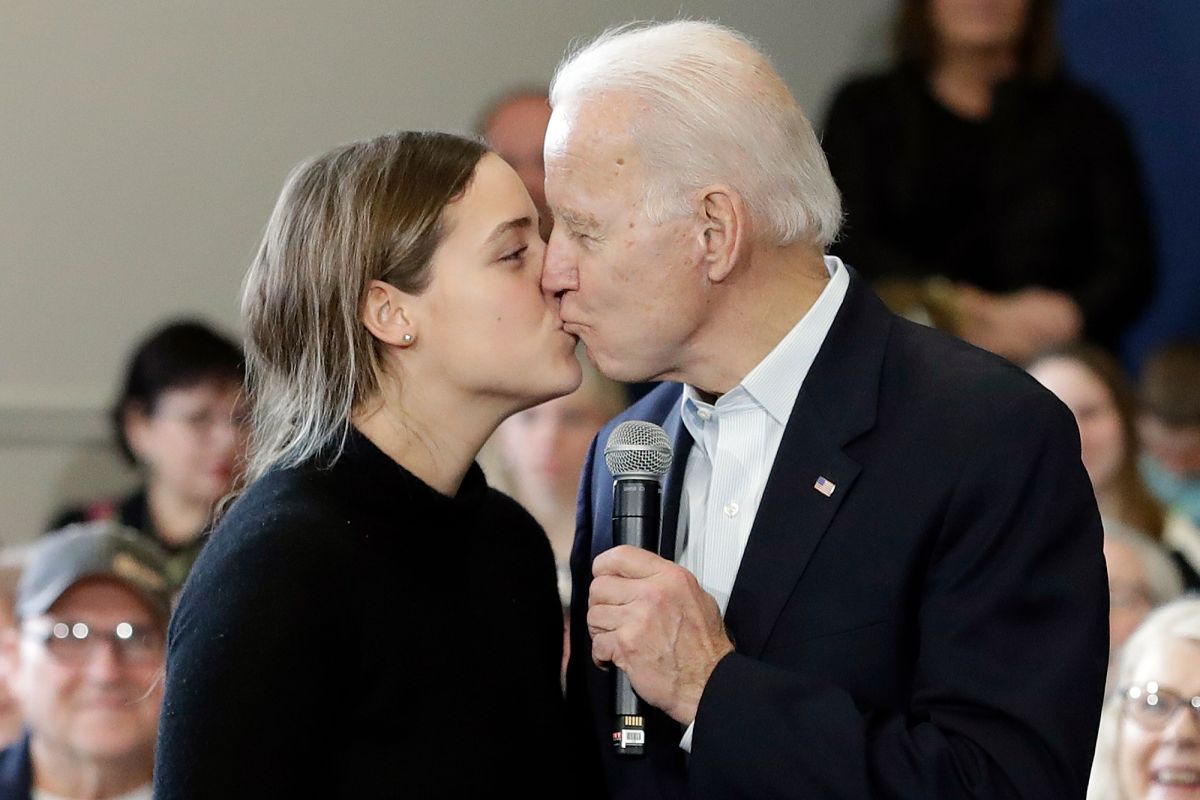
Joe Biden kisses granddaughter on lips during Iowa rally
A new CNBC-Change Research poll released Thursday has found that a majority of voters in six crucial 2020 swing states feel like neither incumbent President Donald Trump nor Democratic presidential nominee Joe Biden is mentally fit to be president.
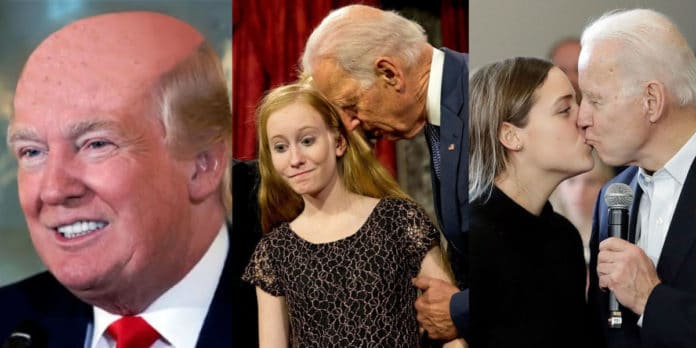
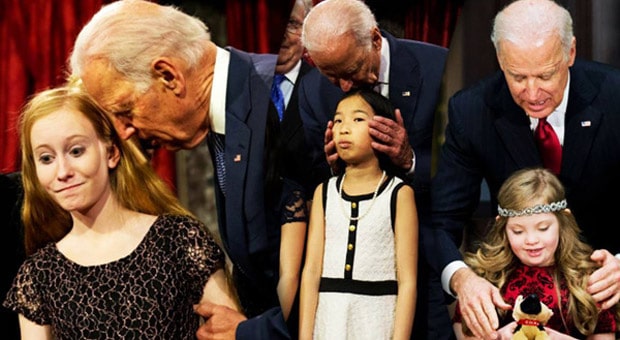
Joe Biden has been in critics for his repeatedly “creepy” behaviour towards women and girls of all ages.
The poll surveyed voters in the crucial states of Arizona, Florida, Michigan, North Carolina, Pennsylvania and Wisconsin and comes as the Trump campaign continues its attempts to drill into voters’ heads the idea that “Sleepy Joe” Biden is a doddering career politician on the verge of senility.
Sleepy Joe has been in politics for 40 years, and did nothing. Now he pretends to have the answers. He doesn’t even know the questions. Weakness will never beat anarchists, looters or thugs, and Joe has been politically weak all of his life. LAW & ORDER!
However, any doubts on the part of voters about Biden being unfit for the job don’t necessarily mean that they see Trump as up to the task.
Either senile “Creepy Joe” or “Grab Them By The Pussy Trump”, America is doomed.
The poll found that 51 percent of respondents believe Trump is mentally unfit for the job, while 52 percent say the same about former vice president Biden.
Voters had slightly more confidence in the physical fitness of the two presidential hopefuls, with 52 percent believing that Trump, 74, is fit enough to continue serving in office while 54 percent believe Biden, 77, can physically handle the job.
At this point it’s really hard to say what is more gross and disturbing: Grabbing, smelling and kissing little girls and kissing your granddaughter on the lips (Joe Biden) or repeatedly saying that you would f*ck your daughter if you weren’t her father…
The poll surveyed 4,143 likely voters across the pivotal states and has a margin of error of plus or minus 1.4 percentage points. Biden led Trump in all of those states by at least a slight margin, while most voters disapproved of the president’s law and order-focused slate.
The poll’s release comes as both candidates’ fitness remains a concern for voters, with both men being the oldest candidates to ever compete for office.
Trump has persistently cast doubt on the mental acuity of the gaffe-prone former vice president, using blistering language to mock Biden and present him as a far past his prime and suffering “cognitive decline.”
However, Trump himself has also been prone to gaffes, and has been seen over the summer giving incoherent, rambling speeches while struggling to pronounce words properly.
Trump has also recently denied speculation that he suffered a stroke, a series of mini-strokes, or another heart emergency after a new book reported that Vice President Mike Pence was placed on standby in 2019 in case the president became incapacitated.
Media outlets generally sympathetic to the Biden campaign and the Democratic Party have long hammered away at the president over the question of his mental fitness to serve as president.
Former officials and advisers have also spoken out and voiced their opinion that Trump’s mental health is an issue, with various ex-White House officials claiming that their former boss suffers from “mental decline,” or that he is prone to erratic behavior and frequently struggles with confusion and an inability to piece together information presented to him.
According to a CNBC/Change Research poll, most voters in six swing states don't consider either Trump or Biden as 'mentally fit' to be president.
Can anyone be mentally fit to do the impossible?
The US Presidency has been warped into something it wasn't ever intended to be.
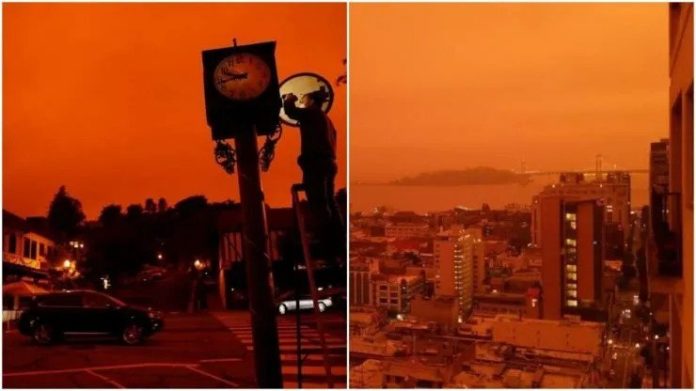
Bay Area skies have been darkened and transformed into an apocalyptic red – drawing comparisons to life on Mars or perhaps even hell.
ened and transformed into an apocalyptic red – drawing comparisons to life on Mars or perhaps even hell.
Residents of San Francisco, Oakland, and surrounding communities woke up to ominous pumpkin-orange skies on Wednesday, a result of toxic air overhead and massive plumes of smoking reaching high into the atmosphere, dimming the sunlight and creating an otherworldly ambiance.
What would have been a normally bright and sunny morning instead looked like dawn as the sun’s rays struggled to penetrate the smoky haze, reports SFGate.
As a result, many slept in because it remained dark outside, while one father joked to his children that they had been moved overnight to Mars, reports the San Francisco Chronicle.
If you woke up this morning and thought you were on Mars instead of the Bay Area, you’re definitely not alone.
“It feels like the end of the world, or like Mordor. But I guess it’s just a weird mix of smog and smoke and haze,” local resident Catherine Geeslin told the Chronicle in between snapping cell phone shots of the blackened sky. “It was alarming to see it’s still dark. And it will be strange to have lunch in the dark. But you still have to get on with your day.”
The smoke is the result of the massive August Complex Fire near Mendocino National Forest, the site of a huge cluster of wildfires in Northern California, as well as similarly unprecedented fires across Washington and Oregon. The wind has pushed the fire southward from as far as the Pacific Northwest U.S. into the Bay Area.
“Extremely dense & tall smoke plumes from numerous large wildfires, some of which have been generating nocturnal pyrocumulunimbus clouds (‘fire thunderstorms), are almost completely blocking out the sun across some portions of Northern California this morning,” UCLA climate scientist Daniel Swain wrote on Twitter.
Extremely dense & tall smoke plumes from numerous large wildfires, some of which have been generating nocturnal pyrocumulunimbus clouds ("fire thunderstorms"), are almost completely blocking out the sun across some portions of Northern California this morning. #CAwx#CAfirepic.twitter.com/y9evl4u0eq
Extremely dense & tall smoke plumes from numerous large wildfires, some of which have been generating nocturnal pyrocumulunimbus clouds ("fire thunderstorms"), are almost completely blocking out the sun across some portions of Northern California this morning. #CAwx#CAfirepic.twitter.com/y9evl4u0eq
In the meantime, a snow-like blanket of ash has also come in from the Bear Fire near Chico, California, which exploded overnight and sent a blizzard of ash into the region’s air.
The ash at Buchanan Field Airport in Concord nearly created sights rarely seen in the Bay, according to National Weather Service forecaster Roger Gass.
“They reported a significant amount of ash,” Gass said. “Almost to the point where it looked like moderate to heavy snow.”
However, Bay Area residents are fortunate because while the high-altitude smoke may create a dramatic scene, the toxic air remains hover above the marine layer from the Pacific Ocean, which offers literal breathing room to locals and a respite from the smoky stench of fire season.
This is what the sky looks like where I live. For reference, it’s 9AM and I just woke up. Initially it was so dark I thought it was 5AM before I looked at a clock. pic.twitter.com/V3gAgprZHK
“The marine layer is a stable area of air that does not rise, and so we’re continually pumping in cleaner air from over the ocean,” said ABC7meteorologist Mike Nicco.
The surreal conditions underscore the bizarre and unnerving nature of 2020, a year that has been characterized by a pandemic, acute social unrest, and a brutal wave of wildfires across the Golden State.
“Pretty much all the customers have the apocalypse on their mind,” barista Leah Lozano said. “It’s a metaphor for our current plight,”
Just before dawn on May 13, 1862, Robert Smalls and a crew composed of fellow slaves, in the absence of the white captain and his two mates, slipped a cotton steamer off the dock, picked up family members at a rendezvous point, then slowly navigated their way through the harbor. Smalls, doubling as the captain, even donning the captain’s wide-brimmed straw hat to help to hide his face, responded with the proper coded signals at two Confederate checkpoints, including at Fort Sumter itself, and other defense positions. Cleared, Smalls sailed into the open seas. Once outside of Confederate waters, he had his crew raise a white flag and surrendered his ship to the blockading Union fleet.
In fewer than four hours, Robert Smalls had done something unimaginable: In the midst of the Civil War, this black male slave had commandeered a heavily armed Confederate ship and delivered its 17 black passengers (nine men, five women and three children) from slavery to freedom.
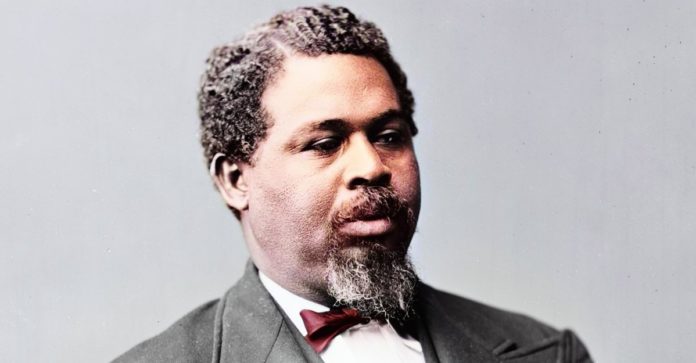
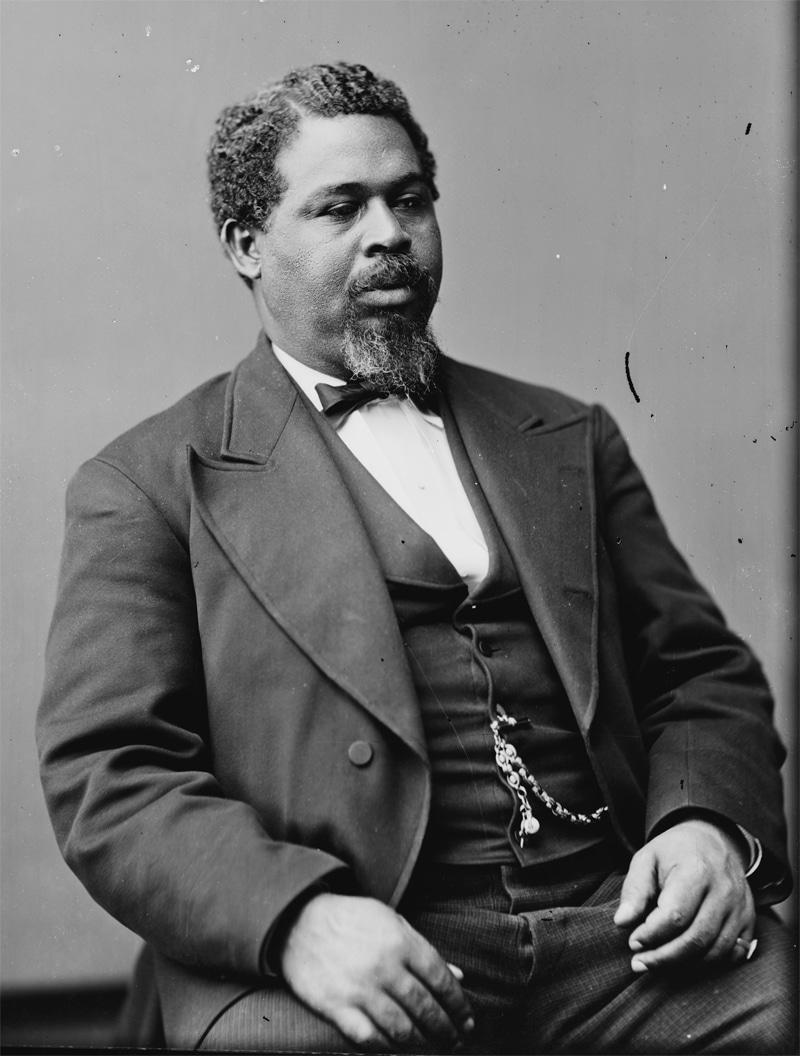
Robert Smalls, S.C. M.C. Born in Beaufort, SC, April 1839. (Library of Congress, prints and photographs division).
Sailing From Slavery to Freedom
Our story begins in the second full year of the war. It is May 12, 1862, and the Union Navy has set up a blockade around much of the Atlantic and Gulf Coasts. Inside it, the Confederates are dug in defending Charleston, S.C., and its coastal waters, dense with island forts, including Sumter, where the first shots of the Civil War were fired exactly one year, one month, before. Attached to Brig. Gen. Roswell Ripley’s command is the C.S.S. Planter, a “first-class coastwise steamer” hewn locally for the cotton trade out of “live oak and red cedar,” according to testimony given in a U.S. House Naval Affairs Committee report 20 years later.
After two weeks of supplying various island points, the Planter returns to the Charleston docks by nightfall. It is due to go out again the next morning and so is heavily armed, including approximately 200 rounds of ammunition, a 32-pound pivot gun, a 24-pound howitzer and four other guns, among them one that had been dented in the original attack on Sumter. In between drop-offs, the three white officers on board (Capt. C.J. Relyea, pilot Samuel H. Smith and engineer Zerich Pitcher) make the fateful decision to disembark for the night — either for a party or to visit family — leaving the crew’s eight slave members behind. If caught, Capt. Relyea could face court-martial — that’s how much he trusts them.
At the top of the list is Robert Smalls, a 22-year-old mulatto slave who’s been sailing these waters since he was a teenager: intelligent and resourceful, defiant with compassion, an expert navigator with a family yearning to be free. According to the 1883 Naval Committee report, Smalls serves as the ship’s “virtual pilot,”but because only whites can rank, he is slotted as “wheelman.” Smalls not only acts the part; he looks it, as well. He is often teased about his resemblance to Capt. Relyea: Is it his skin, his frame or both? The true joke, though, is Smalls’ to spring, for what none of the officers know is that he has been planning for this moment for weeks and is willing to use every weapon on board to see it through.
Background
Smalls was born on April 5, 1839, behind his owner’s city house at 511 Prince Street in Beaufort, S.C. His mother, Lydia, served in the house but grew up in the fields, where, at the age of nine, she was taken from her own family on the Sea Islands. It is not clear who Smalls’ father was. Some say it was his owner, John McKee; others, his son Henry; still others, the plantation manager, Patrick Smalls. What is clear is that the McKee family favored Robert Smalls over the other slave children, so much so that his mother worried he would reach manhood without grasping the horrors of the institution into which he was born. To educate him, she arranged for him to be sent into the fields to work and watch slaves at “the whipping post.”
“The result of this lesson led Robert to defiance,” wrote great-granddaughter Helen Boulware Moore and historian W. Marvin Dulaney, and he “frequently found himself in the Beaufort jail.” If anything, Smalls’ mother’s plan had worked too well, so that “fear[ing] for her son’s safety … she asked McKee to allow Smalls to go to Charleston to be rented out to work.” Again her wish was granted. By the time Smalls turned 19, he had tried his hand at a number of city jobs and was allowed to keep one dollar of his wages a week (his owner took the rest). Far more valuable was the education he received on the water; few knew Charleston harbor better than Robert Smalls.
It’s where he earned his job on the Planter. It’s also where he met his wife, Hannah, a slave of the Kingman family working at a Charleston hotel. With their owners’ permission, the two moved into an apartment together and had two children: Elizabeth and Robert Jr. Well aware this was no guarantee of a permanent union, Smalls asked his wife’s owner if he could purchase his family outright; they agreed but at a steep price: $800. Smalls only had $100. “How long would it take [him] to save up another $700?” Moore and Dulaney ask. Unwittingly, Smalls’ “look-enough-alike,” Captain Rylea, gave him his best backup
To white Confederates, the Union ships blocking their harbors were another example of the North’s enslavement of the South; to actual slaves like Robert Smalls, these ships signaled the tantalizing promise of freedom. Under orders from Secretary Gideon Welles in Washington, Navy commanders had been accepting runaways as contraband since the previous September. While Smalls couldn’t afford to buy his family on shore, he knew he could win their freedom by sea — and so he told his wife to be ready for whenever opportunity dawned.
The Escape on the Planter
That opportunity is at hand on the night of May 12. Once the white officers are on shore, Smalls confides his plan to the other slaves on board. According to the Naval Committee report, two choose to stay behind. “The design was hazardous in the extreme,” it states, and Smalls and his men have no intention of being taken alive; either they will escape or use whatever guns and ammunition they have to fight and, if necessary, sink their ship. “Failure and detection would have been certain death,” the Navy report makes plain. “Fearful was the venture, but it was made.”
At 2:00 a.m. on May 13, Smalls dons Capt. Rylea’s straw hat and orders the Planter’s skeleton crew to put up the boiler and hoist the South Carolina and Confederate flags as decoys. Easing out of the dock, in view of Gen. Ripley’s headquarters, they pause at the West Atlantic Wharf to pick up Smalls’ wife and children, along with four other women, three men and another child.
At 3:25 a.m., the Planter accelerates “her perilous adventure,” the Navy report continues (it reads more like a Robert Louis Stevenson novel). From the pilot house, Smalls blows the ship’s whistle while passing Confederate Forts Johnson and, at 4:15 a.m., Fort Sumter, “as cooly as if General Ripley was on board.” Smalls not only knows all the right Navy signals to flash; he even folds his arms like Capt. Rylea, so that in the shadows of dawn, he passes convincingly for white.
“She was supposed to be the guard boat and allowed to pass without interruption,” Confederate Aide-de-Campe F.G. Ravenel explains defensively in a letter to his commander hours later. It is only when the Planterpasses out of Rebel gun range that the alarm is sounded — the Planter is heading for the Union blockade. Approaching it, Smalls orders his crew to replace the Palmetto and Rebel flags with a white bed sheet his wife brought on board. Not seeing it, Acting Volunteer Lt. J. Frederick Nickels of the U.S.S. Onward orders his sailors to “open her ports.” It is “sunrise,” Nickels writes in a letter the same day, an illuminating fact that may have changed the course of history, at least on board the Planter — for now Nickels could see.
In The Negro’s Civil War, the dean of Civil War studies James McPherson quotes the following eyewitness account: “Just as No. 3 port gun was being elevated, someone cried out, ‘I see something that looks like a white flag’; and true enough there was something flying on the steamer that would have been white by application of soap and water. As she neared us, we looked in vain for the face of a white man. When they discovered that we would not fire on them, there was a rush of contrabands out on her deck, some dancing, some singing, whistling, jumping; and others stood looking towards Fort Sumter, and muttering all sorts of maledictions against it, and ‘de heart of de Souf,’ generally. As the steamer came near, and under the stern of the Onward, one of the Colored men stepped forward, and taking off his hat, shouted, ‘Good morning, sir! I’ve brought you some of the old United States guns, sir!’ ” That man is Robert Smalls, and he and his family and the entire slave crew of the Planter are now free.
After “board[ing] her, haul[ing] down the flag of truce, and hoist[ing] the American ensign” (his words), Lt. Nickels transfers the Planter to his commander, Capt. E.G. Parrott of the U.S.S. Augusta. Parrott then forwards it on to Flag Officer Samuel Francis Du Pont (of the “du Pont” Du Ponts), at Port Royal, Hilton Heads Island, with a letter describing Smalls as “very intelligent contraband.” Du Pont is similarly impressed, and the next day writes a letter to the Navy secretary in Washington, stating, “Robert, the intelligent slave and pilot of the boat, who performed this bold feet so skillfully, informed me of [the capture of the Sumter gun], presuming it would be a matter of interest.” He “is superior to any who have come into our lines — intelligent as many of them have been.” While Du Pont sends the families to Beaufort, he takes care of the Planter’screw personally while having its captured flags mailed to Washington via the Adams Express, the same private carrier that had delivered Box Brown to freedom in 1849.
The Reception
Smalls may not have had the $700 he needed to purchase his family’s freedom before the war; now, because of his bravery and his inability to purchase his wife, the U.S. Congress on May 30, 1862, passed a private bill authorizing the Navy to appraise the Planter and award Smalls and his crew half the proceeds for “rescuing her from the enemies of the Government.” Smalls received $1,500 personally, enough to purchase his former owner’s house in Beaufort off the tax rolls following the war, though according to the later Naval Affairs Committee report, his pay should have been substantially higher.
The Confederates seemed to know this already; after Smalls’ escape, biographer Andrew Billingsley notes, they put a $4,000 bounty on his head. Still, those on the scene had a hard time explaining how slaves pulled off such a feat; in the aftermath, Aide-de-Campe Ravenel even intimated to his commander that the night before, “it would appear that … two white men and a white woman went on board of her, and as they were not seen to return it is supposed that they have also gone with her.” Suppose all they wanted — there was no record of any white passengers aboard the Planter the morning of May 13 — Smalls and his crew had acted alone. As his contemporary steamer pilot Mark Twain famously wrote: “Facts are stubborn things.”
In the North, Smalls was feted as a hero and personally lobbied the Secretary of War Edwin Stanton to begin enlisting black soldiers. After President Lincoln acted a few months later, Smalls was said to have recruited 5,000 soldiers by himself. In October 1862, he returned to the Planter as pilot as part of Admiral Du Pont’s South Atlantic Blockading Squadron. According to the 1883 Naval Affairs Committee report, Smalls was engaged in approximately 17 military actions, including the April 7, 1863, assault on Fort Sumter and the attack at Folly Island Creek, S.C., two months later, where he assumed command of the Planter when, under “very hot fire,” its white captain became so “demoralized” he hid in the “coal-bunker.” For his valiancy, Smalls was promoted to the rank of captain himself, and from December 1863 on, earned $150 a month, making him one of the highest paid black soldiers of the war. Poetically, when the war ended in April 1865, Smalls was on board the Planter in a ceremony in Charleston Harbor.
Robert Smalls’ Postwar Record
Following the war, Smalls continued to push the boundaries of freedom as a first-generation black politician, serving in the South Carolina state assembly and senate, and for five nonconsecutive terms in the U.S. House of Representatives (1874-1886) before watching his state roll back Reconstruction in a revised 1895 constitution that stripped blacks of their voting rights. He died in Beaufort on February 22, 1915, in the same house behind which he had been born a slave and is buried behind a bust at the Tabernacle Baptist Church. In the face of the rise of Jim Crow, Smalls stood firm as an unyielding advocate for the political rights of African Americans: “My race needs no special defense for the past history of them and this country. It proves them to be equal of any people anywhere. All they need is an equal chance in the battle of life.”
Imagine what the Planter and its guns and ammunition would fetch in current dollars? One thing I know: Robert Smalls and the purchase of his family’s freedom? Priceless.
This website uses cookies to improve your experience. We'll assume you're ok with this, but you can opt-out if you wish.AcceptRead More
Privacy & Cookies Policy
Privacy Overview
This website uses cookies to improve your experience while you navigate through the website. Out of these, the cookies that are categorized as necessary are stored on your browser as they are essential for the working of basic functionalities of the website. We also use third-party cookies that help us analyze and understand how you use this website. These cookies will be stored in your browser only with your consent. You also have the option to opt-out of these cookies. But opting out of some of these cookies may affect your browsing experience.
Necessary cookies are absolutely essential for the website to function properly. This category only includes cookies that ensures basic functionalities and security features of the website. These cookies do not store any personal information.
Any cookies that may not be particularly necessary for the website to function and is used specifically to collect user personal data via analytics, ads, other embedded contents are termed as non-necessary cookies. It is mandatory to procure user consent prior to running these cookies on your website.