
Home Blog Page 31

Heavy 7.3 Earthquake in Fukushima Again: Tsunami Alert

0

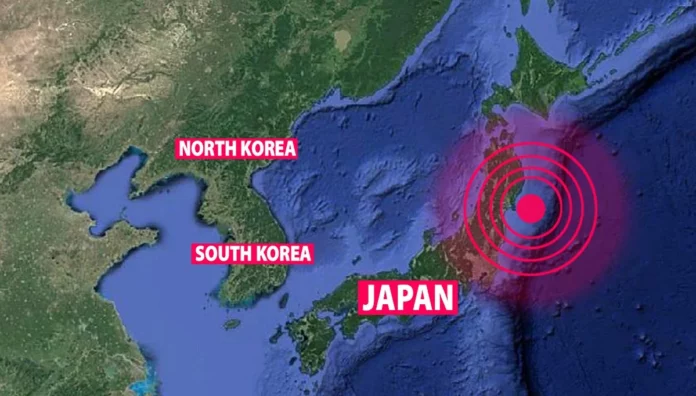
A powerful 7.4 magnitude earthquake struck off the coast of Fukushima in northern Japan on Wednesday evening, leaving four dead, and plunging more than 2m homes in the Tokyo area into darkness.

The region is part of northern Japan that was devastated by a deadly 9.0 quake and tsunami 11 years ago that also triggered nuclear plant meltdowns, spewing massive radiation that still makes some parts uninhabitable.

https://twitter.com/AbyssChronicles/status/1504115251373035525

The Japan Meteorological Agency later lifted its low risk tsunami advisory issued along the coasts of Fukushima and Miyagi early Thursday. Tsunami waves of 30cm (11in) reached shore in Ishinomaki, which lies about 390km (242 miles) north-east of Tokyo. The agency upgraded the magnitude of the quake to 7.4 from the initial 7.3.

https://twitter.com/zak065/status/1504301199679541249

Japan’s prime minister, Fumio Kishida, said four people had died and that the government would be on high alert for the possibility of further strong tremors over the next two to three days.

At least 107 people were reported injured, several of them seriously, with 4,300 households still without water by mid-morning. Residents of one Fukushima city formed a long queue in a parking lot to fill up plastic tanks with water for use at home.

NHK footage showed broken walls of a department store building fell to the ground and shards of windows scattered on the street near the main train station in Fukushima city, about 60km (36 miles) from the coastline. Roads were cracked and water poured out from pipes underground. Footage also showed furniture and appliances smashed to the floor at apartments in Fukushima.

The Tokyo Electric Power Company Holdings, which operates the Fukushima Daiichi nuclear plant where the cooling systems failed after the 2011 disaster, said workers found no abnormalities at the site, which was in the process of being decommissioned.

Japan’s Nuclear Regulation Authority said a fire alarm went off at the turbine building of No 5 reactors at the Fukushima Daiichi but there was no actual fire. Water pumps for the spent fuel cooling pool at two of the four reactors at Fukushima Daini briefly stopped, but later resumed operation. Fukushima Daini, which survived the 2011 tsunami, is also set for decommissioning.

Manufacturers, including global chipmaker Renesas Electronics and automaker Toyota, said they were trying to gauge the potential damage to their facilities in the region.

The Japan Meteorological Agency said the quake hit at 11.36pm at a depth of 60km (36 miles) below the sea.

Japan’s Air Self-Defence Force said it sent fighter jets from the Hyakuri base in Ibaraki prefecture, just south of Fukushima, for information gathering and damage assessment.

More than 2.2m homes were temporarily without electricity in 14 prefectures, including the Tokyo region, but power was restored at most places by the morning, except for some homes in the hardest hit Fukushima and Miyagi prefectures, according to the Tohoku Electric Power Co which services the region.

The quake shook large parts of eastern Japan, including Tokyo, where buildings swayed violently.

East Japan Railway Co said most of its train services were suspended for safety checks. Some local trains later resumed service.

Many people formed long lines outside of major stations while waiting for trains to resume operation late Wednesday, but trains in Tokyo operated normally Thursday morning.

A Tohoku Shinkansen express train partially derailed between Fukushima and Miyagi due to the quake, but nobody was injured, Kishida said.

He told reporters that the government was assessing the extent of damage and promised to do its utmost for rescue and relief operations.

Chief cabinet secretary Hirokazu Matsuno said authorities were scrambling to assess damage. “We are doing our utmost in rescue operations and putting people’s lives first,” he said.
USA Suddenly Admits There Are Biolabs in Ukraine, Says If a Biological Attack Happens ‘it is Russia’s fault’

0

Recently, the Russian Defence Ministry had stated that they had found evidence of US-funded Biolabs in Ukraine which had urgently destroyed samples of deadly pathogens when the ‘military operation’ started.

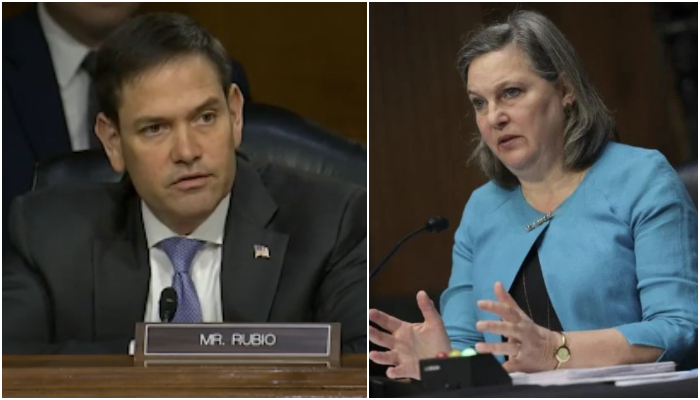
On Tuesday, the US government’s Undersecretary of State for Political Affairs Victoria Nuland testified before a Senate Foreign Relation Committee hearing on Ukraine in Washington, DC, and said that the United States was working with Ukraine to prevent invading Russian forces from seizing biological research material.

The State Department also stated that it was concerned that Russian forces are trying to gain control of biological research facilities within Ukraine. The committee was set to examine Russia’s invasion of Ukraine and the worldwide response.

At the hearing, State Department official Victoria Nuland was asked whether Ukraine has bioweapons. “Ukraine has biological research facilities, which in fact we are now quite concerned Russian troops, Russian forces, may be seeking to gain control of”, she stated to the US lawmakers on March 8. “We are working with the Ukrainians on how they can prevent any of those research materials from falling into the hands of Russian forces should they approach”, she added.

Following the response, US Senator Marco Rubio quickly added that there were ‘Russian propaganda’ reports claiming the discovery of a plot by Ukrainians to release biological weapons, with coordination from NATO. He further asked that if a biological or chemical weapon attack were to occur inside Ukraine, whether Russians would be behind it, to which Nuland affirmed saying, “There is no doubt in my mind, Senator.” She said that it is the classic Russian technique to blame the other guy for what they are planning to do themselves.

US-funded Biolabs in Ukraine

However, by saying that Russia will be responsible for a ‘biological or chemical weapon attack’ taking place, the Nuland has in a way admitted what the Russian government has been saying all along, that US-funded Biolabs are working on developing bioweapons on Ukrainian soil.

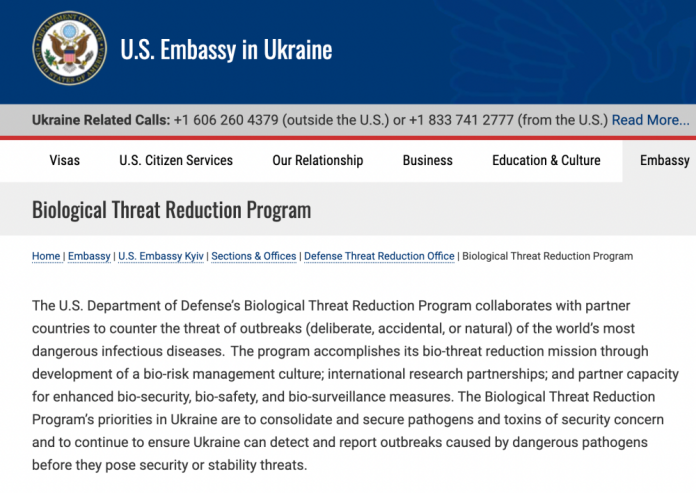
The US government’s embassy in Ukraine had stated that they fund research programs in Ukraine that work on ‘world’s most dangerous pathogens’.

Recently, the Russian Defence Ministry had stated that they had found evidence of US-funded Biolabs in Ukraine which had urgently destroyed samples of deadly pathogens when the ‘military operation’ started.

This is two days after Russia claimed that Ukraine was close to building a plutonium-based dirty bomb nuclear weapon. On March 6, Moscow’s foreign ministry had tweeted that Russian forces found evidence that Kyiv was eradicating traces of the military-biological program in Ukraine, financed by the Pentagon.

The war between Russia and Ukraine broke out on February 24 when Russia began a full-scale invasion of Ukraine through neighboring countries. In a very recent update, Russia has opened humanitarian corridors for the Ukrainian civilians to leave the besieged areas. According to the United Nations, the number of people leaving Ukraine has reached 2 million, and this is the fastest exodus Europe has seen since World War II.

This Is Not Ukraine – Last Year Alone 270,000 Children Have Died Here Because Of War

0

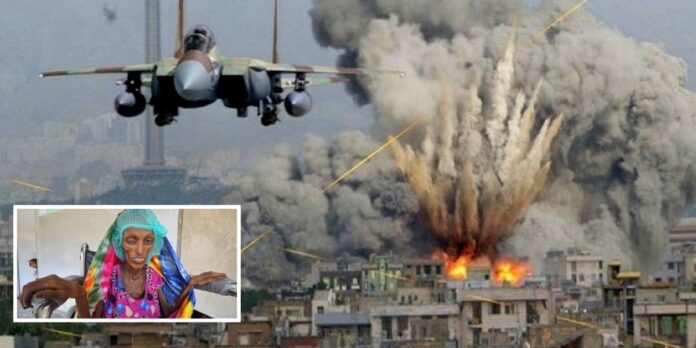
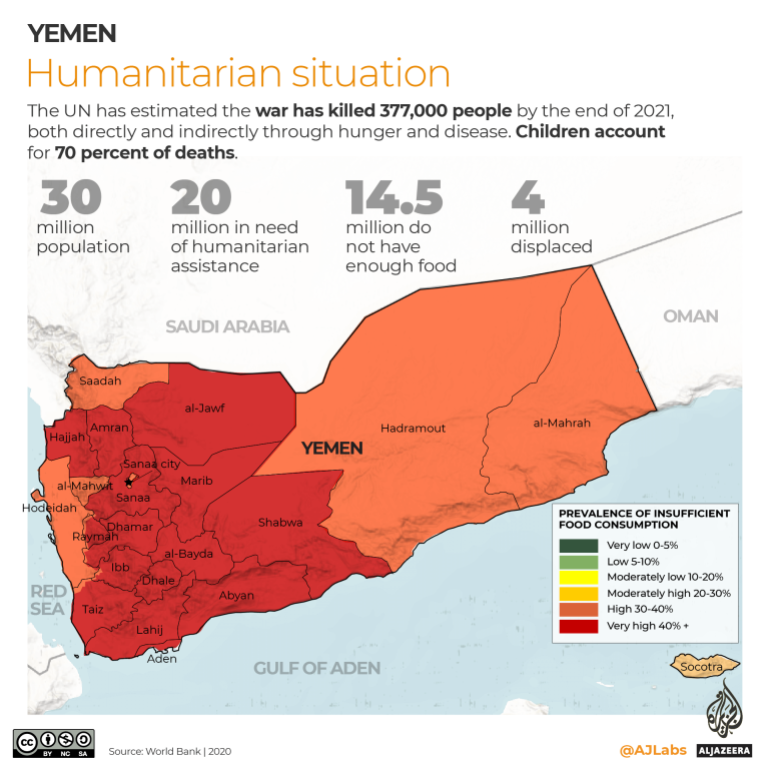
While the world’s focus is put on the Ukraine war thanks to US-influenced Western media (which is legit), more than 20 million people in yemen could starve because of US-supported Saudi Arabia’s bombing of the poor country. More then 270,000 children have died last year in Yemen according to the UN.

While millions of Ukrainians are fleeing the country to Europe – partly with their cars – more than 29 million people in yemen have no realistic ways of leaving their country, financially and logistically-wise and about 20 million of them are estimated to cruelly starve to death according to the United Nations – if no international help arrives.

The United Nations has described Yemen as the world’s worst humanitarian crisis

The UN hast estimated the Yemen war has killed 377,000 people by the end of 2021, both directly and indirectly through hunger and disease. Children account for 70 percent of deaths.

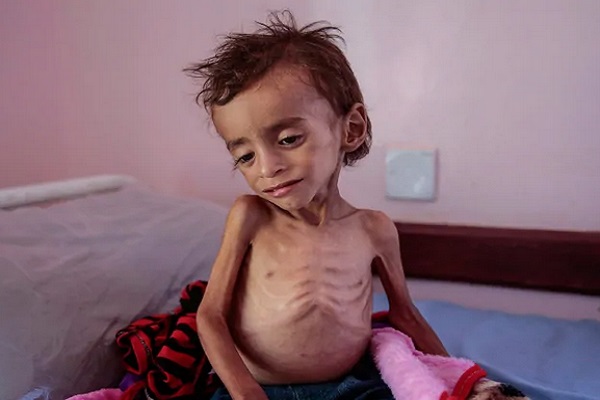
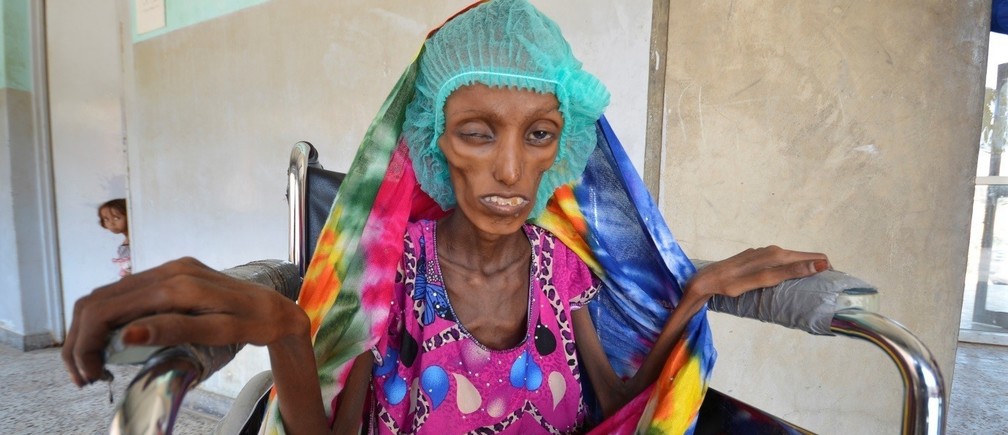
This picture of a starving girl shocked the world. But it’s just another tragedy in Yemen’s forgotten war.

Thus, if they manage to survive the bombings of the Saudis which are deliberately targeting civilians, while Russia mostly tries to avoid civilian deaths (although not very successfully as Putin is now using more and more air attacks and rockets).

Three out of four Yemenis will depend on food assistance in 2022, United Nations (UN) officials said ahead of a high-level pledging conference that aims to raise funds for the war-torn country.

The UN has stressed that $4.3bn is needed to address Yemen’s food shortages this year and prevent 19 million people from going hungry, and it hopes that attendees at the conference will meet that goal on Wednesday in Geneva.

“As of now, funding is drying up and agencies are stopping their work in Yemen,” UN Under-Secretary-General for Humanitarian Affairs Martin Griffiths said on Tuesday. “We need to replenish the food pipeline, provide shelter and send a message to Yemenis that we do not forget them.”

Officials have described a looming catastrophe in the Middle Eastern country, which is entering its seventh year of conflict.

The fighting pits Iran-allied Houthi rebels, who control many of the country’s most populated regions including the capital Sanaa, against the internationally-recognised Yemeni government. A Saudi-led coalition backs the Yemeni government, and has led an air campaign against the Houthis since March 2015.

At the beginning of the year, the UN’s World Food Programme (WFP) was forced to reduce food rations for eight million people due to a funding shortage, with households receiving barely half of the WFP standard daily minimum food basket. Now the shortage of funds is putting five million more at risk of slipping into famine-like conditions.

Griffiths, the former UN special envoy to Yemen, said the dire humanitarian situation in Yemen may get worse, as wheat imports from Ukraine, which supplies some 40 percent of Yemen’s grains, may come to a halt.

“Ukraine is a breadbasket for many countries and needs to remain so,” said Griffiths, warning of the knock-on effects the Russian war on Ukraine may bear on other conflict areas that depend on the country’s wheat production.

Food assistance: 19 million in need

In a report published on Monday, the UN’s WFP, its Food and Agriculture Organization (FAO) and its United Nations Children’s Fund (UNICEF) warned that the humanitarian situation in Yemen is poised to get worse between June and December 2022.

Some 19 million people are projected to be in need of food assistance, an increase from the current 17.4 million. Of these, 7.3 million people will be facing emergency levels of hunger.

The report also shows a persistently high level of acute malnutrition among children under the age of five. Across the country, some 2.2 million children are acutely malnourished, including more than half a million children facing severe acute malnutrition, a life-threatening condition.

In addition, around 1.3 million pregnant or nursing mothers are acutely malnourished. New data also shows that the number of people experiencing famine conditions is projected to increase fivefold, from the current 31,000  to 161,000 in the second half of 2022.

“Peace is required to end the decline,” said UN Resident and Humanitarian Coordinator for Yemen David Gressly in a statement on Tuesday. “The parties to the conflict should lift all restrictions on trade and investment for non-sanctioned commodities. This will help lower food prices and unleash the economy.”

Yemen’s economy has collapsed amid a Saudi-led coalition blockade of its main ports, which is limiting access to food and fuel, as well as non-essential commodities entering the country. Parties to the conflict, including the Houthis and the Yemeni government, have also restricted the transfer of fuel and goods across the country.

Food prices have more than doubled in 2021, while during the same period many salaries have not been paid and remittances have stagnated due to COVID-19.

“We need to inject liquidity, lift restrictions on imports and remove the blockade of the main ports as well as resume flights into the country,” said Griffiths. “While I understand there is a UN Security Council arms embargo and shipments need to be checked and inspected, we have to let in food and fuel.”

https://www.youtube.com/watch?v=i-BINB6vAzc

https://www.youtube.com/watch?v=2s8c4ST9A6A&feature=emb_title

Saudi Arabia & India Just Gave The U.S. Grave Reason For WORLD WAR III

0

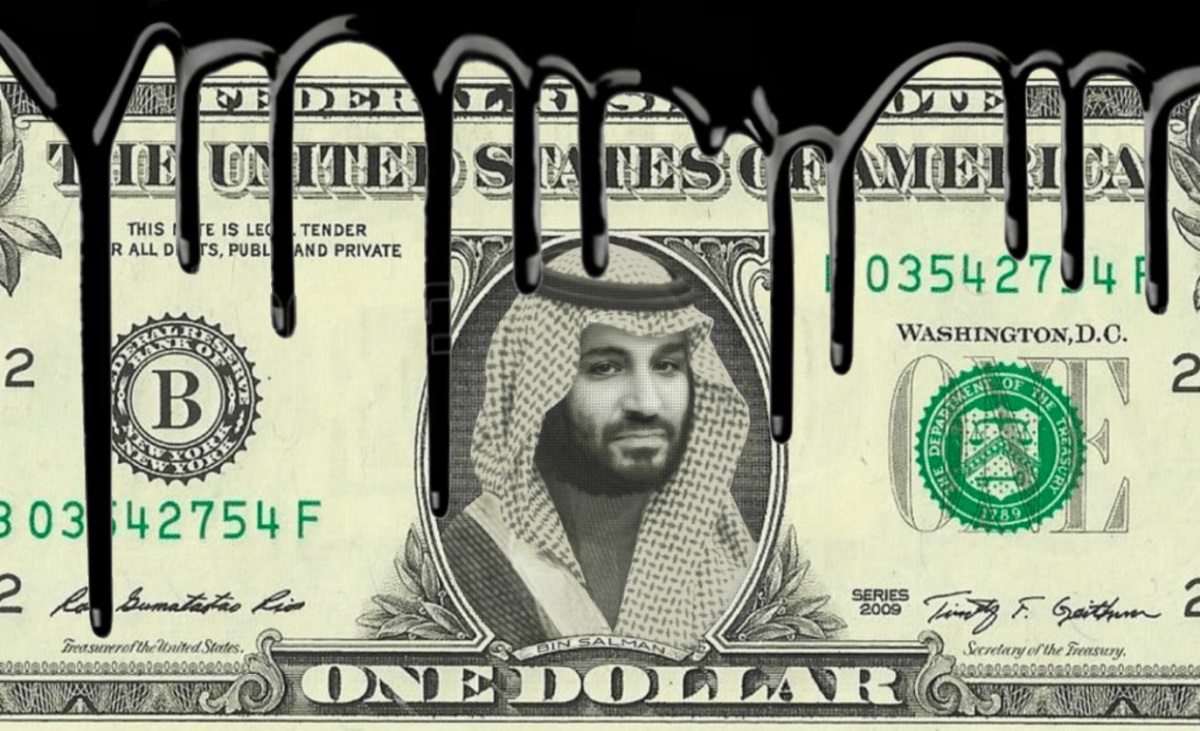
The End Of The “Petrodollar”? The Kingdom of Saudi Arabia (KSA) is considering future deals where China could purchase oil from the country using the yuan, instead of the dollar, which dominates the global oil trade.

The two countries are in active talks to shift away from the dollar-dominated trade, reported The Wall Street Journal and the Dow Jones.

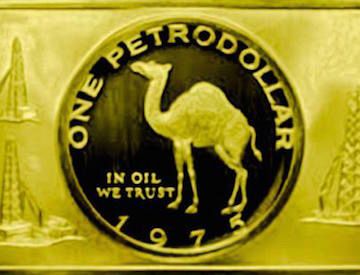
Petrodollars are U.S. dollars paid to an oil-exporting country for the sale of the commodity. Put simply, the petrodollar system is an exchange of oil for U.S. dollars between countries that buy oil and those that produce it.

The reports have buoyed the yuan against the dollar, reversing previous declines. Talks are underway to shift some of the oil contracts to be yuan priced. The KSA has priced all of its oil exports in the dollar since 1974, after a deal with US President Nixon, who promised security guarantees to the kingdom in return. But growing annoyance with Washington D.C. has been pushing Saudi Arabia to look towards the East rather than the West.

The petrodollar was the result of the oil crisis in the mid-1970s when prices spiked to record levels. It helped increase the stability of oil prices denominated in U.S. dollars. The term regained notoriety in the early part of the 2000s when oil prices rose once again.

One of the core staples of the past 40 years, and an anchor propping up the dollar’s reserve status, was a global financial system based on the petrodollar – this was a world in which oil producers would sell their product to the US (and the rest of the world) for dollars, which they would then recycle the proceeds in dollar-denominated assets and while investing in dollar-denominated markets, explicitly prop up the USD as the world reserve currency, and in the process backstop the standing of the US as the world’s undisputed financial superpower.

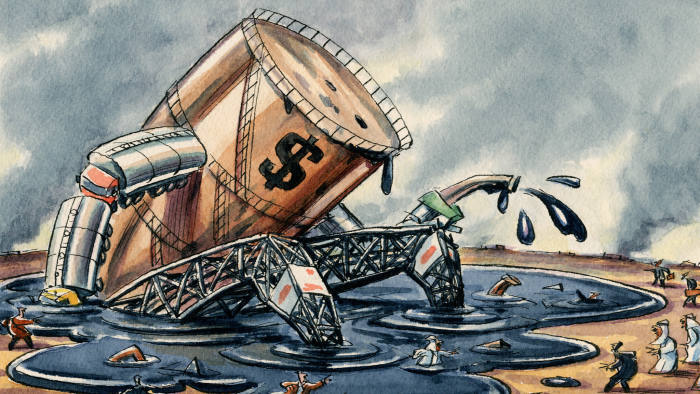
The Petrodollar: The source for all wars?
  • “The dynamics have dramatically changed. The U.S. relationship with the Saudis has changed, China is the world’s biggest crude importer and they are offering many lucrative incentives to the kingdom,” a Saudi official with knowledge of the matter told WSJ.
  • Saudi Arabia’s annoyance with the US stems from a couple of different reasons. The country wants to militarily support the intervention in Yemen, where the KSA has been embroiled in a civil war against Houthi forces. The country is also frustrated with the Iran nuclear deal progressing, as it does not wish to see nuclear technology in the hand of its regional rival.
  • US President Joe Biden’s statements on the killing of Saudi journalist Jamal Khashoggi in 2018, have also created rifts between the US and Crown Prince Mohammed bin Salman.
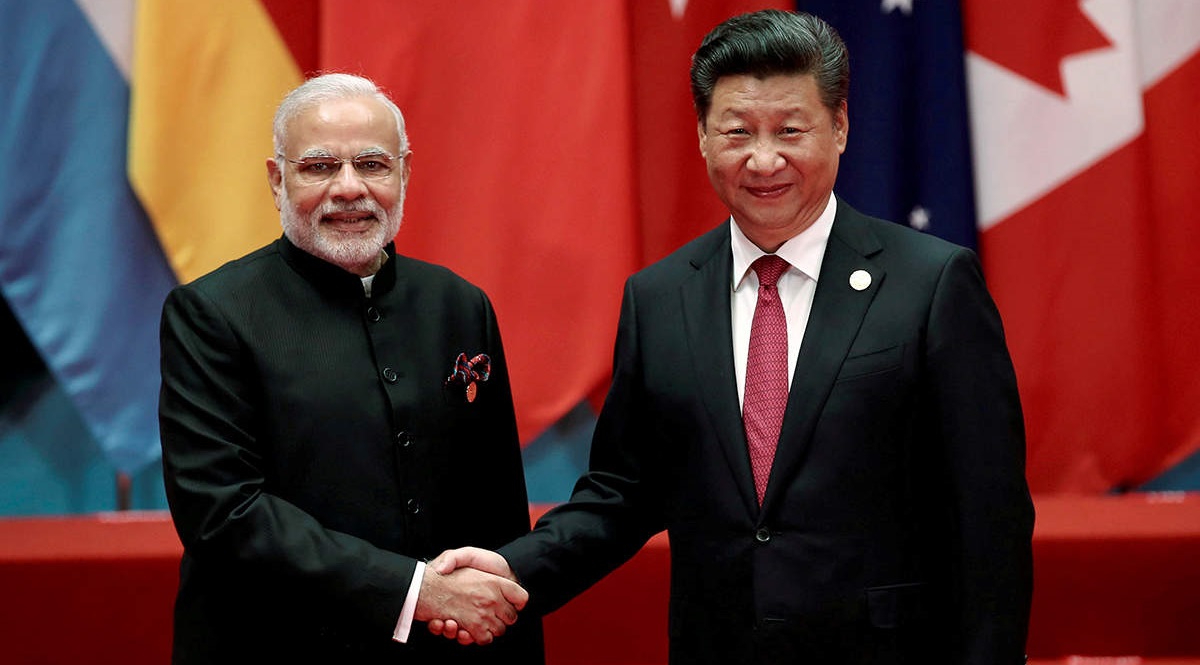
Left: India’s current prime minister Narendra Modi – Right: China’s current president:
Xi Jinping

India joins Saudia Arabia

India is reportedly planning to buy Russian oil at discounted prices and even considering the Chinese yuan as a reference currency in an India-Russia payment settlement mechanism, a move that Chinese analysts say represents the growing frustration among world economies over the US-led sanctions against Russia that have rattled global markets.

The reported plans come as India has been shrugging off pressure from the US to join in its sanctions against Russia, despite growing diplomatic ties between the two countries. This also underlines a trend of countries working to seek alternatives to US-dominated global financial mechanisms to fend off risks as they have been repeatedly weaponized, analysts noted.

One of the issues to be ironed out is in what currency the trade will be settled, and Livemint, an Indian news outlet, reported that India and Russia are exploring the possibility of using the yuan as a reference currency to value a rupee-ruble trade mechanism. The outlet cited unidentified Indian government officials.

The rupee-ruble trade mechanism will allow Indian exporters to be paid in rupees for their exports to Russia instead of dollars or euros amid sanctions against Moscow. However, there have been concerns as neither the Russian nor Indian currencies are widely used in international trade.

Following Indian officials’ consideration of using the yuan, Chinese experts also flagged the likelihood of using the yuan due to the currency’s stable value and its status as the world’s fourth most-traded currency after the US dollar, the euro and the pound.

Countries involved in energy trading are used to using an intermediate currency, previously the US dollar or the euro, as a base to set exchange rate between two national currencies, Li Xin, director of Institute for Eurasian Studies, China National Institute for SCO International Exchange and Judicial Cooperation – Shanghai University of Political Science and Law, told the Global Times on Tuesday.

“The advantage of the yuan as a pricing tool lies in its stability, growing role in international settlements and payments, and the backing of China’s economic strength,” Li said.

The report came as payments worth some $500 million to Indian exporters for goods already shipped to Russia remain stuck as financial sanctions weigh in.

The sanctions by the US and its allies on Russia can only force Russia and countries holding other values than the US to move toward setting up a new trading mechanism, Dong Shaopeng, a senior research fellow at the Chongyang Institute for Financial Studies at Renmin University of China, told the Global Times on Tuesday.

“The target of the sanctions can be Russia today and any other country tomorrow. The move will further stimulate relevant countries to seek independence from the current international trade system,” he said.

India has been under pressure from Western countries to condemn Russia after it abstained from voting against Moscow at the UN.

Anonymous Takes Down Russian Secret Service Website FSB

0

The Anonymous hacker group continues to attack government websites of the Russian Federation. This time the site fell under the distribution Federal Security Service. The hackers reported this on the official Twitter page. The site has been down for some time. 

On February 25, Anonymous international hacker group announced that it was launching attacks against the government of the Russian Federation, while the Russian private sector could also be affected. Following this announcement, the group has already hacked 2,500 websites in Russia and Belarus in support of Ukraine.

On February 24, Russian president Vladimir Putin declared war on Ukraine and launched a large-scale invasion. Russian troops are shelling and destroying infrastructure, conducting massive shelling of residential areas of Ukrainian cities and towns using artillery, multiple launch rocket systems, and ballistic missiles. Martial law was imposed in the country and general mobilization was announced. Ukraine filed a lawsuit against the Russian Federation at the UN International Court of Justice in The Hague.